Quick Summary
The best water leak detection devices for homeowners are point sensors placed where leaks start, whole-home systems that monitor the main line and can shut off water, and freeze sensors for pipes in cold areas. Most homes do best with a whole-home system plus a few point sensors near appliances.
- Point sensors are inexpensive and easy to install yourself, but each covers only a small area.
- Whole-home systems monitor all water use and can shut off the supply automatically, but usually need a licensed plumber.
- Freeze sensors warn you about pipes in unheated crawl spaces, attics, or exterior walls before they burst.
- Check whether a starter kit includes the hub, since sensors without it may not report anything.
- Confirm how an automatic shutoff behaves during power, Wi-Fi, or cloud outages before you buy.
Table of Contents
- How Water Leak Detection Devices Work
- Point Sensors Versus Whole-Home Monitoring Systems
- Top-Rated Water Leak Detection Devices Compared
- Best Automatic Water Leak Detection and Shut Off Systems
- Water Leak Sensor Placement Around Common Leak Sources
- Choosing the Right Detector for Your Home and Next Steps
- Frequently Asked Questions
How Water Leak Detection Devices Work
Most water leak detectors sense moisture where it shouldn't be and alert you before a small drip becomes a flooded floor.
Some models use a different method. Flow-monitoring systems sit on the main water line and track how much water passes through.
Freeze sensors add a second function. They report temperature, so you get warned before a pipe in an unheated crawl space bursts.
Point Sensors Versus Whole-Home Monitoring Systems
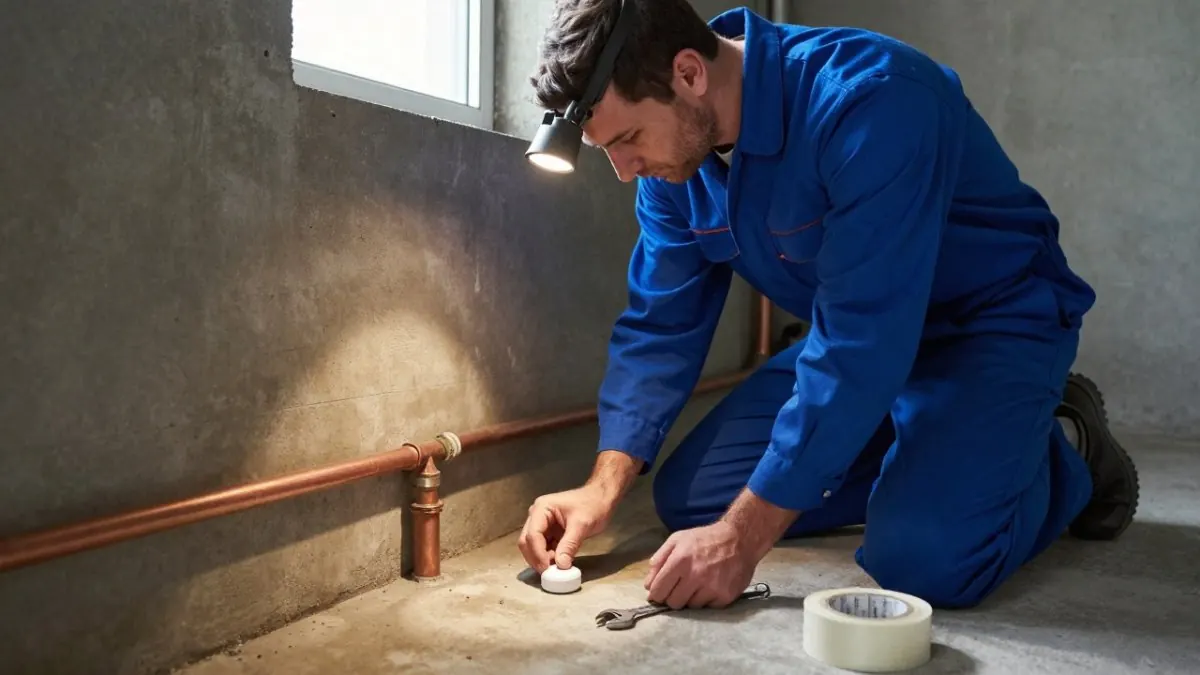
Point sensors are the simplest option. You place them where leaks usually start, such as under a sink or beside a water heater, and each one covers a small area.
Whole-home systems take a different approach. They attach to the main supply line and watch all water use in the house.
The trade-off is coverage versus cost. A point sensor protects only its spot; a whole-home system protects everything downstream but costs more and usually needs a licensed plumber.
Top-Rated Water Leak Detection Devices Compared
The table below groups the leak detection devices by type, freeze detection, connectivity, and typical use. Prices and bundles vary by retailer, so confirm the current price and included sensor count before you buy.
| Device | Type | Freeze Detection | Connectivity | Best For |
|---|---|---|---|---|
| Eufy Water and Freeze Sensor | Point sensor | Yes | Requires a Eufy hub or compatible smart-home bridge | Leak plus freeze coverage in one puck |
| SwitchBot Wi-Fi Leak Detector | Standalone Wi-Fi | No | Connects directly to Wi-Fi, no hub | A single trouble spot with no hub commitment |
| First Alert L1 Wi-Fi Water Leak and Freeze Detector | Point sensor with cable | Yes | Wi-Fi | Leak, temperature, and humidity in one unit |
| Flo by Moen Smart Water Detector | Point sensor | No | Wi-Fi, pairs with the Flo shutoff system | Homes already using Flo for whole-home shutoff |
| Kidde Smart Water Leak and Freeze Detector | Point sensor | Yes | Wi-Fi | Leak and freeze alerts with a loud local siren |
| GoveeLife Smart Water Leak Detector 1S | Point sensor | No | Wi-Fi or Bluetooth gateway | Wide coverage with long battery life |
| D-Link Water Leak Sensor Starter Kit (SW-A11KT) | Starter kit | No | Requires the D-Link hub included in the kit | Several rooms covered in one purchase |
| YoLink Smart Home Starter Kit | Starter kit | No | Requires the YoLink hub included in the kit | Long-range coverage across a large house |
Standalone and Starter Kit Options
A standalone sensor suits one or two spots without committing to a hub ecosystem. Standalone Wi-Fi sensors connect directly to a router without a bridge. The trade-off: Wi-Fi radios are power-hungry, so standalone units typically run on batteries that need regular replacement, and a weak signal can delay alerts.
Starter kits trade a little setup work for a lower cost per sensor. Kits often include a hub bridging sensors to Wi-Fi, letting sensors use low-power radios and last longer on batteries. Before buying, confirm the sensor count, whether the hub is included, and smart-home compatibility.
Pros of starter kits: lower cost per sensor, longer battery life thanks to the hub, and fast coverage of several rooms. Cons: you may pay for sensors you do not need, the hub is one more device to power and update, and sensors from one brand generally will not talk to another brand's hub. When a sensor kit cannot pinpoint moisture hidden in a wall, a moisture meter can offer another way to investigate, as SWFL 24 Rooter notes.
Watch out: a kit advertised as a "starter kit" sometimes ships without the hub, leaving you with sensors that cannot report anything until you buy one separately.
Freeze Detection and Multi-Sensor Options
If your home has pipes in a crawl space, attic, or exterior wall, freeze detection is not a nice-to-have. A freeze sensor reports temperature as well as moisture, warning you while the pipe is still intact rather than after it splits.
Multi-sensor coverage is where larger homes get complicated. A single point sensor covers only the few square feet where its contacts sit, so "wide coverage" usually means several sensors or a radio that reaches across the house.
Total Cost of Ownership Over Five Years
Upfront price is the least useful number in this category. A cheap sensor that eats batteries yearly and needs an unbudgeted hub can cost more over five years than a pricier kit with low-power radios. Estimate four line items: the device and any required hub, batteries, any subscription for cloud alerts or cellular backup, and replacement parts such as sensing cables or valve motors.
Best Automatic Water Leak Detection and Shut Off Systems
An automatic shutoff valve closes the main water supply when a leak is detected, the only way to stop a leak while you are away, limiting burst-line damage to minutes instead of hours. Detection alone does not fix the underlying problem, so see which permanent repairs hold once a leak is found. Competitors cover the category; what they rarely explain is how these systems behave when something goes wrong, which is exactly when you need them to work.
How the Shutoff Actually Closes the Valve
There are two common designs. A motorized ball valve replaces or sits inline with your existing valve and turns the handle electrically. An actuator clamps onto your existing ball valve and physically turns it, which is cheaper to install because there is no pipe cutting, but it only works on a lever-style ball valve that turns a quarter turn.
Check your main valve before you shop. If it is a gate valve, budget for a plumber to swap it for a ball valve during installation, because that cost is easy to overlook. A licensed plumber should handle any work that involves cutting into the supply line.
What Happens During a Power, Wi-Fi, or Cloud Outage
This is the question most buying guides skip. Behavior varies widely by product, and the difference matters:
- Power outage: Some systems run on battery backup and keep monitoring and shutting off; others go dormant until power returns. Ask whether the valve can close on battery alone, not just whether the sensor can report.
- Wi-Fi outage: A hub-based system may keep sensor-to-hub communication working locally, but push alerts will not arrive until the connection returns. Standalone Wi-Fi sensors typically lose reporting entirely.
- Cloud outage: If shutoff logic runs in the manufacturer's cloud, a service outage can disable automatic shutoff even though the hardware is fine. Ask whether the shutoff decision is made locally at the valve or in the cloud.
A common pattern is that local valve control survives outages while app features do not. Confirm this in writing before you buy, because marketing pages rarely spell it out.
Shutoff Safety and Failure Scenarios
An automatic valve that closes at the wrong time can be its own problem. A false alarm while you are away can shut off water to a refrigerator ice maker, a boiler fill line, or a whole-house humidifier, and some appliances do not react well to an unexpected supply cut. Look for these safeguards:
- Manual override: You must be able to open the valve by hand during an emergency or after a false alarm. Confirm the override works without power.
- Scheduling and away modes: Many systems let you set a flow limit or a schedule so routine use, such as a long shower or lawn irrigation, does not trigger a shutoff.
- Valve failure behavior: Ask what the valve does if its motor fails or the battery dies mid-close. A valve stuck closed is inconvenient; a valve stuck open defeats the purpose.
Manual shutoff remains essential regardless. Learn where your main valve is and how to close it fully with a wrench or valve handle, and tag the valve so anyone in the household can find it in the dark, because a sensor cannot turn off the water if the device fails.
Insurance Discount Verification Checklist
Many insurers advertise discounts for leak detection and automatic shutoff, but eligibility is narrower than the ads suggest. Before you buy, work through this list with your agent:
- Ask whether the discount applies to point sensors, whole-home shutoff, or only a specific combination.
- Request the list of approved device types or brands, if one exists, and confirm the model you plan to buy is on it.
- Ask what documentation the insurer requires, such as a receipt, an installation invoice from a licensed plumber, or a photo of the installed valve.
- Confirm whether the discount renews annually and what you must do to keep it, such as maintaining a subscription or re-certifying installation.
- Ask whether a monitored subscription is required, since some discounts only apply to professionally monitored systems.
Get the answer in writing before installation. A discount saving a few dollars a month is worth claiming, but it should not drive your choice of system.
Water Leak Sensor Placement Around Common Leak Sources
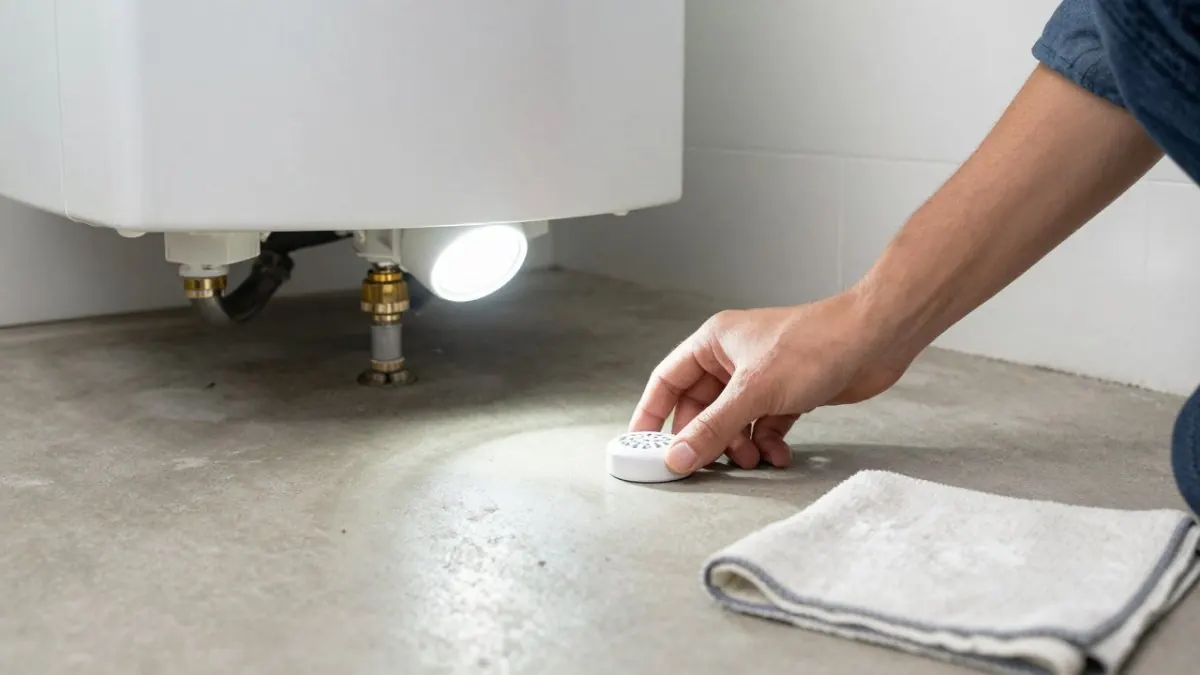
Place sensors where water collects first. Common spots include:
- Under sinks, especially around supply lines and drain traps
- Beside the water heater and washing machine
- Behind or beside the toilet base
Keep sensors flat on the floor, because water runs downhill and the sensing contacts sit at the bottom edge. Avoid placing one where a box or cabinet can block it.
Call a plumber when:
- You see water pooling with no obvious source
- Your water meter keeps moving while all fixtures are off
- A pipe has burst, or you hear water running inside a wall
If you suspect a burst pipe, shut off the main valve first, then call for emergency service. Learn the signs of a burst pipe emergency and the immediate steps to take.
Choosing the Right Detector for Your Home and Next Steps
Match the device to your risk. A condo with one bathroom needs two or three point sensors.
Start with the highest-risk spots: the water heater, the washing machine, and any unheated area with pipes.
If you are unsure which setup fits your home, Rich's Plumbing Heating & Air Conditioning can assess your plumbing and recommend a system. Contact them to schedule an estimate.
Last Updated: November 16, 2026
Frequently Asked Questions
What is a good device to detect household water leaks?
For most homes, a battery-powered Wi-Fi leak sensor paired with a smartphone app is a practical starting point. Sensors like these cost far less than a whole-home system and can be placed under sinks, behind washing machines, and beside water heaters. Pricing varies by model and retailer, so check current listings or contact Rich's Plumbing Heating & Air Conditioning for guidance on which option fits your layout. Choose a device that sends alerts to your phone, lists battery life clearly, and works with the hub or app you already use.
Do water leak detectors automatically shut off the water?
Most standalone leak sensors only send an alert and do not stop the flow of water. Automatic shutoff requires a motorized valve installed on the main supply line, connected to a flow monitor or controller that can close the valve when a leak or unusual flow is detected. These systems are more involved to install, may need a licensed plumber, and should be tested so you know how they behave during a power outage or a valve failure. Ask about manual override before you buy.
Where should homeowners place water leak sensors?
Place sensors where water is most likely to collect or escape: beneath sinks, behind toilets, beside the water heater, around the washing machine and dishwasher, and in basements or crawl spaces at the lowest point of the floor. A sensor only detects water that touches its contact points, so position it flat on the floor where water will pool, not on a shelf above it. Check sensor placement after any renovation or appliance replacement.
Are Wi-Fi water leak detectors worth it?
Wi-Fi detectors are worth considering if you want instant phone alerts while you are away from home, especially for vacation properties or homes with a history of hidden leaks. They depend on your home network staying online, so a Wi-Fi or internet outage can delay notifications. Battery-powered sensors with a local audible alarm add a backup when connectivity fails. Compare the alert methods and battery life of each model before deciding.
What is the best smart water leak detector for a whole house?
No single device is best for every whole house. A whole-home approach usually combines several point sensors in high-risk areas with an automatic shutoff valve on the main line. Look for systems with clear coverage specifications, multiple alert methods, and compatibility with your smart home hub. Because sensor and valve pricing is not verified for every model here, get current prices from the manufacturer or a licensed professional before committing.