Last Updated: November 10, 2026
Quick Summary
Central air efficiency in older homes improves most when you fix the building envelope and duct system before tuning the equipment. Start with basic maintenance like filter changes and condenser cleaning, then seal ducts, add attic insulation, and air seal gaps.
- Replace or clean the air filter every 1 to 3 months.
- Keep at least two feet of clearance around the outdoor unit.
- Sealing ducts is often the highest-return upgrade in an older home.
- Add attic insulation to the level recommended for your climate zone.
- Use a load calculation before choosing a right-sized replacement system.
Table of Contents
- Why Central Air Runs Inefficiently in Older Homes
- Step 1: Check Your Central Air Conditioner Maintenance Basics
- Step 2: Address Older Home Duct Sealing
- Step 3: Improve Air Sealing and Insulation for Older Homes
- Step 4: Adjust Controls and Airflow
- Step 5: Evaluate Older Home HVAC Retrofit Options
- Common Mistakes That Waste Efficiency Gains
- Booking an Efficiency Assessment With Rich's Plumbing
- Frequently Asked Questions
Why Central Air Runs Inefficiently in Older Homes
Central air efficiency in older homes is often lower than most homeowners expect, and the cause is rarely the cooling unit alone. Older houses were built before modern duct standards and insulation codes, so cooled air frequently leaks out before it reaches the rooms it's meant for. The same pattern shows up again and again: the system is working hard, but the house is working against it.
Several factors drive this. Ductwork in older homes often runs through unconditioned attics, crawl spaces, and basements, where leaks and poor insulation waste cooled air. Older windows, thin attic insulation, and gaps around framing let outside heat in. U.S. Department of Energy guide on sealing and insulating ducts explains why duct losses can account for a meaningful share of cooling energy use.
Central air efficiency improves most when you fix the building envelope and the distribution system first, then tune the equipment. This guide walks through that order, step by step.
Step 1: Check Your Central Air Conditioner Maintenance Basics
Start with the simplest fixes. A dirty system is an inefficient system, and routine central air conditioner maintenance costs far less than a lost season of cooling.
- Replace or clean the air filter every 1 to 3 months
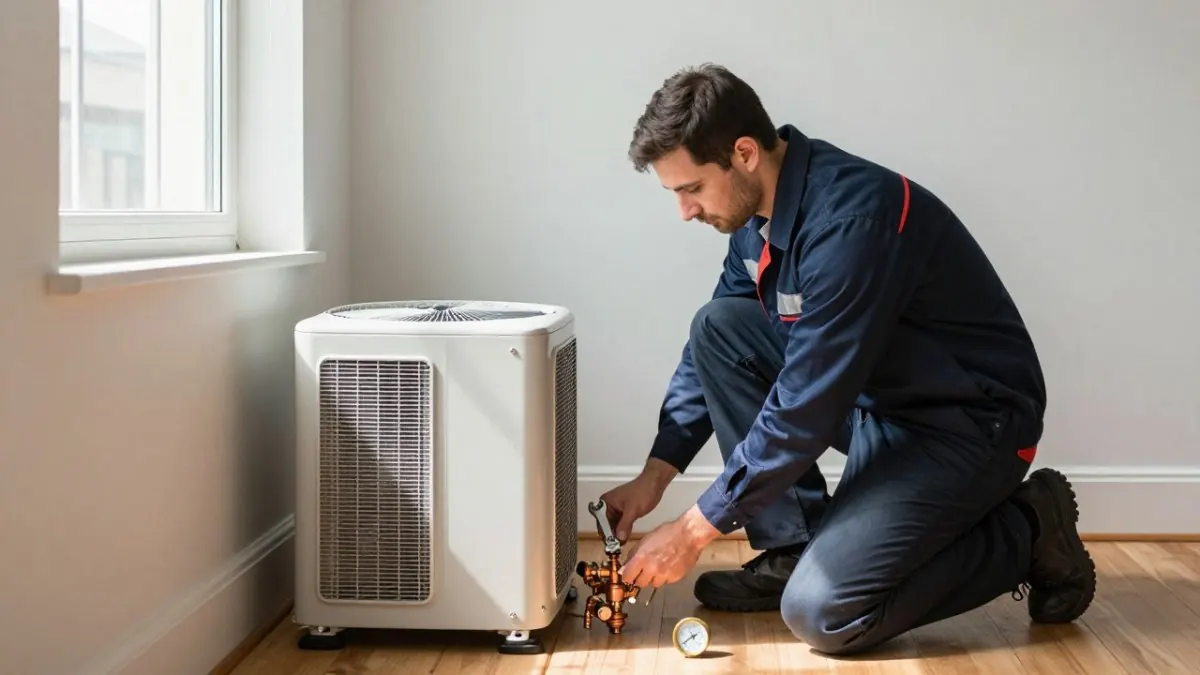
- Rinse debris from the outdoor condenser fins with a garden hose
- Keep at least two feet of clearance around the outdoor unit
- Clear the indoor evaporator drain line of algae buildup
- Schedule a professional tune-up each spring before peak season
A common mistake is ignoring the condenser coil. Dirt on the fins forces the compressor to work longer for the same cooling.
The basic maintenance tasks below are the quickest way to recover lost efficiency, as summarised in the table.
| Task | Frequency or timing | Why it matters |
|---|---|---|
| Replace or clean air filter | Every 1 to 3 months | Dirty filters restrict airflow |
| Rinse condenser fins | Routine cleaning | Dirt forces longer compressor run |
| Keep outdoor clearance | At least two feet | Ensures proper airflow |
| Clear evaporator drain line | Routine cleaning | Removes algae buildup |
| Professional tune-up | Each spring | Prepares system for peak season |
Step 2: Address Older Home Duct Sealing
Duct sealing is often the highest-return upgrade in an older home, but the work only pays off when you know where the losses are.
There are three common problem areas in older homes:
- Supply ducts running through unconditioned attics, crawl spaces, or garages, where leaks pull hot or humid air into the system and push cooled air out of it
- Return-air pathways that are too small or missing entirely, which starves the air handler and creates pressure imbalances that pull unconditioned air through gaps around doors and cabinets
- Undersized or poorly routed branch ducts that deliver far less air to distant rooms, often the upstairs bedrooms or additions
You can check some of this yourself. On a hot day with the system running, hold a lightweight tissue or incense stick near joints and seams in accessible ducts; movement toward or away from a joint suggests a leak. Compare the supply-register temperature in each room with the return-air temperature at the air handler. Large, consistent differences between rooms usually point to a balancing or sizing problem rather than a leak alone.
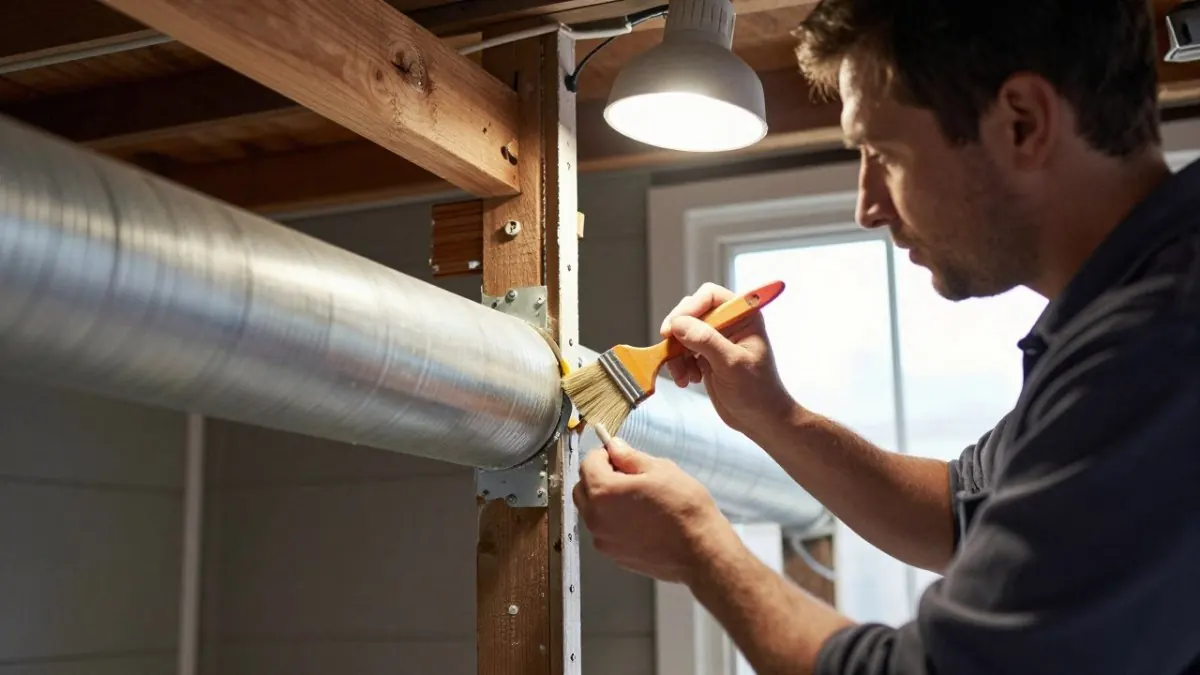
Focus on the air handler cabinet, plenum seams, branch-to-trunk connections, and register boots, since these are the most common leak points in older installations.
Duct insulation matters where ducts run through unconditioned space.
Sealing alone can overload an airflow system that was already marginal. If you seal leaks and the house pressurizes or the blower struggles, the return side is usually the cause, and adding return capacity or a return in a closed room can restore balance. Measured results are the only reliable confirmation. Check temperatures in the far rooms before and after the work, note the thermostat runtime during a similar hot day, and keep a short log. Consistent monitoring of these performance metrics provides the necessary data to lower high energy bills by identifying which specific zones require further adjustments to their thermal envelope.
Step 3: Improve Air Sealing and Insulation for Older Homes
Air sealing and insulation for older homes reduces the cooling load before the system runs at all. Focus on the attic first, since heat gain from the roof is usually the largest source.
- Add attic insulation to the level recommended for your climate zone
- Seal gaps around wiring, pipes, and attic hatches
- Weatherstrip doors and window frames
- Insulate accessible crawl space and rim joist areas
ENERGY STAR guidance on air sealing and insulation outlines where to start and how much insulation different regions need.
Step 4: Adjust Controls and Airflow
Smart settings can cut waste without new equipment. A programmable or smart thermostat lets the system rest when the house is empty, and small setpoint changes add up over a summer.
- Set the thermostat a few degrees higher when you're away
- Use ceiling fans to feel cooler at a slightly higher setting
- Close blinds on sun-facing windows during the afternoon
- Balance registers so rooms receive similar airflow
Watch out: Closing too many supply vents can strain the blower and make the system less efficient, not more. Adjust vents gently and check that the system still runs normally.
Step 5: Evaluate Older Home HVAC Retrofit Options
Sometimes repairs and sealing are not enough. An older central-air system may be losing efficiency because its equipment is outdated, because its ducts can't deliver the airflow a newer unit needs, or because the house itself has changed since the system was installed. Choosing between repair, retrofit, and replacement depends on which of these is driving the problem. Before committing to a retrofit, read common HVAC installation mistakes to avoid so you can spot errors early.
Start with a short diagnostic question list before anyone quotes a new condenser:
- How old is the condenser and air handler, and has the most recent repair been for the same component?
- Does the system short-cycle, run continuously on hot afternoons, or fail to reach the thermostat setpoint?
- Are some rooms consistently warmer than others, even after the thermostat has settled?
- Has the home been insulated, air-sealed, or re-windowed since the equipment was installed?
A single failed capacitor on a relatively young unit is usually a repair. Repeated compressor or refrigerant-circuit failures on a unit approaching the end of its typical service life usually point toward replacement.
A load calculation matters more in an older home than in a new one. Heat gain through old single-pane windows, thin attic insulation, and leaky ductwork can make the real cooling load very different from what the original installer assumed. A right-sized system from a proper load calculation runs in longer, steadier cycles, removes more humidity, and wastes less energy than an oversized unit that short-cycles.
Retrofit options fall into a few groups:
- Replacing the outdoor condenser and indoor coil with a higher-efficiency matched pair, which keeps your existing ductwork and thermostat wiring
- Adding a variable-speed or multi-speed blower, which improves humidity control and reduces noise and short-cycling
- Installing a ductless mini-split for rooms that stay hot, particularly additions or rooms over garages where extending ducts is impractical
- Converting to a heat pump if the home already uses electric resistance heat or is ready for a whole-home electrification plan
U.S. Department of Energy overview of heat pump and central air upgrades
Common Mistakes That Waste Efficiency Gains
Even good upgrades can underperform if the basics are missed. These errors show up often in older homes:
- Sealing ducts while leaving attic insulation thin
- Replacing the outdoor unit without checking duct size and layout
- Setting the thermostat too low, which runs the system longer
- Skipping filter changes after a renovation
- Ignoring uneven temperatures, which often point to duct or airflow problems
Booking an Efficiency Assessment With Rich's Plumbing
Improving central air efficiency in older homes is easier with a clear plan. Rich's Plumbing Heating & Air Conditioning, a family-owned business serving New Jersey since 1989, is licensed, bonded, and insured, and offers estimates for most services. If you're ready to see where your system is losing efficiency, schedule an AC maintenance visit in East Brunswick or explore a maintenance plan to keep your system running well all year.
Frequently Asked Questions
How can I make my central air conditioner more efficient in an older home?
Start with the cheapest fixes: replace or clean the air filter, clear debris from the outdoor condenser, and confirm the system is charged and running properly. Then address the building itself. Sealing leaky ducts and air leaks around windows, doors, and attic penetrations usually reduces wasted cooling more than any equipment change. Older homes often have the largest gains from these steps because their ducts and envelopes were never built for modern efficiency standards. Measure your results on utility bills over a full cooling season to see what worked.
Should I seal or replace old ductwork?
In most older homes, sealing and insulating existing ducts is the right first move. Duct leaks in unconditioned spaces like attics and crawl spaces can waste a meaningful share of conditioned air before it reaches a room. Replacement makes more sense when ducts are crushed, disconnected, undersized for the load, or have return-air problems that sealing cannot fix. A load calculation helps determine whether the existing duct layout can support the system's airflow requirements.
How often should I change the air filter in an older home?
Check the filter monthly during the cooling season and replace it when it looks dirty or every one to three months, depending on the filter type, pets, and dust levels. Older homes often have more dust infiltration through gaps and older return grilles, so a filter may clog faster than the manufacturer suggests. A clogged filter restricts airflow, makes the blower work harder, and can reduce cooling capacity. Use the filter size printed on the frame and avoid high-restriction filters unless your system is rated for them.
When should I replace an older central air conditioner instead of repairing it?
Consider replacement when the unit is near the end of its typical service life, repairs are frequent or expensive, or the refrigerant type is obsolete and costly to service. Compare the cost of a repair against the expected energy savings and remaining life of the system. Before deciding, get a load calculation and confirm that the existing ducts can handle a new unit. Rich's Plumbing Heating & Air Conditioning can provide an estimate to help you compare these options.