Last Updated: November 26, 2026
Quick Summary
An emergency plumbing kit is a small set of tools and supplies that lets you slow or stop water damage until a licensed plumber arrives. Its core items are a plunger, an adjustable wrench, pipe tape, a bucket, towels, and a flashlight, stored together in one labeled container.
- Keep a flange plunger for toilets and a cup plunger for sinks and tubs.
- Store the kit in a sealed, labeled plastic bin near the water heater or in an easy-to-reach utility area.
- Find your main water shutoff valve before an emergency and turn it gently once or twice a year.
- Review the kit every six months and replace any damaged, dried-out, or missing items.
- Temporary pipe repairs only slow a leak; schedule a permanent fix with a licensed plumber.
Table of Contents
- What Belongs in an Emergency Plumbing Kit?
- Essential Plumbing Tools for Homeowners
- Home Plumbing Emergency Kit Checklist
- How to Shut Off Water to House Quickly
- Using Temporary Pipe Leak Repair Safely
- Emergency Response Steps by Problem Type
- Storing, Maintaining, and Replacing Your Kit
- Frequently Asked Questions
What Belongs in an Emergency Plumbing Kit?
An emergency plumbing kit is a small set of tools and supplies that lets you slow or stop water damage until a licensed plumber arrives. The core of any emergency plumbing kit is a plunger, an adjustable wrench, pipe tape, a bucket, towels, and a flashlight.
Homeowners who have a basic kit on hand can contain water faster and describe the problem more clearly when they call for help.
Most kits fail for one simple reason: the owner has no idea where the main shutoff is, or the tools are scattered across the garage. A kit only works if it is complete, stored in one place, and familiar to everyone in the house.
Essential Plumbing Tools for Homeowners
Start with the tools that address the most common emergencies. Water leaks, clogs, and loose fittings account for most calls, so the kit should cover those first.
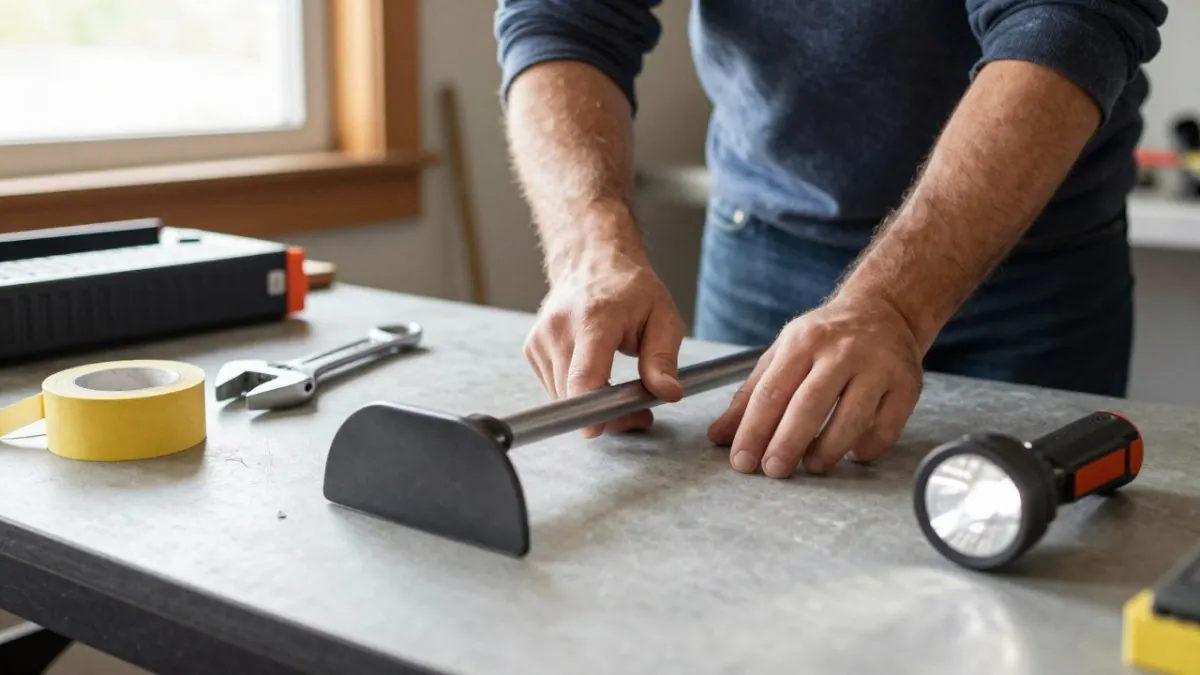
Here are the core tools to include:
- Cup plunger for sinks and tubs
- Flange plunger for toilets, since its extended rubber lip seals the drain opening
- Adjustable or crescent wrench for tightening fittings and supply lines
- Pipe wrench for gripping and turning larger pipes
- Drain snake or auger for stubborn clogs that a plunger cannot clear
- Pipe cutter or tubing cutter for trimming damaged sections in an emergency
- Pliers and a multi-bit screwdriver for fasteners and access panels
A common mistake is buying a large set of tools that never leaves the box. A small, well-chosen group of tools is more useful than a crowded toolbox you cannot find in the dark.
Must-Have vs. Nice-to-Have Items
The table below separates items every homeowner should keep from those that help in specific situations.
| Item | Category | What It Mitigates |
|---|---|---|
| Flange plunger | Must-have | Toilet overflows and clogs |
| Cup plunger | Must-have | Sink and tub drain backups |
| Adjustable wrench | Must-have | Loose fittings and supply line connections |
| PTFE pipe thread tape | Must-have | Small drips at threaded joints |
| Five-gallon bucket | Must-have | Catches water and limits floor damage |
| Towels or rags | Must-have | Absorbs spills and speeds cleanup |
| Flashlight | Must-have | Lets you inspect dark cabinets and crawl spaces |
| Work gloves | Must-have | Protects hands when handling wet, dirty pipes |
| Pipe wrench | Nice-to-have | Grips and turns larger threaded pipes |
| Drain snake or auger | Nice-to-have | Clears clogs a plunger cannot reach |
| Pipe clamp or hose clamp | Nice-to-have | Holds a temporary patch on a damaged line |
| Duct or rescue tape | Nice-to-have | Wraps temporary repairs on leaking hoses |
Each item in the must-have column addresses a problem that tends to start small and become expensive. A bucket and towels, for example, can prevent water from soaking into subflooring while you wait for help.
Home Plumbing Emergency Kit Checklist
Use this checklist to build your kit. Check each item off once it is stored in your container.
- Flange plunger (toilet)
- Cup plunger (sink and tub)
- Adjustable wrench
- Pipe wrench
- PTFE thread tape
- Five-gallon bucket
- Towels and rags, plus a few paper towels
- Flashlight with spare batteries
- Work gloves
- Pliers and multi-bit screwdriver
- Pipe clamp and rescue tape
- Drain snake or auger
- Written list of emergency phone numbers, including your plumber and your water utility
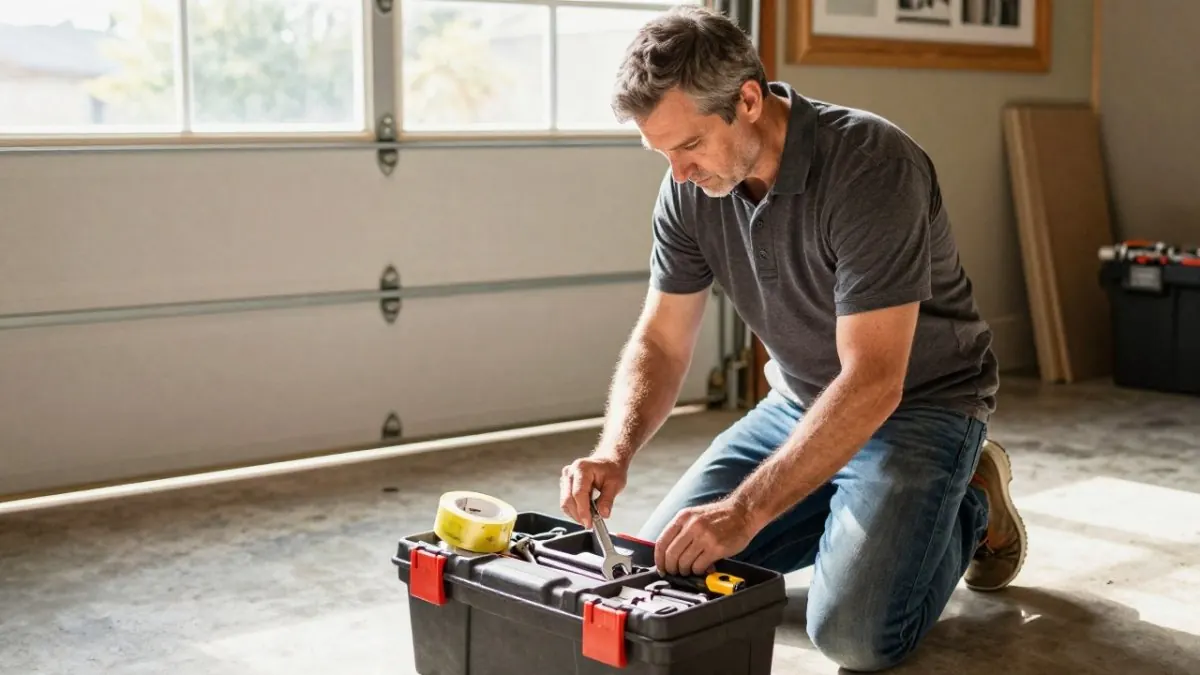
Store the kit in a sealed, labeled plastic bin. Keep it near the water heater or in a utility area that is easy to reach. Review the contents every six months and replace anything that is damaged, dried out, or missing.
How to Shut Off Water to House Quickly
The fastest way to limit damage is to shut off the main water valve. Find it before you need it. Most homes have the main shutoff near the water meter, where the supply line enters the house, or in a basement, crawl space, or utility closet. In warmer climates, the main valve is often at the street curb in a concrete or plastic box, sometimes called a curb stop, and may require a special water key to operate.
Follow these steps:
- Locate the main valve. Look for a lever, gate valve, or round handwheel on the pipe entering the home. A lever handle is a ball valve and needs only a quarter turn. A round handwheel is usually a gate or globe valve and needs several turns.
- Turn it clockwise. For a lever handle, turn it so it sits perpendicular to the pipe. For a gate valve, turn the handwheel clockwise until it stops. Do not force a valve that will not move; a broken stem can turn a small leak into a full-flow emergency.
- Open a faucet to drain pressure. Run a cold faucet on a lower floor to release remaining water in the lines. This also tells you whether the main valve actually closed.
- Confirm the flow has stopped. Watch the leak or the faucet to verify water is no longer coming through. If water keeps running, the main valve may be failing or you may have closed the wrong valve.
Watch out: many homeowners never test the main valve until an emergency. Valves that have not been moved for years can seize. Turn the valve gently once or twice a year to keep it working, and never force a stuck valve in a panic.
Fixture Shutoff Valves
For a leak limited to one fixture, a local shutoff under the sink or behind the toilet may stop the water without shutting off the whole house. Most sinks have two angle stops under the cabinet, one for hot and one for cold. Toilets usually have a single stop valve on the wall behind the bowl. These valves are often quarter-turn ball valves or multi-turn compression valves. Label every local valve so the whole household knows where to turn.
Watch out: older compression stops can weep or fail when first turned after years of disuse. If a stop valve will not close fully, shut off the main valve instead and schedule a replacement.
If the Main Valve Fails
If the main valve will not close, call your water utility. Many utilities can shut off service at the curb stop or meter from the street. Keep the utility's emergency number in your kit alongside your plumber's number. If water is still flowing after the curb stop is shut, keep clear of the affected area and call an emergency plumber to limit further damage.
If you cannot locate or close the main valve, call your plumber immediately. A written shutoff map, showing the main valve, the water heater valve, and every fixture stop, is worth keeping inside the kit lid so anyone in the house can act fast.
Using Temporary Pipe Leak Repair Safely
A temporary repair buys time. It does not replace a permanent fix. Use temporary repairs only to slow a leak until a licensed plumber can make a lasting repair.
For a small pinhole leak in a supply line, wrap the area with rescue tape or PTFE tape, then secure a pipe clamp over the wrapped section. Tighten the clamp gently. Overtightening can crack older pipe.
Watch out: never use a temporary repair on a gas line, and do not attempt repairs on electrical equipment while standing in water.
Temporary repairs have clear limits. Tape and clamps can fail under water pressure, especially on older galvanized pipe. Check the patch regularly, keep a bucket underneath, and schedule a permanent repair as soon as possible.
Rich's Plumbing Heating & Air Conditioning offers emergency plumbing service across New Jersey with a 60-minute response time. For a detailed guide to the specific fixes covered here, read 5 Ways to Temporarily Fix a Burst Pipe.
Emergency Response Steps by Problem Type
Different emergencies call for different first moves.
Burst pipe: Shut off the main water valve first. For a full set of emergency steps, see What to Do If Pipes Burst in Winter: Emergency Steps.
Toilet overflow: Lift the tank lid and lower the float or close the supply valve behind the toilet. Do not flush again.
Sink or tub clog: Start with a cup plunger and a few inches of water covering the cup. Work the plunger with firm strokes.
Leaking supply line under a sink: Close the local shutoff valve under the fixture. Dry the area and place a bucket below.
Water heater leak: Shut off the cold inlet valve on top of the tank and the gas valve or breaker feeding the unit.
Watch out: never use a temporary repair on a gas line, and do not attempt repairs on electrical equipment while standing in water.
Water-Damage Prevention and Documentation
While you wait for help, move furniture, rugs, and electronics away from the water. Use towels to soak up standing water. Photograph or video the damage before cleanup for insurance purposes, and keep receipts for any emergency supplies or repairs. Contact your insurer if the damage is significant; many policies require prompt notice.
If you cannot control the leak, call for emergency help. Rich's Plumbing Heating & Air Conditioning provides emergency plumbing repairs and emergency drain services, and our team is ready to respond quickly. Check our emergency plumbing response time guarantee for details on how fast help can reach your home.
Storing, Maintaining, and Replacing Your Kit
A kit only helps if its contents work when you need them. Store items in a dry, cool spot away from direct sunlight. Keep the bin off concrete floors where moisture collects.
Check the kit on a set schedule:
- Every six months: Test the flashlight, check batteries, and confirm the tape has not dried out.
- Every year: Review the emergency phone list and confirm your main valve still turns.
- After any use: Clean and dry all tools, then restock anything you used.
Replace items that show rust, cracks, or brittle rubber. A plunger with a torn cup or a flashlight with weak batteries will fail at the worst possible moment.
Budget tiers help you decide where to spend. A basic kit with a plunger, bucket, wrench, tape, and towels covers most household emergencies for a modest cost.
For a dependable backup, keep Rich's Plumbing Heating & Air Conditioning's number in your kit.
Frequently Asked Questions
What are the essential plumbing tools that every homeowner should have?
Every homeowner should keep a flange plunger for toilets, a cup plunger for sinks and tubs, an adjustable wrench, a pipe wrench, plumber's PTFE tape, a five-gallon bucket, towels or rags, and a flashlight. These cover the most common emergencies: clogs, loose fittings, small leaks, water catching, and cleanup.
How do I shut off the water to my house?
Locate the main shutoff valve, usually where the water line enters the home, often in a basement, crawlspace, utility room, or near the front wall. Turn the handle clockwise until it stops. If the valve is stuck or leaking, do not force it; call an emergency plumber. Once the main is off, open a faucet on the lowest floor to drain remaining pressure. Label the valve now so you can find it quickly during an emergency.
Can a plumbing emergency kit fix a burst pipe?
A kit can slow or temporarily stop a burst pipe, but it does not permanently repair one. Shut off the water first, then wrap the damaged section with PTFE tape or a rescue tape and secure it with a pipe clamp if you have one. These temporary fixes buy time to protect your home. Replace the damaged section with a licensed plumber as soon as possible, since temporary repairs can fail under pressure.
When should I call an emergency plumber instead of attempting a repair?
Call a professional if the leak is from a water heater, gas line, or main sewer line, if water is spreading into walls or electrical outlets, or if you cannot shut off the water. Also call if a clog keeps returning after plunging or snaking. Rich's Plumbing Heating & Air Conditioning offers emergency service with a 60-minute response time for urgent plumbing problems.