Last Updated: November 21, 2026
Quick Summary
Plumbing permits are the official approvals that let licensed work on your home's water, drain, and gas lines happen legally and safely. They create a code-compliance check and a record that can help when you sell or file an insurance claim. Skipping the permit can cost far more than the fee.
- Most changes to drain, vent, or water supply lines need a permit; simple repairs often do not.
- Confirm requirements with the local building department and request the answer in writing.
- Plans must show fixture locations, pipe routes, drain sizes, and vent connections.
- Book rough-in inspections before walls close, since drywall makes verification much harder.
- Do not start work before the permit is issued, or face stop-work orders and penalty fees.
Table of Contents
- What a Plumbing Permit Authorizes
- When Plumbing Work Requires a Permit
- Plumbing Permit Requirements and How to Apply
- Plumbing Permit Cost and Other Project Expenses
- Plumbing Permit Inspection: What Happens and How to Prepare
- Plumbing Work Without a Permit: Risks and Fixes
- Schedule Your Permitted Plumbing Project With Rich's
- Frequently Asked Questions
Plumbing permits are the paperwork and approvals that let licensed work on your home's water, drain, and gas lines happen legally and safely.
Many homeowners treat a permit as a hassle. A permit is the local building department's way of checking that new work meets the plumbing code.
Here is what this guide covers: what a permit authorizes, when you need one, how to apply, what it costs, what the inspection looks like, and what to do if unpermitted work already exists.
What a Plumbing Permit Authorizes
A plumbing permit is official approval to perform specific plumbing work at a specific address. It names the scope of the job, such as moving a drain, adding a bathroom, or replacing a water heater.
The permit covers the work described on it and nothing more. If your project grows, you may need to amend the permit before the crew opens another wall.
- Scope: the exact pipes, fixtures, and locations approved
- Who can do the work: usually a licensed plumber or a qualified owner-builder
- Inspections: the stages where the city or county checks the work
When Plumbing Work Requires a Permit
Most changes to the plumbing system need a permit. Replacing a faucet or a toilet often does not. The rules vary by jurisdiction, so always confirm locally.
Work that typically requires a permit includes:
- Moving or adding drain, vent, or water supply lines
- Installing or replacing a water heater
- Adding a bathroom, kitchen sink, or laundry hookup
- Any gas piping work
- Connecting a new fixture to an existing sewer line
Work that may not require a permit includes simple repairs like replacing a worn washer or clearing a clog. Even so, some towns require a permit for any work beyond a basic repair, so ask first.
Plumbing Permit Requirements and How to Apply
Applying for a plumbing permit is mostly a documentation exercise. The departments that review these applications are checking three things: that the scope is clearly described, that the person pulling the permit is authorized to do the work, and that the plans show a code-compliant layout. Get those three right and the process is usually predictable.
Here is the full workflow, including the parts most homeowners learn only after a rejection.
- Confirm the requirements in writing. Call or email the local building department, describe the project in plain terms (for example, "relocating a kitchen sink six feet and adding a dishwasher drain"), and ask which permit type applies. Ask for the answer by email so you have a record.
- Confirm who may pull the permit. In most jurisdictions a licensed plumber pulls the permit, but many departments also allow a homeowner to act as an owner-builder for work on their own primary residence. Owner-builder rules usually require the homeowner to sign an affidavit, perform or directly supervise the work, and accept that the permit is not transferable if the home sells. Confirm this before you hire anyone.
- Prepare plans that match the scope. A hand sketch is often acceptable for a single-fixture change, but it must show fixture locations, pipe routes, drain sizes, vent connections, and where the new lines tie into the existing system. For a bathroom addition or a full repipe, expect to submit dimensioned drawings, and in some cases a plumbing isometric.
- Complete the application. Typical fields include property address and legal description, owner name and contact information, contractor name and license number, scope of work, estimated job valuation, and the number of fixtures added or relocated. Missing license numbers and vague scope descriptions are common rejection triggers.
- Submit plans and pay fees. Many departments now accept applications through an online portal; others require in-person or mail submission. Plan review may be same-day for simple work or take several business days for larger projects. Ask whether review is over-the-counter or requires a scheduled review cycle.
- Respond to plan-review comments. Reviewers frequently return plans with corrections, undersized vents, missing cleanouts, or drain slope that does not meet code. You or your plumber revise and resubmit; each cycle can add days to the schedule, so build review time into the project calendar.
- Receive and post the permit. The permit card or placard must be visible at the job site. Keep the approved plans on site as well, because inspectors often compare installed work against them.
- Schedule inspections at the required stages. The permit lists which inspections are required and when. Book them before walls close and before fixtures are set, not after.
Verifying Requirements With Your Local Building Department
Requirements are set locally, and the building department is the final authority. A short, structured call saves weeks of rework. Ask these questions and write down the answers:
- Does this project need a plumbing permit, and which permit type?
- Who may pull the permit: a licensed plumber, or can I act as an owner-builder?
- What plans, forms, and supporting documents must I submit?
- Is plan review required, and how long does it typically take?
- Which inspections are required, and at what stages?
- What is the current fee schedule, and are there re-inspection fees?
- Are there separate requirements from a health department or utility for gas or sewer connections?
Record the date, the name of the person you spoke with, and the guidance you received. If requirements change mid-project or a different staff member gives conflicting information, that record is your reference point.
Watch out: Do not let a contractor start demolition or rough-in before the permit is issued.
The application steps and the inspection stages are the parts homeowners most often get wrong, so the table below lays them out in order.
| Step | What to do | Timing |
|---|---|---|
| Confirm requirements | Call or email the building department and ask which permit applies | Before any work starts |
| Confirm who may pull | Check whether a licensed plumber or owner-builder may pull the permit | Before hiring |
| Prepare plans | Show fixture locations, pipe routes, drain sizes and vent connections | Before submission |
| Submit and pay | Apply through the portal, in person or by mail, and pay fees | Review can take several business days |
| Respond to comments | Revise and resubmit plans after plan-review corrections | Each cycle adds days |
| Post permit and plans | Keep the permit visible and approved plans on site | Throughout the job |
| Schedule inspections | Book rough-in and final inspections before walls close | At each required stage |
Plumbing Permit Cost and Other Project Expenses
Permit fees vary widely by city, county, and project size, so we cannot give a single figure.
Other expenses to budget for include plan preparation, inspection re-visit fees if work fails, and any penalties if work starts before the permit is issued. Your building department can provide the current fee schedule.
Pricing for our own plumbing services depends on the job. Visit the Rich's Plumbing Heating & Air Conditioning website for current pricing or to request a quote.
Plumbing Permit Inspection: What Happens and How to Prepare
Inspections are the part of the permit process that actually verifies the work, and they are also where schedules slip. Because inspection requirements can shape the order of work in a small bathroom, Dimensions Luxury Builders can help keep plumbing changes aligned with the renovation schedule.
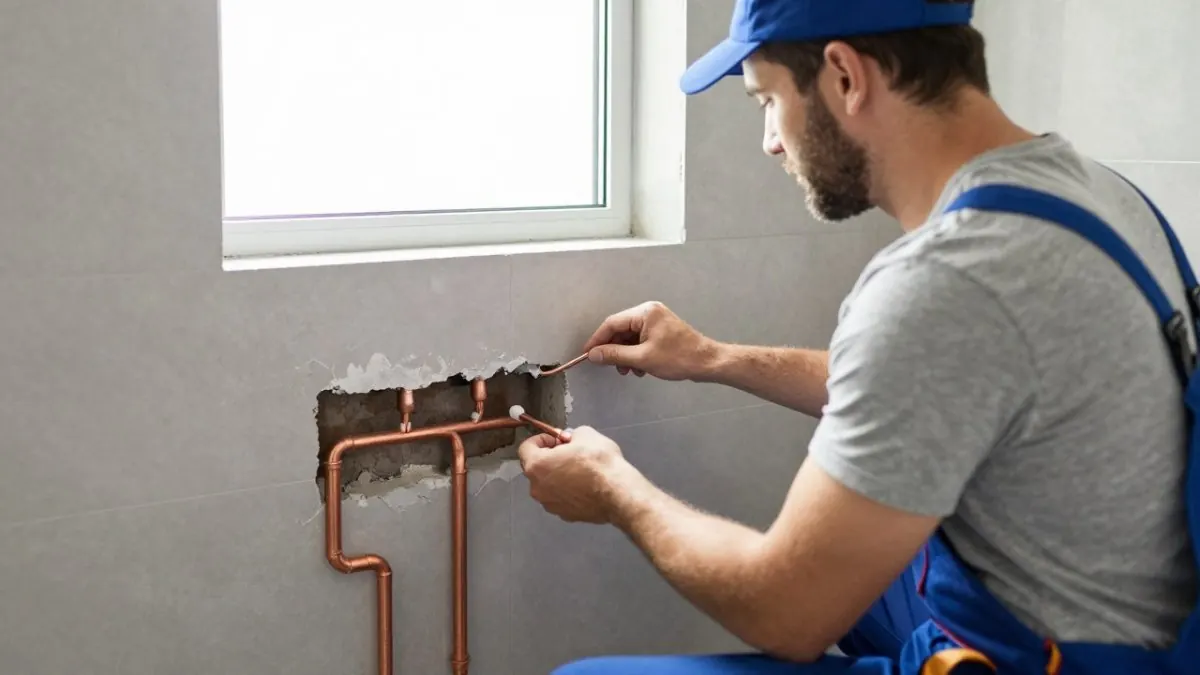
The most common inspection stages are:
- Underground or slab inspection: drain and water lines in trenches or under a slab, before backfill or concrete pour.
- Rough-in inspection: all piping, vents, and connections in open walls or floors, before insulation and drywall.
- Gas pressure test: gas piping capped and pressurized, often combined with the rough-in or a separate inspection.
- Final inspection: fixtures set, water on, drains tested, and the system operating.
Timing matters more than most homeowners expect. Rough-in inspections must happen while the piping is still exposed.
Common reasons work fails inspection:
- Incorrect or inconsistent drain slope
- Improper venting, including missing or incorrectly sized vents
- Loose or unsupported pipe
- Fixtures installed without accessible shutoff valves
- Work that does not match the approved plans
- Missing cleanouts at required locations
- Untested or improperly tested gas lines
If an inspection fails, the inspector issues a correction notice listing each item.
Watch out: Do not cover rough-in work to keep the schedule on track. A failed or missed rough-in inspection is far more expensive to resolve after drywall than the few days of delay it costs to wait for the inspector.
Plumbing Work Without a Permit: Risks and Fixes
Unpermitted plumbing work can create real problems. It can void homeowner's insurance coverage if a related claim is denied, lead to fines, complicate a home sale, and create safety hazards that nobody has checked.
If you discover unpermitted work, take these steps:
- Do not panic. Document the work with photos.
- Contact the building department to learn the retroactive permit process.
- Hire a licensed plumber to evaluate the work.
- Expose and correct any code violations the inspector identifies.
- Pull the retroactive permit and pass the required inspections.
Some departments allow retroactive permits. Others may require the work to be opened up for inspection. Either way, legalizing the work is usually far cheaper than the risk of leaving it in place.
For a burst pipe or active leak in unpermitted work, shut off the main water supply first, then call a licensed plumber. You can use these temporary fixes for a burst pipe while you wait for professional repair.
Schedule Your Permitted Plumbing Project With Rich's
A permitted project protects your home, your investment, and your insurance. Rich's Plumbing Heating & Air Conditioning has served New Jersey since 1989 as a family owned and operated business. We are licensed, bonded, and insured, and we handle permit applications and inspections as part of the job.
Ready to start? Tap to easily schedule service today with Rich's Plumbing Heating & Air Conditioning.
Frequently Asked Questions
Why do plumbing renovations require permits?
Plumbing permits let your local building department confirm that new or altered water supply, drain, vent and gas piping meets the plumbing code and safety standards. The permit triggers plan review and inspections at key stages, such as the rough-in before walls close and the final inspection before the work is approved. This protects your household from leaks, cross-connections and venting failures that can be hidden behind finished walls. Permitted work also leaves a documented record that helps with insurance claims and a future home sale. Requirements vary by municipality, so confirm with your local building department before you start.
Do I need a permit to remodel a bathroom?
In most New Jersey municipalities, you need a plumbing permit when a bathroom remodel moves, adds or replaces supply lines, drains, vents or fixtures such as a tub, shower valve or toilet location. Simply swapping a like-for-like faucet or showerhead often does not require one. Because rules differ between towns, contact your local building department with your scope of work and ask whether a permit or inspection applies. A licensed plumber familiar with local requirements can also tell you what the project needs before work begins.
What happens if plumbing work is done without a permit?
Unpermitted plumbing work can lead to fines, stop-work orders and a requirement to open finished walls so an inspector can verify the installation. Insurers may deny claims tied to water damage from non-compliant work, and unpermitted changes can complicate a home sale or appraisal. The usual fix is to apply for a retroactive permit, have the work inspected and correct any code violations found. Addressing it early is typically less costly than waiting until the problem surfaces during a sale.
How much does a plumbing permit cost?
Plumbing permit fees are set by each municipality and are often based on project scope, the number of fixtures or the estimated value of the work. Inspection and plan review fees may be charged separately. Because pricing depends on your town and the size of the project, check your local building department's fee schedule for current amounts in USD. For an estimate of the plumbing work itself, you can review pricing on the Rich's Plumbing Heating & Air Conditioning website or request a quote.