Last Updated: November 19, 2026
Quick Summary
A preventative maintenance plan for your electric water heater means shutting off power, flushing the tank to clear sediment, testing the T&P valve, and inspecting the anode rod once a year. Sediment, corrosion, and a tired heating element show warning signs long before the tank leaks, so this yearly routine protects the tank and keeps efficiency steady.
- Flip the breaker to OFF and confirm power is dead with a non-contact voltage tester before touching anything.
- Never drain a tank while the power is on, because a dry heating element can burn out in seconds.
- Flush the tank once a year, or every six to nine months in hard-water homes.
- Replace the anode rod when it is more than half consumed or heavily pitted and coated.
- Call a pro for any work inside the element or thermostat panels, and never probe live terminals.
Table of Contents
- Electric Water Heater Maintenance Checklist for Homeowners
- Electric-Specific Checks: Thermostats, Heating Elements, and Circuit Breakers
- How Much Does Water Heater Maintenance Cost?
- Finding Water Heater Maintenance Near Me: What to Ask Before You Book
- A Year-Round Maintenance Calendar for Your Electric Water Heater
- Hard Water, Scald Prevention, and Other Adjustments That Protect Your Tank
- Troubleshooting After Maintenance: Noises, Leaks, and Lukewarm Water
- Schedule Your Electric Water Heater Service with Rich's
- Frequently Asked Questions
Electric Water Heater Maintenance Checklist for Homeowners
A preventative maintenance plan for your electric water heater is simpler than most homeowners expect: shut off power, flush the tank, test the safety valve, and check the anode rod once a year. Tank failures rarely happen without warning, which is why this routine matters.
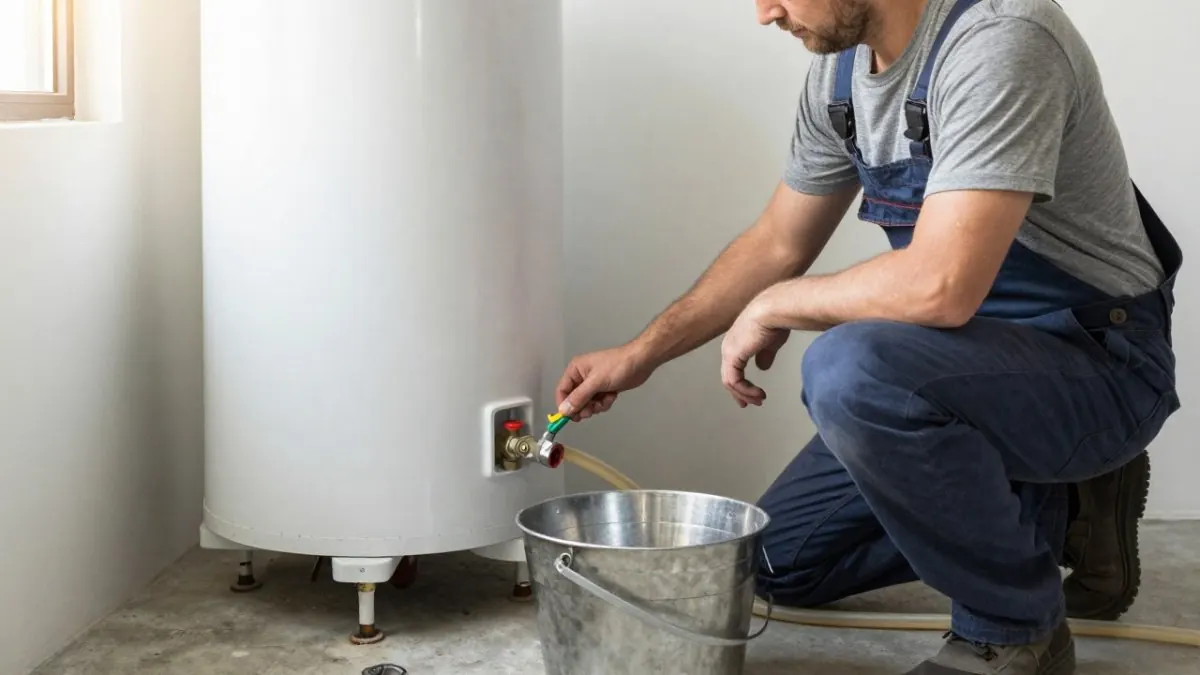
Step 1: Shut Off Power and Water Before You Touch Anything
Safety comes first, every time. Flip the breaker that feeds the water heater to OFF, then confirm the power is dead with a non-contact voltage tester. For extra protection, turn off the cold-water supply valve on top of the tank. Never drain a tank while the power is on: a dry heating element can burn out in seconds. If you are unsure which breaker controls the heater, switch off the main breaker and call a licensed pro rather than guessing.
Step 2: Drain and Flush the Tank to Clear Sediment Buildup
Sediment is the quiet killer of electric water heaters. Minerals settle on the tank floor, insulate the lower element, and force the heater to work harder. Attach a garden hose to the drain valve, run it to a floor drain or outside, and open the valve. Let the tank empty, then open the cold-water supply briefly to stir up remaining sediment. Repeat until the water runs clear. Flushing the tank once a year is an effective way to protect your storage tank and keep energy efficiency steady.
Step 3: Test the T&P Valve and Inspect the Anode Rod
The temperature-and-pressure relief valve is your tank's emergency release. Lift its lever and confirm water flows freely, then let it snap back and stop. If it drips afterward or stays stuck, replace it. Next, the sacrificial anode rod: this metal rod attracts corrosion so your tank does not. Pull it and inspect it. If it is heavily pitted or coated in calcium, swap it out.
Electric-Specific Checks: Thermostats, Heating Elements, and Circuit Breakers
Electric water heaters can fail differently than gas units, and the checks below help identify some common electric-specific problems. The key distinction is between what a homeowner can safely inspect and what requires a licensed electrician or plumber working under a permit. Most manufacturers and electrical codes treat the interior wiring, element terminals, and thermostat contacts as live-electrical work once the breaker is back on, so plan your checks around that boundary.
Start with the breaker and the disconnect
Before any interior check, confirm the breaker size and type match the data plate on the tank, a common pattern is a double-pole 30-amp breaker for a 4,500-watt element pair, but your model's label is the authority. Look for heat discoloration, a loose breaker-to-bus connection, or a breaker that trips repeatedly after reset. A breaker that trips only when the tank calls for heat usually points to a failing element or a shorted thermostat, not the breaker itself.
Thermostat checks: what to look for without opening the panel
On most residential electric tanks, the upper thermostat controls the lower element through a sequence: it heats the top of the tank first, then switches power to the lower thermostat and element. Symptoms of a bad upper thermostat include no hot water at all, hot water that runs out unusually fast, or the reset button tripping repeatedly. A bad lower thermostat often shows up as lukewarm water or a tank that recovers slowly.
Heating element inspection
Elements scale up and crack over time, especially in hard water. Visible signs include a bulged or blistered element, heavy calcium crust, or a burned terminal. A failed element usually produces no hot water (upper) or lukewarm water that recovers slowly (lower). Testing an element means disconnecting power, isolating the element terminals, and checking resistance against the model's specified range, a task that requires a multimeter and comfort working inside the wiring compartment.
When to call a professional
Call a licensed electrician or plumber for any check that requires opening the element or thermostat panels, probing live terminals, replacing a breaker, or working on a tank whose data plate or manual you cannot locate. The same applies if you smell burning, see scorch marks, or the breaker will not stay reset.
Watch out: never probe thermostat or element terminals with the breaker on, and never assume the power is off just because the tank is quiet, confirm with a non-contact voltage tester at the element terminals before touching anything.
How Much Does Water Heater Maintenance Cost?
Water heater maintenance cost depends on what you need done. A basic flush and inspection is one tier; adding anode rod replacement, element testing, or thermostat work moves you up. Pricing depends on the scope of work and your system's condition. For current pricing or a quote, visit the Rich's Plumbing Heating & Air Conditioning pricing page. Keeping costs predictable starts with routine care, and water heater maintenance tips can help you spot small issues before they call for more extensive work.
Finding Water Heater Maintenance Near Me: What to Ask Before You Book
Before you book, ask four questions. First, are you licensed and insured? Second, does the visit include a full tank flush or just a look? Third, will you test the T&P valve and inspect the anode rod? Fourth, do you provide a written estimate before starting? Skip anyone who quotes a price sight unseen or rushes you into a replacement. A maintenance visit should leave you with a clear record of what was checked and what needs watching.
A Year-Round Maintenance Calendar for Your Electric Water Heater
A calendar is only useful if it reflects your water, your model, and how hard the tank works. The schedule below is a starting point, not a rulebook: manufacturer guidance in your owner's manual overrides it, and local water conditions can shorten or stretch the intervals. Treat the monthly column as quick visual checks, the annual column as the core service tasks, and the as-needed column as triggers that reset the clock.
| Interval | Task | Why it matters |
|---|---|---|
| Monthly | Look for moisture, rust streaks, or corrosion at fittings and the tank base; listen for new popping or rumbling | Early leaks and sediment noise are cheapest to fix before they spread |
| Monthly | Confirm the breaker is not tripping and the tank is not unusually warm | Repeated trips point to an element or thermostat problem |
| Every 6-12 months | Test the T&P valve by lifting the lever and confirming it reseats | A stuck valve is a safety failure, not a maintenance nuisance |
| Annually | Drain and flush sediment from the tank | Sediment insulates the lower element and shortens tank life |
| Annually | Inspect the anode rod; replace if heavily pitted or coated | The rod sacrifices itself so the tank does not rust |
| Annually | Check the thermostat setpoint against a faucet thermometer | Drift wastes energy and can scald |
| As needed | Flush sooner in hard-water homes or after a water-quality change | Mineral content drives sediment and anode wear |
| As needed | Replace the anode rod when it is more than half consumed | Waiting until it is gone means the tank starts corroding |
| As needed | Call a pro after any leak, repeated breaker trip, or no-hot-water event | These are diagnostic events, not routine maintenance |
Adjusting the calendar to your water and model
Hard water is the biggest variable. Homes with high mineral content often need flushing every six to nine months rather than annually, and the lower element and anode rod wear faster. If your water leaves scale on fixtures, assume the tank is seeing the same load. To judge whether upkeep or replacement makes more sense, see what the average water heater lifespan is.
Seasonal timing that actually fits the work
Spring and fall are practical anchors because the weather is mild and a drained tank is less disruptive. Schedule the annual flush and T&P test in spring, the anode inspection in fall, and use the monthly checks as a five-minute walkaround.
Watch out: if the tank will not refill after a flush, or a valve drips after testing, stop and diagnose before restoring power, running a dry element can destroy it in seconds.
Hard Water, Scald Prevention, and Other Adjustments That Protect Your Tank
Hard water accelerates mineral deposits, so homes with heavy mineral content should flush more often and watch the lower element closely. Set your thermostat to a safe temperature to prevent scalding, especially in homes with kids or older adults. Lower settings also slow sediment baking onto the element. Inspect the tank exterior, pipes, and connections for corrosion or moisture each season, and follow the manufacturer instructions for your model to keep the warranty valid. Small adjustments now prevent unexpected breakdowns later.
Troubleshooting After Maintenance: Noises, Leaks, and Lukewarm Water
Some issues show up right after service, and most are easy to sort out. Popping or rumbling usually means trapped air or leftover sediment. If your heater is still not producing hot water, our step-by-step guide on troubleshooting no hot water walks you through it. If you spot dripping after servicing the tank, this guide to stopping a water heater leak fast covers the first moves.
Watch out: if you smell gas or see standing water near electrical components, stop and call a professional immediately.
Schedule Your Electric Water Heater Service with Rich's
Keeping up with preventative maintenance tips for electric water heaters protects your tank, your wallet, and your hot showers. If you are weighing a failing unit, an emergency repair vs replacement guide can help you decide before you call.
Your electric water heater works hard all year, and a little preventive care keeps it running quietly and efficiently. If maintenance feels like more than you want to tackle, or you are due for a professional inspection, we are ready to help.
Frequently Asked Questions
Is there a recommended maintenance schedule for an electric water heater?
Most manufacturers recommend flushing the tank once a year to clear sediment, testing the T&P valve every six months, and checking the anode rod annually. Inspect the thermostat and heating elements if you notice lukewarm water or unusual noises. A qualified technician can handle the electrical checks safely. Following a consistent electric water heater maintenance checklist extends the unit's service life and helps avoid unexpected breakdowns.
How often should an electric water heater be flushed?
Flush your electric water heater once a year in most homes. If your water supply is hard or has high mineral content, flush every six months to prevent sediment buildup from insulating the heating elements and driving up energy costs. Draining and refilling the tank takes about an hour and is the single most effective step in any preventative maintenance routine.
What does water heater maintenance cost?
Water heater maintenance cost varies by service and provider. Pricing depends on the scope of work, parts needed, and your system's condition. For current pricing or a quote, visit the Rich's Plumbing Heating & Air Conditioning pricing page.
When should I call a plumber instead of doing maintenance myself?
Call a licensed plumber for anything involving the electrical panel, heating element replacement, thermostat testing with a multimeter, or if you spot corrosion on the tank exterior or water pooling near the base. If you're searching for water heater maintenance near me, verify the company is licensed and insured, ask about response times, and confirm they handle electric models specifically.