Last Updated: November 18, 2026
Quick Summary
Yes, older homes qualify for heat pump tax credits because the federal credit rewards efficiency, not construction year. The credit equals 30 percent of eligible costs, capped at $2,000 for air-source heat pumps, and the home must be an existing home you own and use as a residence.
- The equipment must be new, meet efficiency standards, and be placed in service during the tax year you claim.
- The manufacturer, not the IRS, certifies which models qualify, so get that certification in writing.
- Insulation and air sealing qualify at 30 percent of cost, capped at $1,200 per year.
- The credit follows the install-and-ready date, so a January install belongs to the later tax year.
- Check the electrical panel, ductwork, air sealing, and insulation before installing a heat pump.
Table of Contents
- How Federal Heat Pump Tax Credits Work for Older Homes
- Heat Pump Tax Credit Requirements Every Homeowner Should Check
- Credit Amounts, Annual Limits, and the $2,000 Heat Pump Cap
- The List of Heat Pumps That Qualify for Tax Credit
- Heat Pump Tax Credit 2026: Rules by Tax Year and What Changed
- The Tax Credit for Insulation 2026 and Other Envelope Upgrades
- Older-Home Retrofitting Checklist Before You Install
- Schedule Your Heat Pump Assessment and Installation
- Frequently Asked Questions
How Federal Heat Pump Tax Credits Work for Older Homes
Yes, older homes qualify for heat pump tax credits, and the age of your house is not a disqualifier. The federal credit under Section 25C rewards efficiency, not construction year. This guide from Rich's Plumbing Heating & Air Conditioning breaks down how heat pump tax credits for older homes actually work, where the rules trip people up, and what to fix before you buy equipment.
The credit is a federal income tax credit, not a rebate. You buy and install a qualifying system, then claim it on your return. The IRS guidance on the Energy Efficient Home Improvement Credit confirms the credit equals 30 percent of eligible costs, capped by equipment type.
So what does that mean in plain terms?
- You must own the home and use it as a residence.
- The equipment must be new and meet efficiency standards.
- The home must be an existing home, not new construction (Energy Efficient Home Improvement Credit).
- The system must be placed in service during the tax year you claim.
A common mistake is assuming an old house automatically fails the efficiency test. It doesn't. The equipment carries the standard, not the house.
Heat Pump Tax Credit Requirements Every Homeowner Should Check
The short answer: check three things before you sign a contract. The equipment must be certified, the home must qualify, and you must be the taxpayer claiming it.
Efficiency Standards and Manufacturer Certification
Not every heat pump on the market qualifies. The unit must meet the efficiency thresholds set for its category. The manufacturer must certify that the model qualifies. Ask for that certification in writing before installation.
What most guides miss is this: a great heat pump installed in a leaky, drafty older home can underperform and still technically qualify for the credit. The credit follows the equipment, but your comfort follows the whole system.
Which Homes and Taxpayers Qualify
The rules are narrower than most people expect. Here is the practical breakdown:
- Primary residence: qualifies.
- Secondary residence: may qualify for some improvements, but rules differ by category.
- Renters: generally cannot claim the credit.
- New construction: does not qualify, because the home must be an existing home.
- Landlords: generally cannot claim it for rental units.
If you are weighing a heat pump against a furnace, our team explains the trade-offs in Heat Pump vs Furnace: Which Wins for Your Home? so you can confirm the system fits before you chase credits.
Credit Amounts, Annual Limits, and the $2,000 Heat Pump Cap
Here is where the math gets specific. The credit is calculated on eligible costs, but caps apply per category and per year.
| Item | Credit Rate | Annual Cap |
|---|---|---|
| Heat pump (air-source) | 30% of cost | $2,000 |
| Heat pump water heater | 30% of cost | $2,000 |
| Insulation and air sealing | 30% of cost | $1,200 |
| Electrical panel upgrade | 30% of cost | $600 |
| Overall annual limit | 30% of cost | $3,200 |
Annual Cap
Check the current IRS guidance for the annual limits that apply to heat pumps and other qualifying improvements.
Eligible costs include the equipment purchase price and qualifying labor and installation costs. Keep every itemized invoice. Keep documentation for your records, and check the current IRS instructions for the form you file with your return.
The List of Heat Pumps That Qualify for Tax Credit
There is no single federal list you can download, and that surprises people. The reason is structural: qualification is model-specific, and the manufacturer, not the IRS, certifies which units meet the efficiency thresholds for their category. The IRS relies on that manufacturer certification, which is why your paperwork matters more than any online list.
What the manufacturer is actually certifying is that the model meets the applicable efficiency standard for its category. For air-source heat pumps, that generally means meeting the threshold for the equipment type and capacity, and for heat pump water heaters it means meeting the standard for that category. The exact thresholds are set in the tax rules and updated over time, so check current guidance for the requirements that apply to your system.
What to ask for before you sign:
- The exact model and serial number in writing, not just a family name.
- The manufacturer's certification statement confirming the model qualifies.
- Confirmation that the unit meets the efficiency threshold for its category and capacity.
- The placed-in-service date on the invoice or completion document.
A common pattern in older homes is a contractor who quotes a high-efficiency model verbally, then substitutes a different model at install because of supply or sizing. That substitution can quietly move you to a non-qualifying unit. Watch out: make the model number part of the contract, and verify the installed unit matches before you pay the final invoice.
This is also where the older-home angle diverges from the generic advice. A unit can qualify for the credit and still be a poor fit for your house. The credit follows the equipment, but comfort follows sizing, ductwork, and the building envelope. A model that meets the efficiency standard but is oversized for a leaky, poorly sealed older home will cycle, underperform, and leave you blaming the equipment for a house problem. That is why the checklist below matters as much as the certification statement. Because ductwork and air leakage can shape whether a heat pump performs as intended, Central Duct Testing belongs alongside envelope checks when you assess the home’s needs.
If a contractor hesitates to put the model number and certification in writing, treat that as a signal to slow down. The documentation is not a formality; it is the evidence that supports the credit on your return.
Heat Pump Tax Credit 2026: Rules by Tax Year and What Changed
The credit is not a single permanent number. It is a set of rules that Congress has revised, extended, and restructured over time, and the rules that apply to your project are the ones in effect for the tax year in which your system is placed in service. That phrase does the heavy lifting, so start there.
Placed in service means the equipment is installed, connected, and ready to operate, not merely purchased or delivered. A common pattern is a homeowner who buys a heat pump in late December, has it installed in January, and then claims the credit on the earlier return. That is generally the wrong year. The credit follows the install-and-ready date, so the deduction belongs to the later tax year. If you are close to year-end, ask your installer for the date the system was fully operational and keep that documentation with your invoice.
Here is how the rules have changed in broad strokes: the credit has been revised and extended over time, so the rules that apply depend on the tax year of installation. Confirm the current framework with the IRS before you file.
Watch out: do not assume that because a contractor quotes you a credit amount in 2026, the same terms will apply if the job slips into 2027. IRS guidance, form instructions, and the list of qualifying equipment are updated over time, and a model that qualifies this year can be superseded. Confirm the rules for the tax year your system is actually placed in service, and check the current IRS guidance before you file.
A practical habit: save a dated folder for each project with the signed contract, the itemized invoice showing equipment and labor separately, the manufacturer certification statement, and the install completion date. If the rules shift or the IRS asks questions, that folder is what lets you defend the year and the amount you claimed.
The Tax Credit for Insulation 2026 and Other Envelope Upgrades
The tax credit for insulation 2026 pairs well with a heat pump, and older homes usually need it. Insulation, air sealing, and some envelope upgrades qualify at 30 percent of cost, capped at $1,200 per year.
Why bother? Because a tight, well-insulated house lets a heat pump run less to hold the same temperature. You get the credit and lower bills.
For a deeper walkthrough on tightening up an old house, see How Do You Improve Home Insulation for Energy Efficiency?. Skipping air sealing before a heat pump install can leave the system working harder than it should.
Older-Home Retrofitting Checklist Before You Install
Older homes need prep work before a heat pump goes in. Here is the checklist we walk homeowners through.
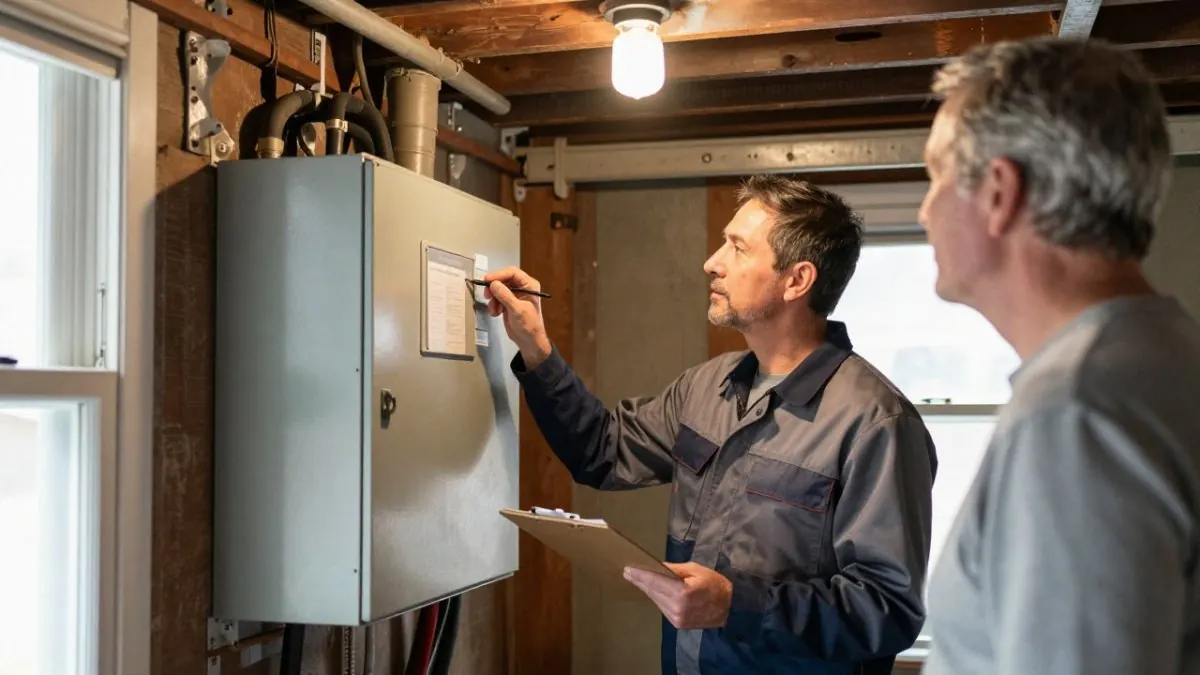
- Check the electrical panel has capacity for the new system.
- Inspect ductwork for leaks, sizing, and insulation.
- Air seal gaps around windows, doors, and rim joists.
- Confirm insulation levels in the attic and walls.
- Verify the outdoor unit has clear space and proper drainage.
- [ ]
Duct and efficiency issues in an older house can undercut a new heat pump. Our guide on how to improve central air efficiency in older homes covers the fixes that matter most before installation.
If you are still deciding whether a heat pump suits your house at all, read Heat Pumps for Older Homes in New Jersey: Worth It? before you commit.
Schedule Your Heat Pump Assessment and Installation
The credit is worth chasing, but only if the system is sized and installed correctly. A rushed install can cost you comfort and undercut the savings the credit was meant to deliver.
Before you book, get a clear picture of what replacement runs. Check our HVAC system replacement cost guide or request a quote for current pricing.
At Rich's Plumbing Heating & Air Conditioning, we are family owned and operated, licensed, bonded, and insured, and we have served New Jersey since 1989. We offer estimates on most services, a fast response time for urgent needs, and a 100 percent satisfaction guarantee. Our team handles heat pump assessments and installation.
Tap to easily schedule service today!
An older home can absolutely qualify for heat pump tax credits, but the paperwork and the prep work both matter. Get the certification in writing, keep your invoices, and fix the house before the equipment goes in. If you want a straight answer on whether your home is ready, our licensed team can assess it and give you a clear estimate before you commit.
Frequently Asked Questions
Do older homes qualify for heat pump tax credits?
Yes. Older homes are not excluded by age alone. What matters is that the equipment meets the applicable efficiency requirements, is installed in an existing home you use as a residence, and is placed in service during the tax year. Keep your manufacturer certification and itemized invoice, and check current IRS guidance for how to claim the credit.
What are the heat pump tax credit requirements?
The main heat pump tax credit requirements generally involve the unit meeting applicable efficiency standards, installation in an existing home used as a residence, and placement in service in the tax year you claim. Keep the manufacturer certification statement and an itemized invoice, and confirm current requirements with the IRS.
Is the heat pump tax credit still available in 2026?
Credit availability and limits for 2026 depend on current federal rules, which can change by tax year. Confirm the current rules with a tax professional or the IRS before filing.
Can I claim the heat pump tax credit if I replace an existing HVAC system?
Yes. Replacing an existing furnace or air conditioner with a qualifying heat pump can qualify. The new unit must meet the applicable efficiency requirements and be placed in service in the tax year you claim. Keep the itemized invoice and manufacturer certification, and check current IRS guidance for the limits that apply.