Table of Contents
- Start With Your Household Size and Daily Hot-Water Habits
- Water Heater Size by Family Size: A Practical Capacity Chart
- First-Hour Rating: The Number That Actually Predicts Performance
- 40 Gallon vs 50 Gallon Water Heater: Which Fits Your Household?
- Tankless Water Heater Sizing: Flow Rate and Temperature Rise
- Heat-Pump and Replacement Sizing: Verify Before You Buy
- Frequently Asked Questions
Last Updated: October 21, 2026
Start With Your Household Size and Daily Hot-Water Habits
Picking the right water heater size starts with two numbers: how many people live in your home, and how much hot water they use at once. Homeowners buy by tank gallons alone and ignore peak demand.
The U.S. Department of Energy's guide to water heating puts it plainly: sizing should match your household's actual hot-water use, not the biggest tank on the shelf.
Count Occupants and Bathrooms, Not Just Bedrooms
Bedrooms tell you nothing about hot-water demand. People and fixtures do.
- Add one person per bedroom, plus any long-term guests
- Count every full bathroom with a shower or tub
- Note extra fixtures: a second dishwasher, a hot-tub, a laundry room
A three-bedroom house with two full baths and four occupants needs more capacity than the same house with one bathroom and two people.
Map Your Peak Hour: Showers, Dishwasher, and Washing Machine
Peak demand is the busiest 60 minutes of hot-water use in your home. Most families hit it in the morning.
Here's a simple worksheet. List what runs at the same time:
- Shower 1: ___ minutes
- Shower 2: ___ minutes
- Dishwasher cycle: ___ (yes/no)
- Washing machine load: ___ (yes/no)
- Sink use: ___ minutes
If two showers, the dishwasher, and a laundry load all overlap, you have a high peak demand. That changes your sizing more than household count alone.
Water Heater Size by Family Size: A Practical Capacity Chart
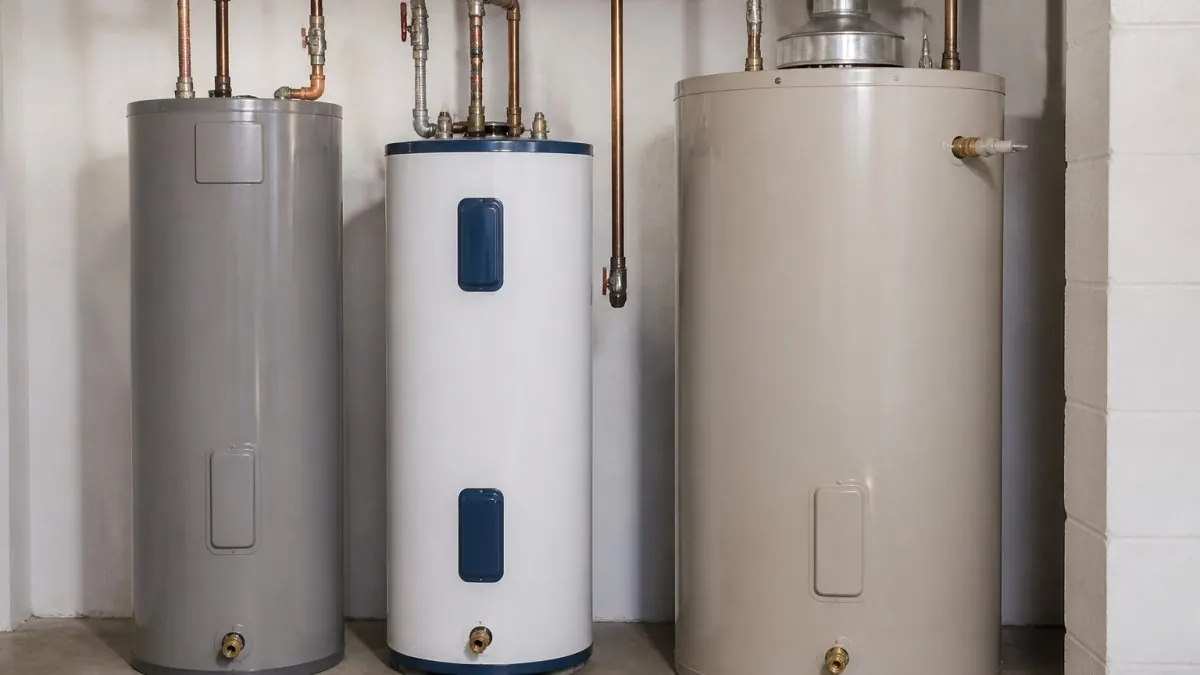
Water heater size by family size gives you a starting point, not a final answer. Use the chart below, then adjust for bathrooms and peak demand.
| Household Size | Typical Tank Capacity | Common Use Case |
|---|---|---|
| 1-2 people | 30-40 gallons | One bathroom, light use |
| 2-3 people | 40-50 gallons | One to two bathrooms |
| 3-4 people | 50 gallons | Two bathrooms, daily laundry |
| 4-5 people | 50-66 gallons | Two-plus bathrooms, heavy mornings |
| 5+ people | 66-80 gallons | Multiple simultaneous showers |
These are general ranges, not rules. A two-person household with a soaking tub and a hot-tub can outrun a four-person home with quick showers.
First-Hour Rating: The Number That Actually Predicts Performance
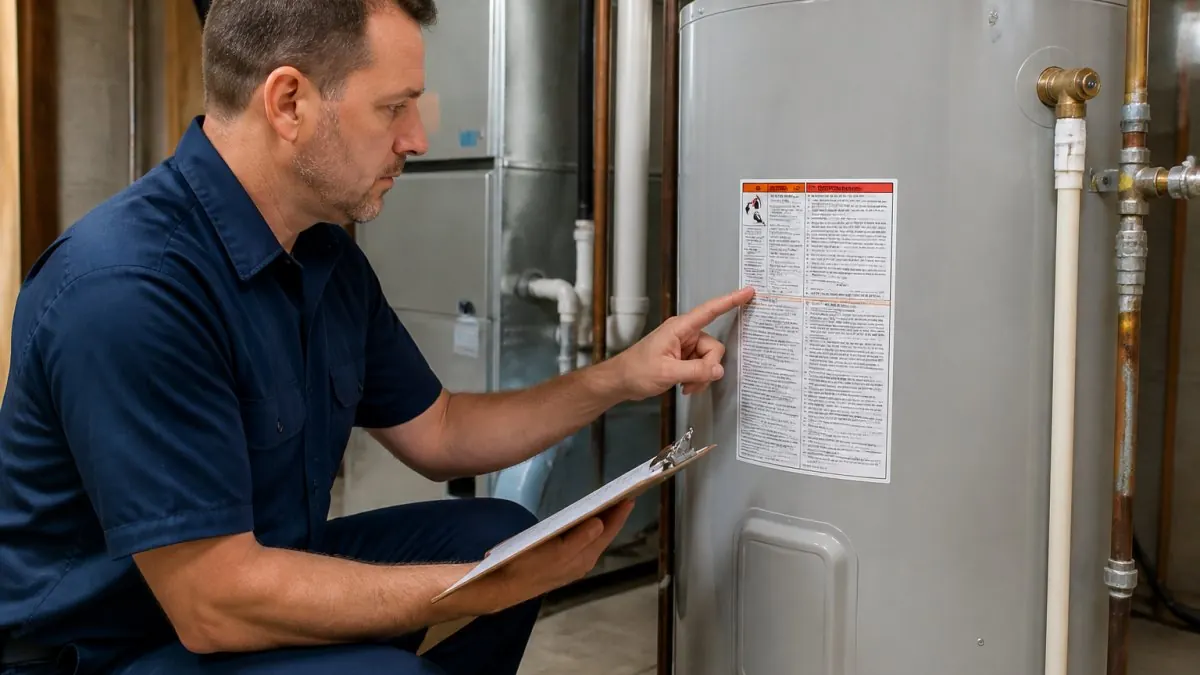
The first-hour rating (FHR) is the gallons of hot water a tank can deliver in its busiest hour, starting full. It's the single best performance number on the label.
Tank gallons tell you storage. FHR tells you what you'll actually get. A 50-gallon tank with a strong burner can beat a 66-gallon tank with a weak one.
Recovery Rate and Temperature Rise Explained
Recovery rate is how fast the heater reheats after you draw water. It depends on heating capacity (BTU for gas, watts for electric) and temperature rise, the gap between incoming cold water and your set temperature.
- A bigger temperature rise means slower recovery
- Cold groundwater makes the heater work harder
- Gas heaters usually recover faster than standard electric resistance models
Match FHR to your peak-hour worksheet. If your peak needs 60 gallons, a heater rated near 60 FHR fits.
40 Gallon vs 50 Gallon Water Heater: Which Fits Your Household?
The 40 gallon vs 50 gallon water heater question comes down to bathrooms and people. A 40-gallon tank suits one to two people with one bathroom. A 50-gallon tank fits three to four people with two bathrooms and regular laundry.
Here's how we'd decide:
- Choose 40 gallons for a couple, one bath, low peak demand
- Choose 50 gallons for a family of three or four, two baths, morning overlap
- Go bigger if you have a soaking tub, hot-tub, or five-plus occupants
Check the physical space too. A 50-gallon tank is taller and wider than a 40, and it needs clearance for installation and venting.
Tankless Water Heater Sizing: Flow Rate and Temperature Rise
Tankless water heater sizing works differently. You size by flow rate in gallons per minute (GPM) and temperature rise, not tank gallons. A tankless unit's capacity is not a single number, it is a curve: the unit can deliver its rated maximum GPM only at a small temperature rise, and less flow as the rise increases.
Step 1: Add Up Simultaneous Fixture Flow
List the fixtures that can run at the same time and add their flow rates:
- Standard shower: about 2.0-2.5 GPM
- Kitchen faucet: about 1.5 GPM
- Bathroom faucet: about 1.5 GPM
- Dishwasher: about 1.5 GPM
- Washing machine: about 2.0 GPM
Two showers plus a kitchen faucet can hit 6.5 GPM or more. That is your required flow at the temperature rise you need.
Step 2: Calculate Temperature Rise
Temperature rise is your set-point temperature minus the incoming groundwater temperature. If you set the heater to 120°F and groundwater is 50°F in winter, the rise is 70°F. In summer, groundwater might be 65°F, so the rise is only 55°F. The same unit delivers more hot water at the smaller rise.
Step 3: Read the Unit's Flow-Capacity Chart
Every tankless manufacturer publishes a chart or table showing GPM at various temperature rises. A unit rated at 8 GPM might deliver that 8 GPM only at a 35°F rise; at a 70°F rise it may deliver only 4-5 GPM. To size correctly:
- Find your required GPM from Step 1
- Find your worst-case temperature rise from Step 2 (use the coldest groundwater month)
- Check the chart to confirm the unit delivers your required GPM at that rise
If the chart shows less flow than you need, either choose a larger unit or plan to stagger fixtures so they do not all run at once.
Step 4: Adjust for Cold Incoming Water and Seasonal Groundwater
Colder incoming water needs a bigger temperature rise, which cuts flow. In winter, groundwater runs colder, so a tankless unit rated for a warm climate may fall short on a freezing morning. Size for your coldest season, not your mildest. A common pattern is to use the January groundwater temperature for your region as the design condition.
ENERGY STAR's guidance on tankless and heat-pump water heaters explains how efficiency ratings shift with climate and use.
Heat-Pump and Replacement Sizing: Verify Before You Buy
Heat-pump water heaters save energy but recover more slowly, so they often need a larger tank or a lower peak demand to keep up. They also need space and airflow.
For a replacement, verify before you buy:
- Measure the old tank's height, width, and connections
- Confirm fuel type and venting
- Check the electrical panel for a heat-pump unit
- Compare the new FHR to your peak-hour worksheet
A like-for-like swap is safest. Changing fuel type or size can trigger new installation requirements. A licensed pro can confirm the fit before anything is ordered.
Sizing a water heater is one thing. Getting it installed right, with the venting, connections, and code details handled, is another. Rich's Plumbing Heating & Air Conditioning brings over 30 years of family-owned experience, licensed and insured technicians, free estimates on most services, and a 100% satisfaction guarantee. We offer a fast 60-minute response time for urgent needs. Get started with Rich's Plumbing Heating & Air Conditioning and choose a water heater that fits your home the first time.
Frequently Asked Questions
Is a 40 gallon water heater enough for a family of 5?
Usually not comfortably. A 40-gallon tank typically serves two to three people well, and a family of five often runs out of hot water during back-to-back morning showers. Check the first-hour rating (FHR) on the label rather than the tank capacity alone; a 40-gallon gas unit with a strong FHR can sometimes handle four people with staggered schedules, but five usually points to a 50-gallon tank or a high-FHR unit. If you have two full bathrooms in heavy use, size up.
How do you calculate what size water heater you need?
Start with the number of occupants and bathrooms, then estimate peak-hour demand: add up the gallons used by simultaneous showers, the dishwasher, and the washing machine in your busiest hour. Match that number to a unit's first-hour rating, not its tank capacity. For tankless, add the flow rates in gallons per minute (GPM) of the fixtures you expect to run at once and confirm the unit can deliver that flow at your incoming water temperature. A licensed plumber can verify the calculation on site.
How do you size a tankless water heater for a household?
Tankless sizing uses flow rate and temperature rise, not gallons of storage. Add the GPM of the fixtures running at the same time, for example two showers at about 2.0 GPM each plus a faucet. Then find the temperature rise: your desired output temperature minus the incoming groundwater temperature. A unit rated for 9 GPM at a 35-degree rise delivers less at a 70-degree rise, which matters in colder months. Size for your coldest incoming water, not your summer average.
Does the number of bathrooms affect water heater size?
Yes. Each additional full bathroom raises the chance of simultaneous hot-water use, which pushes peak demand up. A home with two full baths usually needs a higher first-hour rating than a one-bath home with the same occupant count, because two showers can run at once. If you plan to add a bathroom or a large soaking tub, size the heater for the future layout so you are not replacing it again in a few years.