Table of Contents
- Why Pipes in an Unheated Garage Freeze
- How to Insulate Water Pipes in a Garage
- Pipe Heat Tape Installation and Safety
- Sealing Air Leaks and Keeping the Garage Door Closed
- Letting Faucets Drip and Maintaining Indoor Heat
- What to Do When Pipes Freeze
- How to Shut Off Water to Prevent Pipe Damage
- Frequently Asked Questions
Last Updated: October 18, 2026
Why Pipes in an Unheated Garage Freeze
Knowing how to prevent frozen pipes in unheated garage in New Jersey starts with one fact: an unheated garage is one of the first places pipes freeze when temperatures drop.
Water expands when it freezes (Essential Tasks After it Warms Up). That expansion puts pressure on pipe walls and joints. A burst pipe can dump hundreds of gallons into your home before you notice.
At Rich's Plumbing Heating & Air Conditioning, we see these calls spike every cold snap. Most start in garages, crawl spaces, and exterior walls.
Here is what makes a garage pipe a target:
- No heat source. The garage stays close to outdoor temperature.
- Exposed runs. Builders often leave supply lines bare along walls and ceilings.
- Drafty openings. Gaps around doors, vents, and framing pull in cold air.
- Poor insulation. Many garages have little or no wall insulation.
The good news: most garage freezes are preventable.
How to Insulate Water Pipes in a Garage
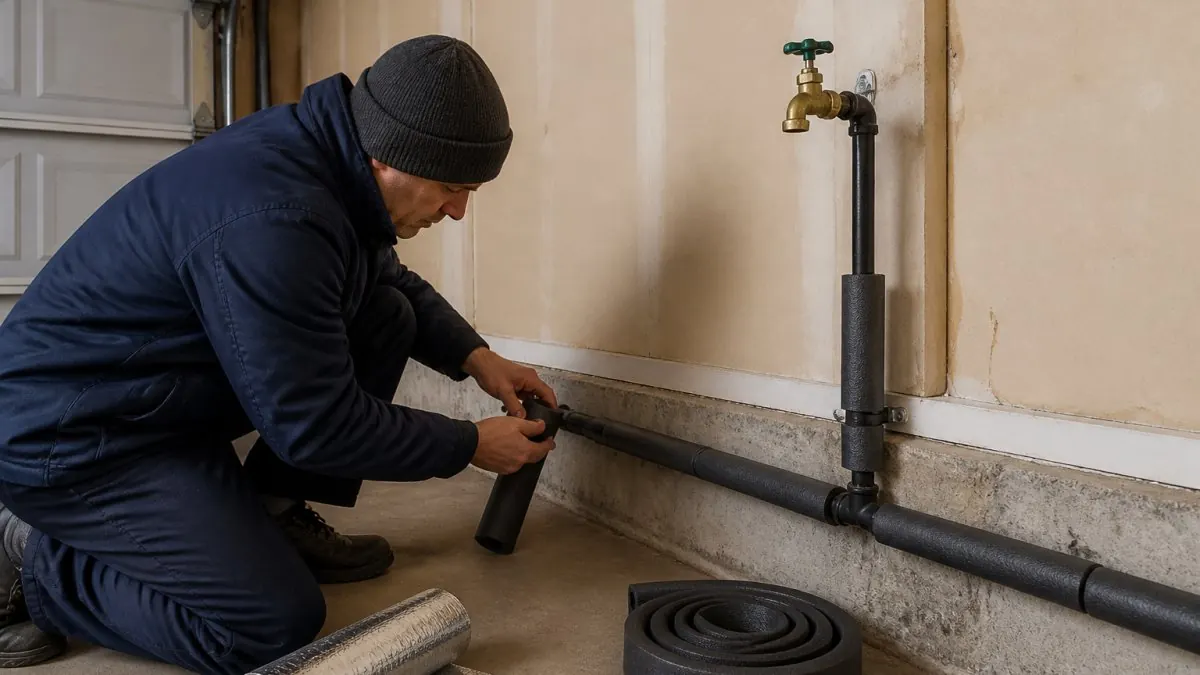
Pipe insulation is the first and cheapest line of defense. Foam pipe insulation wraps the pipe in a barrier that holds in heat and blocks cold air.
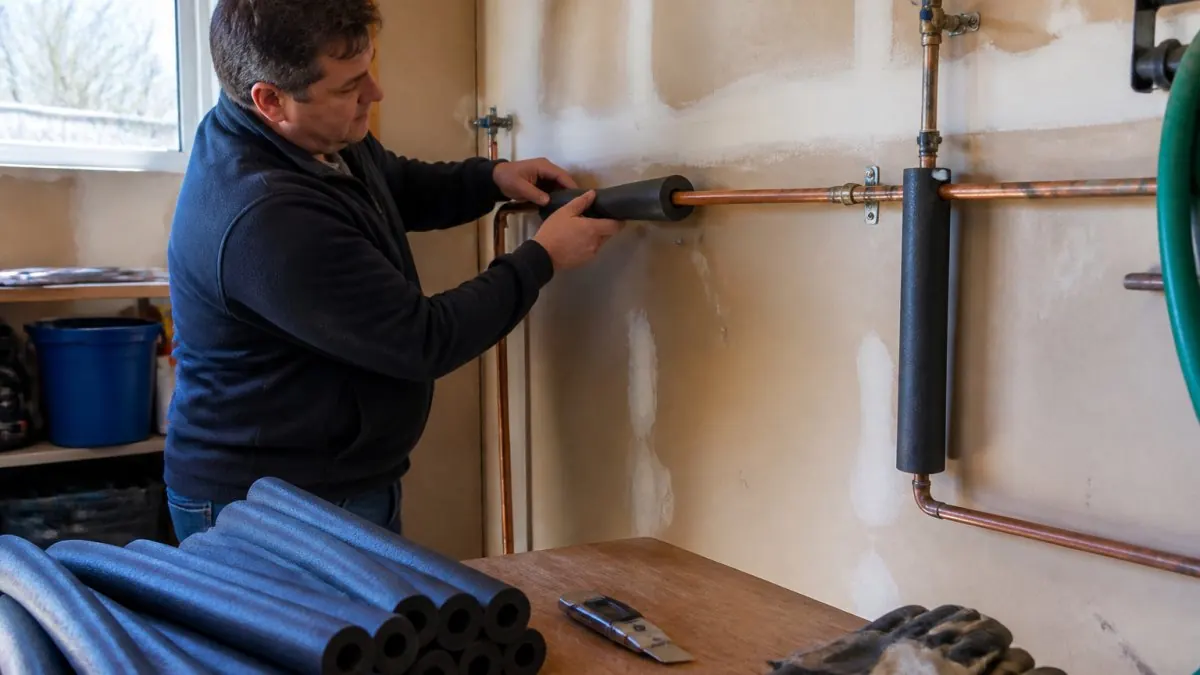
Here is how to insulate water pipes in a garage:
- Measure the pipe diameter. Match the foam sleeve to the pipe size. A snug fit matters more than a thick wall.
- Cut the sleeve to length. Use a utility knife and cut straight edges.
- Slide it on or split and snap it. Split sleeves have a self-sealing seam.
- Seal the seams. Use foil tape on every joint and seam. Gaps let heat escape.
- Cover every exposed run. Insulate elbows, tees, and corners too.
A common mistake is insulating only the straight sections. The joints and fittings are where heat leaks out and where ice forms first. Wrap them all.
Also insulate the garage walls and ceiling if you can. That keeps the whole space warmer and protects the pipes for good.
Pipe Heat Tape Installation and Safety
Heat tape adds active warmth to a pipe. It is the right move when insulation alone cannot keep a pipe above freezing, but it is also the step most likely to cause a fire or electrical shock if it is chosen or installed wrong. Treat this as a safety task, not a shopping task.
Choose the right cable type
- Thermostatically controlled cable. It switches on near freezing and off when the pipe warms, which saves energy and reduces the risk of overheating. A built-in thermostat is the single most important feature for an unheated garage.
- Self-regulating (self-limiting) cable. The most common residential type. Its output drops as the pipe warms, so it is less likely to overheat if it is accidentally crossed. Still follow the manufacturer's rule on overlap.
- Constant-wattage cable. Produces the same heat along its length and must never overlap itself. It usually needs a separate thermostat and is better left to a licensed electrician.
- Skip unlisted products. Look for a UL or ETL listing mark on the cable and the plug. Unlisted imports are a common cause of garage fires.
Match the cable to the pipe and the circuit
- Length matters. Buy cable sized to the run, not longer than you need. Do not coil excess cable on itself.
- Check the amperage. Most residential heat cable draws a small load, but a long run on a shared circuit can trip a breaker. A dedicated circuit is the safest setup.
- Use a GFCI outlet. Water and electricity need that protection. A GFCI will trip before a shock or short becomes a fire.
- Read the label for wet/dry rating. Cable rated for dry locations should not sit in a damp garage corner or against concrete that wets.
Install it correctly
- Never overlap the cable. Overlapping traps heat and can melt the cord or ignite insulation. Self-regulating cable tolerates a crossing better, but the manufacturer's instructions still govern.
- Run the cable along the pipe, not around fittings first. Tape it down with the manufacturer's approved tape, not duct tape, which can dry out and fall off.
- Cover with insulation after. Add the foam sleeve over the taped cable so heat stays at the pipe instead of the garage air.
- Plug directly into a GFCI outlet. Never use an extension cord or a power strip with heat tape.
- Do not cover the cable with rugs, boxes, or stored items. It needs air to shed heat.
Know the limits
Heat tape protects the pipe it touches, not the whole garage. If the garage drops well below freezing for days, a single cable on one run will not save a second unprotected line. Pair heat tape with pipe insulation and air sealing, and inspect the cable each fall for cracked insulation or a damaged plug. Replace any cable that shows wear, a $30 cable is not worth a garage fire.
Sealing Air Leaks and Keeping the Garage Door Closed
Cold air is the enemy. Sealing air leaks and keeping the garage door closed does more than any single product.
Start with a walk-through. On a cold, windy day, feel for drafts around:
- The bottom and sides of the garage door
- The door between the garage and the house
- Vents, pipes, and wiring that pass through walls
- Cracks in the foundation and sill plate
Seal cracks with caulk and expandable foam. Add a new bottom seal to the garage door. Weatherstrip the side gaps.
Then change habits:
- Keep the garage door closed. An open door on a 20-degree night is a direct path to a frozen pipe.
- Close the house door too. A drafty door between house and garage chills both sides.
- Block wind with a barrier. A sheet of rigid foam behind a drafty wall helps.
Letting Faucets Drip and Maintaining Indoor Heat
Let the faucet closest to the garage drip at a thin stream. Open the cabinet doors under sinks on exterior walls so warm air reaches the pipes.
Maintaining indoor heat matters just as much. Keep the thermostat set to the same temperature day and night during a cold snap.
If you leave town, do not shut the heat off. Set it to at least 55 degrees Fahrenheit.
What to Do When Pipes Freeze
A frozen pipe is not a burst pipe yet. Act fast and you can often save it. But the hardest case is a freeze during a power outage or a multi-day cold snap, when the heat tape and furnace you were counting on are both offline. Plan for that case before it happens.
First response: thaw safely
- Shut off the water. Close the main valve to stop flow and limit damage if the pipe splits.
- Open the nearest faucet. This gives melting water a place to go and tells you when flow returns.
- Warm the pipe slowly. Use a hair dryer, heat lamp, or warm towels. Work from the faucet end back toward the frozen spot.
- Never use an open flame. A torch can crack the pipe or start a fire.
- Watch for leaks. If water sprays when flow returns, the pipe has burst, shut the main valve again and call a licensed plumber.
Power outage or prolonged freeze: the contingency plan
When the furnace and heat tape lose power, the garage becomes the first room to drop below freezing. A common pattern is a freeze within the first 24 to 48 hours of an outage in an unheated garage. Have a plan:
- Shut off and drain vulnerable lines. If you expect a long outage, close the branch valve feeding the garage or outdoor spigot and open the lowest faucet to drain trapped water. A drained line cannot burst.
- Let faucets drip. A thin stream keeps water moving and relieves pressure even without heat.
- Open cabinet doors. Warm room air reaches pipes under sinks on exterior walls.
- Use safe supplemental heat. A battery-powered fan or a space heater on a generator circuit can keep the garage-adjacent wall above freezing. Keep heaters clear of anything flammable and never leave one unattended overnight.
- Do not run a generator indoors or in the garage. Carbon monoxide kills (the CDC). Place it outdoors, away from windows and doors.
- Check on the garage daily. Feel the exposed pipes. If they are cold to the touch and the forecast stays below freezing, drain the line rather than gamble.
When to call a licensed plumber
Stop and call a pro if:
- You cannot find the freeze point, or the pipe will not thaw after a reasonable attempt.
- The pipe is inside a wall, slab, or ceiling you cannot safely open.
- Water sprays when flow returns, or you see staining or swelling that suggests a hidden leak.
- The same line has frozen before, recurring freezes usually mean a routing or insulation problem a plumber should correct.
A licensed plumber has the tools to thaw safely, check for hidden damage, and recommend a permanent fix so the same pipe does not freeze again next winter.
How to Shut Off Water to Prevent Pipe Damage
Knowing how to shut off water to prevent pipe damage is a skill every homeowner should have before winter.
Find your main shutoff valve now, before you need it.
Then label it and test it once a year. A valve that will not close is useless in an emergency.
For a garage-specific setup:
- Find the branch valve. Many garages have a valve feeding the outdoor spigot or garage line.
- Drain the line. After shutting the valve, open the lowest faucet to drain trapped water.
- Disconnect outdoor hoses. A hose left connected traps water in the spigot and can crack it.
If a pipe bursts, shut the main valve first, then call for help.
A cold snap can turn an unheated garage into a frozen pipe waiting to happen.
Rich's Plumbing Heating & Air Conditioning has served New Jersey homeowners since 1989.
Frequently Asked Questions
How do I keep pipes from freezing in an unheated garage?
Start by insulating every exposed pipe with foam sleeves, then seal cracks around the garage door and foundation with caulk or expandable foam. Install thermostatically controlled heat cable on the most vulnerable sections, and keep the garage door closed during cold snaps. If temperatures drop below 20°F for extended periods, open the door to the house briefly to let warm air circulate. These steps together keep frozen pipes from forming and protect your plumbing through the winter.
Should I use heat tape on pipes in an unheated garage?
Yes, heat tape works well in an unheated garage when installed correctly. Choose a thermostatically controlled cable that turns on only when temperatures drop, and wrap it directly around the pipe before adding insulation. Never overlap the cable on itself, and always plug it into a GFCI-protected outlet. Follow the manufacturer's instructions for pipe heat tape installation and safety, and inspect the cable each fall for cracks or damage before the first freeze.
What should I do if a pipe in my garage freezes?
Shut off the main water supply first to limit damage if the pipe bursts, then open the nearest faucet to relieve pressure. Thaw the pipe slowly using a hair dryer, heat lamp, or wrapped towels soaked in hot water, working from the faucet end toward the frozen section. Never use an open flame or blowtorch. If you cannot locate the freeze point or the pipe does not thaw within a few hours, call a licensed plumber before damage spreads.
When should I call a plumber for a frozen pipe?
Call a plumber if the pipe is behind a wall, in a crawl space, or otherwise hard to reach, or if you cannot find the frozen section after a thorough search. Also call if the pipe has already burst, if water pressure stays low after thawing, or if you smell gas near a water heater. A licensed plumber can thaw the line safely and check for cracks that could leak once pressure returns.