Table of Contents
- Is Professional Sewer Line Cleaning Worth It? The Honest Answer
- What Professional Sewer Line Cleaning Actually Involves
- Sewer Line Cleaning Cost: What Drives the Price
- Hydro Jetting vs. Snaking: Which Method Fits Your Clog?
- Sewer Camera Inspection: Seeing the Problem Before You Pay
- How Often to Clean Sewer Lines (and When to Skip It)
- DIY vs. Professional Cleaning: Cost, Risk, and Long-Term Value
- Frequently Asked Questions
Last Updated: October 16, 2026
Is Professional Sewer Line Cleaning Worth It? The Honest Answer
For most homeowners with a recurring clog, a slow main line, or a sewer line full of grease and tree roots, professional sewer line cleaning is worth it. The honest answer is that it depends on what is actually blocking the pipe, not on how the drain feels on any given day. A single slow kitchen drain is often a local clog you can handle. A main sewer line that backs up every few months is a different problem, and that is where professional cleaning pays for itself.
This guide from Rich's Plumbing Heating & Air Conditioning breaks down what the service includes, what drives the price, and when you should skip it entirely. Below, we walk through the real decision points so you can stop guessing.
The key distinction most homeowners miss is simple. Clearing a blockage restores flow today. Cleaning the pipe removes the buildup that caused the blockage in the first place. Only one of those keeps you from calling again in six months.
What Professional Sewer Line Cleaning Actually Involves
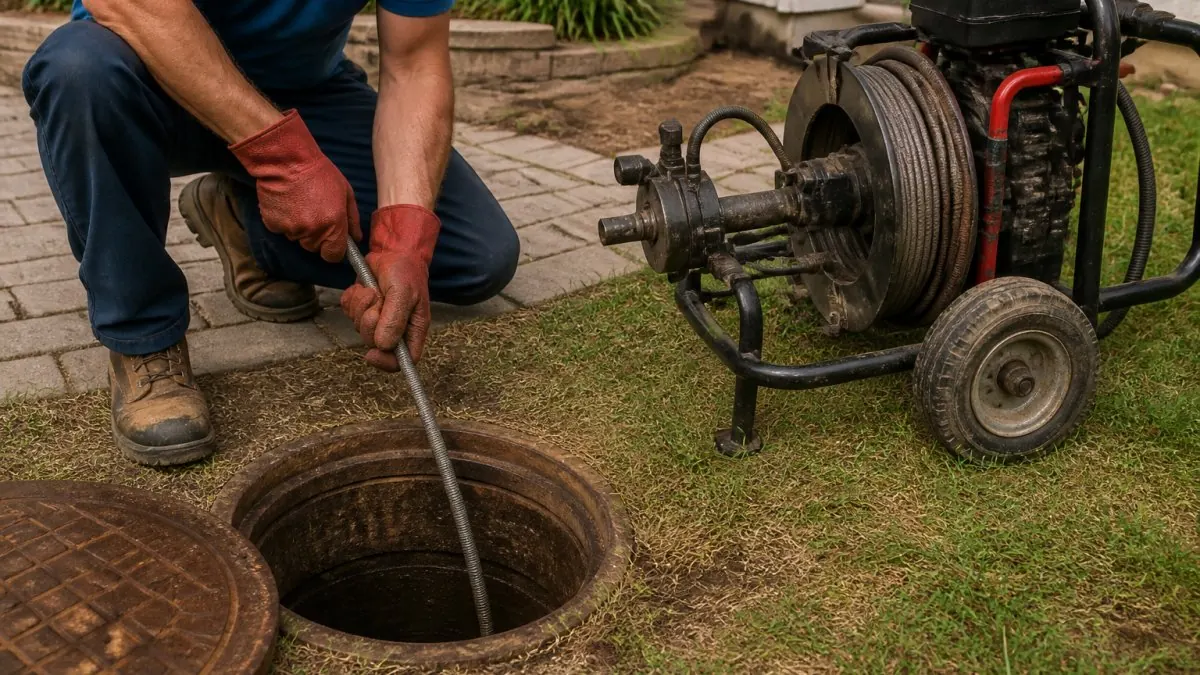
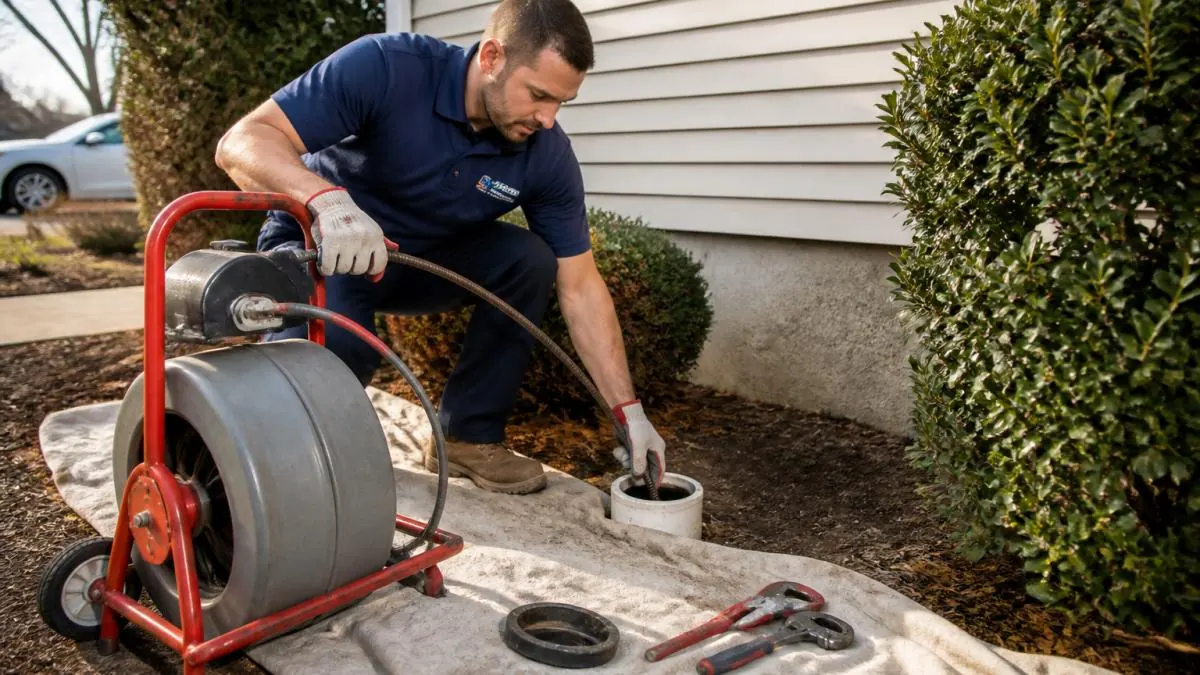
Professional sewer line cleaning is the process of removing buildup and blockages from the main sewer line using motorized equipment, then confirming the pipe is clear. It is not the same as plunging a sink. The work happens at the main line, the pipe that carries all wastewater from your home to the public sewer or septic system.
A typical service call follows a set sequence:
- Locate the cleanout access point outside or in the basement
- Run a drain snake or hydro jetting equipment through the main line
- Flush the line to clear loosened debris
- Confirm flow and check for remaining blockage
- Recommend a camera inspection if problems repeat
The difference between a patch job and real cleaning comes down to scope. A quick snake punches a hole through a clog. Proper cleaning removes the grease, soap scum, and debris coating the pipe walls. That coating is what catches future waste and starts the next clog.
Sewer Line Cleaning Cost: What Drives the Price
Sewer line cleaning cost depends on the blockage type, the length of the line, access difficulty, and the method used. There is no single flat rate, and any company quoting a number before seeing the line is guessing. Pricing varies by region, home age, and how far the blockage sits from the cleanout.
The main cost factors:
- Method: Snaking costs less than hydro jetting because it uses simpler equipment
- Access: A clear outdoor cleanout keeps labor down; a line needing excavation adds cost
- Blockage type: Grease and soap scum clear faster than dense tree roots
- Line length: A long run to the street takes more time and equipment
- Inspection add-on: A camera inspection adds to the bill but prevents guesswork
Labor costs and equipment costs make up most of the total. Emergency or after-hours calls usually run higher than scheduled visits. For an accurate figure, ask for a written estimate before work begins.
The Cost-Versus-Value Math Most Articles Skip
Here is the comparison that actually answers the keyword. Cleaning is a maintenance expense. A repair is a capital expense. They are not the same size, and that gap is where the value lives.
| Scenario | What you pay | What you avoid |
|---|---|---|
| Routine cleaning on a grease-clogged line | A single service-call fee | Repeat snaking visits every few months |
| Cleaning plus camera inspection | Service fee plus inspection add-on | Paying to clean a pipe that actually needs repair |
| Skipped cleaning, line backs up | Emergency call at premium rates | Nothing, you pay more, later |
| Skipped cleaning, pipe fails | Full excavation or line replacement | Nothing, the most expensive outcome |
The pattern most homeowners run into is repetition. One cleaning that removes buildup costs less than three emergency snaking calls in the same year. And a backup that floods a finished basement or ruins flooring and drywall adds cleanup and restoration costs on top of the plumbing bill, costs that dwarf the price of preventive cleaning.
So the honest framing is this: cleaning is worth it when the alternative is a recurring problem or a preventable failure. It is not worth it when the pipe is already broken, because no amount of cleaning fixes a collapsed or misaligned line. That is why the camera inspection matters before you approve any work.
At Rich's Plumbing Heating & Air Conditioning, we provide free estimates for most services, so you know the scope before we start. That matters when you are comparing quotes and trying to avoid surprise charges.
Hydro Jetting vs. Snaking: Which Method Fits Your Clog?
Hydro jetting and snaking solve different problems. Snaking is the right call for a single stubborn clog. Hydro jetting is the right call for a pipe lined with grease, soap scum, or roots. Choosing wrong means paying twice.
Here is how the two compare:
| Factor | Snaking | Hydro Jetting |
|---|---|---|
| Best for | Single clog, soft blockage | Grease, soap scum, roots |
| Method | Rotating cable breaks up clog | High-pressure water scours walls |
| Cleans pipe walls | No | Yes |
| Risk to old pipes | Low | Higher on fragile lines |
| Typical use | Quick unclog | Full line cleaning |
A drain snake, also called a drain auger, breaks through a blockage but leaves the pipe walls coated. Hydro jetting uses high-pressure water to strip that coating away, which is why it lasts longer on grease-heavy kitchen lines.
The catch is pipe condition. High-pressure water can damage old, cracked, or root-damaged pipes. That is why a camera inspection should come first on any home with aging plumbing.
Sewer Camera Inspection: Seeing the Problem Before You Pay
A sewer camera inspection sends a waterproof camera down the line to show what is actually happening inside the pipe. It is the single most useful step for avoiding unnecessary work. Without it, every recommendation is a guess.
What a camera inspection reveals:
- Tree roots entering through pipe joints
- Cracks, bellies, or collapsed sections
- Grease and scale buildup depth
- Offset joints or foreign objects
- The exact location of the blockage
This matters for cost control. If the camera shows a healthy pipe with a soft clog, cleaning is a straightforward fix. If it shows a collapsed line, cleaning will not solve anything and you need repair. Paying for cleaning on a broken pipe wastes money.
For homeowners who have been burned by a plumber who "just patched the problem," the camera is your proof. You see the pipe condition yourself, not a technician's summary.
How Often to Clean Sewer Lines (and When to Skip It)
There is no universal cleaning schedule, and any company that pushes annual cleaning on every home is overselling. The right interval depends on what is inside your pipe and what is around it. A healthy line in a newer home may go years without professional cleaning. A line with known root intrusion may need attention far more often.
A Frequency Framework Based on Your Actual Conditions
Use these factors to set your own interval rather than following a calendar:
- Pipe material: Older cast iron and clay pipes are rougher inside, catch debris faster, and tend to need cleaning more often than smooth PVC. A common pattern is that aging cast iron lines benefit from inspection every couple of years once they show any history of clogs.
- Tree roots: If roots have entered the line before, they will return. Lines with active root intrusion are typically the ones that need the most frequent attention, often on a recurring schedule rather than a one-time fix.
- Kitchen and grease load: A household that pours grease, oils, and food scraps down the drain builds up coating faster than one that does not. Heavy grease use shortens the interval.
- Household size and usage: More people, more laundry, and more fixtures mean more volume and more solids moving through the same pipe.
- Clog history: A line that has never clogged rarely needs scheduled cleaning. A line that clogs in the same spot repeatedly is telling you something is wrong inside the pipe.
The most reliable signal is not a number of months, it is a camera inspection. Once you know whether the pipe is smooth and clear, lightly scaled, or root-infested, you can set a realistic interval instead of guessing.
When to Skip Professional Cleaning Entirely
Skip professional cleaning if the issue is a single fixture. A slow bathroom drain or one clogged toilet is usually a local blockage, not a main line problem. Try a plunger or a hand snake first.
Also skip cleaning, and go straight to inspection or repair, if the symptoms point to a structural failure rather than a blockage. Cleaning cannot fix a broken, collapsed, misaligned, or root-crushed pipe. If you see repeated backups at the lowest drain in the home, sewage odors, or a line that drains slowly no matter how often it is cleared, the next step is a camera inspection, not another cleaning.
Match the service to the pipe, not the calendar. A line with no history of problems rarely needs scheduled cleaning. A line with tree roots needs a plan. When in doubt, inspect before you clean.
DIY vs. Professional Cleaning: Cost, Risk, and Long-Term Value
DIY drain cleaning works for small, reachable clogs. Professional cleaning wins for main line blockages, recurring problems, and anything involving roots or damaged pipe. The dividing line is where the clog sits and what caused it.
DIY works when:
- The clog is in a single sink, tub, or toilet
- A plunger or hand snake clears it
- The problem does not return
Call a professional when:
- Multiple drains back up at once
- You smell unpleasant odors from drains
- You hear gurgling drains after use
- The main line backs up into the basement
- Clogs keep returning in the same spot
The risk of DIY on a main line is real. Store-bought chemicals can damage pipes, and a hand snake cannot reach a blockage deep in the main sewer line. Professional-grade tools reach what homeowner tools cannot.
Cost versus value comes down to repetition. A cheap DIY fix that fails three times costs more than one professional visit done right. When you factor in water damage from a backup, the math favors professional service for main line problems.
That is where a licensed team earns its keep. Rich's Plumbing Heating & Air Conditioning has served homeowners for over 30 years as a family-owned and operated business, licensed, bonded, and insured, with a 60-minute response time for urgent calls and a 100% satisfaction guarantee.
Frequently Asked Questions
How often do you need to clean your sewer line?
A camera inspection can show exactly how much buildup has returned, so you can schedule based on your pipe's actual condition instead of guessing.
How much does professional sewer line cleaning cost?
Sewer line cleaning cost depends on the length of the line, the type of blockage, and whether a camera inspection is included. Simple snaking of an accessible cleanout costs less than hydro jetting a main line full of grease and roots. Rich's Plumbing Heating & Air Conditioning offers free estimates for most services, so you can get a clear number before any work begins.
Is it better to snake or hydro jet a sewer line?
Snaking is best for soft clogs like toilet paper or a single obstruction, and it's usually the cheaper option. Hydro jetting uses high-pressure water to scour grease, soap scum, and tree roots from the pipe walls, which makes it the better choice for recurring clogs or heavy buildup. A camera inspection helps determine which method your line actually needs.
Can I clean my sewer line myself?
You can handle a simple kitchen or bathroom drain clog with a plunger or hand auger. Once the blockage is in the main sewer line, DIY tools often can't reach it, and renting a commercial drum auger risks cracking older pipes. Professional cleaning uses camera inspection and professional-grade tools to clear the blockage without damaging the line.
A backed-up main line is not a problem you want to solve twice. If your drains are slow, gurgling, or backing up, the cause is usually deeper than a single fixture, and guessing wastes time and money. Rich's Plumbing Heating & Air Conditioning brings licensed, insured technicians, free estimates for most services, and a 60-minute response time to diagnose and clear the real problem. Get started with Rich's Plumbing Heating & Air Conditioning and restore flow to your sewer line the right way.