Table of Contents
- Step 1: Open Windows and Improve Ventilation
- Step 2: Control Indoor Pollutant Sources
- Step 3: How to Purify Air at Home Naturally
- Step 4: Pick the Best Air Purifier for Home Use
- Step 5: HVAC Air Filter Replacement Frequency
- Step 6: Does AC Improve Air Quality? What Your System Actually Does
- Step 7: Reduce Dust, Manage Humidity, and Measure Home Air Quality
- When to Call a Professional for Home Air Quality Problems
- Frequently Asked Questions
Last Updated: October 17, 2026
Step 1: Open Windows and Improve Ventilation
Opening windows for 10 to 15 minutes a day is the fastest way to improve home air quality. Fresh outdoor air pushes out trapped pollutants and drops carbon dioxide levels inside.
Most homes trap stale air. Cooking, cleaning, and even breathing raise indoor pollutant levels over time. A quick air exchange fixes that.
Here is how to do it:
- Open windows on opposite sides of the house to create cross-flow
- Run a window fan blowing outward to pull air through
- Do this in the morning or evening when traffic is light
- Skip it on high pollen days or wildfire smoke days
The EPA guide to indoor air quality notes that without proper ventilation, pollutant levels indoors can run higher than outdoors. That is the case for most homes.
Bathroom and kitchen exhaust fans help too. Run the kitchen fan every time you cook. Run the bathroom fan during and after showers.
Step 2: Control Indoor Pollutant Sources
Source control is the cheapest fix for home air quality problems. Stop pollutants at the source and you have less to filter later.
Common indoor pollutants include:
- Combustion gases from gas stoves and fireplaces
- Volatile organic compounds from paint, glue, and new furniture
- Cleaning products with strong chemical scents
- Mold from damp areas
- Smoke from cigarettes or candles
A few practical moves help. Vent gas stoves with a hood that exhausts outdoors. Store paint and solvents in a garage or shed. Switch to fragrance-free cleaners. Never smoke indoors.
New furniture and carpet release chemical emissions for weeks. Air out the room and run a fan during that stretch.
Step 3: How to Purify Air at Home Naturally
Natural air purification comes down to three habits: ventilation, cleaning, and moisture control. No gadget replaces those basics.
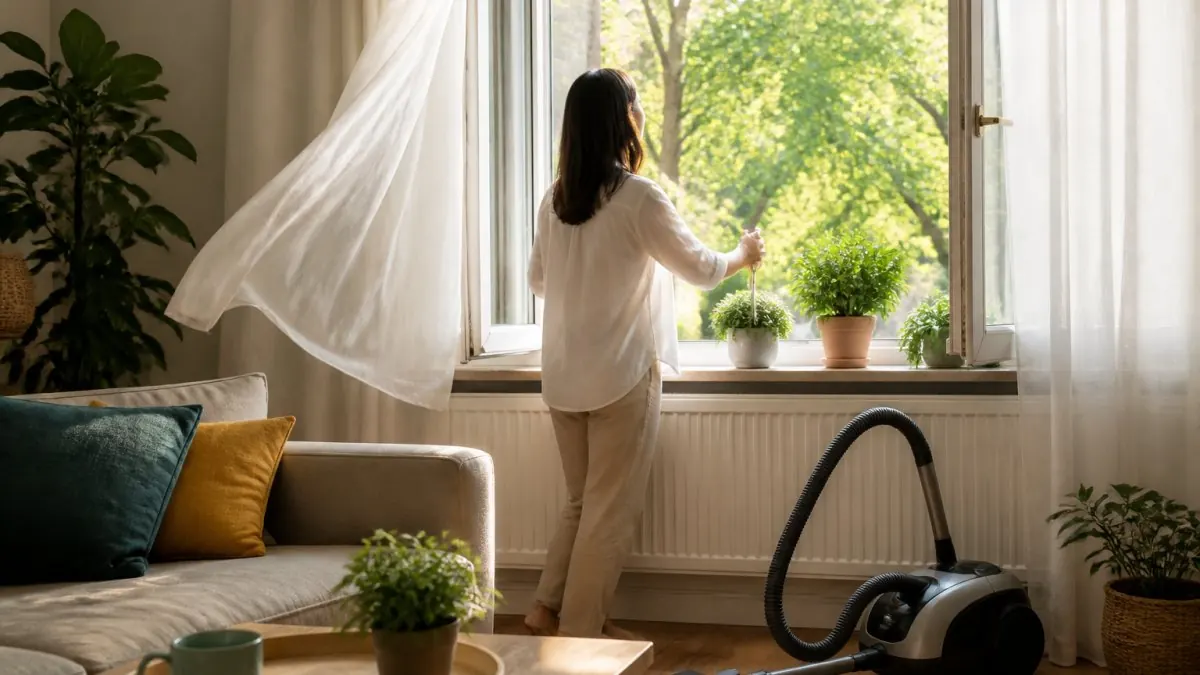
Start with open windows and exhaust fans. Then vacuum with a HEPA vacuum to pull dust, pet dander, and pollen off floors and rugs. Wipe hard surfaces with a damp cloth instead of dry dusting, which just kicks particles back into the air.
What about houseplants? The evidence is thin. Lab studies show plants can absorb some volatile organic compounds, but the amounts are tiny next to normal room volume. A few plants will not clean your air. They look nice, and that is a fair reason to keep them.
Step 4: Pick the Best Air Purifier for Home Use
The best air purifier for home use is one sized to your room with a true HEPA filter. Match the unit's clean air delivery rate to the square footage, then check the filter cost before you buy.
Start by deciding what you are trying to remove. A purifier is a particle tool, not a cure-all:
- Particles (dust, pollen, pet dander, smoke particles): a true HEPA filter is the right tool. HEPA media is rated to capture 99.97% of particles at 0.3 microns, which covers most airborne particles that bother people.
- Gases and odors (cooking fumes, VOCs, some cleaning product emissions): HEPA does nothing here. You need an activated carbon filter, and carbon filters vary widely in how much media they contain. A thin carbon pad saturates fast.
- Carbon dioxide and stale air: no purifier removes CO2. That is a ventilation problem, not a filtration problem. If a monitor shows high CO2, open a window or run exhaust fans.
Look for these features:
- True HEPA filter rated to capture 99.97% of particles at 0.3 microns
- Clean air delivery rate that matches your room size
- Low filter replacement cost (check yearly, not just sticker price)
- Low noise on the sleep setting for bedrooms
Skip units with ionizers you cannot turn off. Skip anything marketed as "filterless."
A common mistake is buying one small unit for a big open room. It will run at full speed and still fall short. Size up, or buy two.
Sizing in practice: clean air delivery rate is measured in cubic feet per minute.
Placement matters more than people expect. Put the purifier where you spend the most time and where particles are generated, near the bed for sleep, near the kitchen doorway for cooking, not tucked in a corner behind furniture.
What a purifier will not fix: it will not remove mold growing on a bathroom wall, gas leaking from a stove, or radon coming up through a basement slab. Those are source problems. Filtration is the last line of defense, not the first.
Step 5: HVAC Air Filter Replacement Frequency
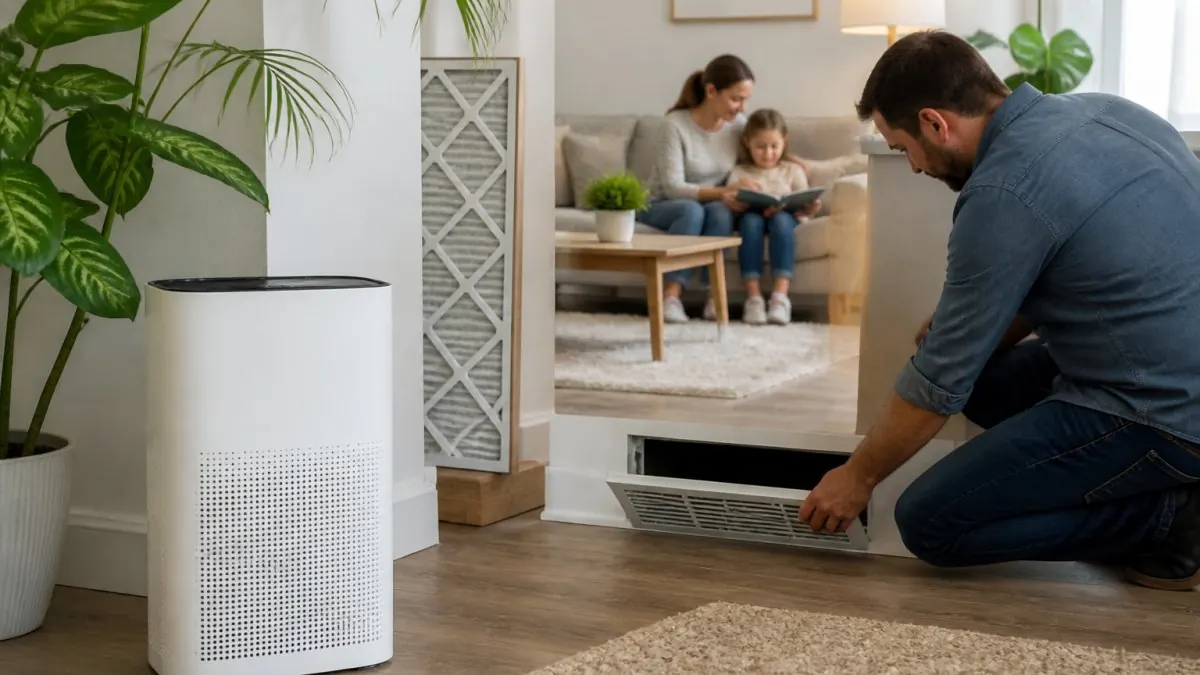
Change your HVAC air filter every 60 to 90 days for most homes. Homes with pets, allergies, or heavy dust should change it every 30 to 45 days.
Here is a quick guide:
| Home Situation | Filter Change Interval |
|---|---|
| No pets, low dust | Every 90 days |
| One pet | Every 60 days |
| Multiple pets or allergies | Every 30-45 days |
| Recent renovation | Every 30 days |
| Peak pollen season | Every 30-45 days |
Check the filter itself, not just the calendar. Hold it up to light. If you cannot see light through it, it is done.
Use the right filter size and do not overshoot the MERV rating your system can handle. A filter that is too dense chokes airflow. That strains the blower and raises energy bills.
Step 6: Does AC Improve Air Quality? What Your System Actually Does
Yes, air conditioning improves air quality, but only as a side effect. Your AC pulls air through a filter and removes humidity, which helps with dust, pollen, and mold growth.
Here is what the system actually does:
- Filters particles as air passes through the return filter
- Cools the air, which lowers humidity and limits mold
- Circulates air through the home instead of letting it sit
What it does not do is remove gases, odors, or fine chemicals. For those, you need ventilation and source control.
Keep the filter clean and the system runs better. A dirty filter means the AC moves less air and filters less effectively. That hurts both comfort and home air quality.
Step 7: Reduce Dust, Manage Humidity, and Measure Home Air Quality
Dust and humidity are the two factors most homeowners overlook. Get both under control and the air feels noticeably better. Then measure what you can so you are not guessing.
Reduce dust:
- Vacuum weekly with a HEPA vacuum
- Use doormats and take shoes off inside
- Wash bedding in hot water every week or two
- Keep pets off beds if allergies are an issue
- Wipe hard surfaces with a damp cloth instead of dry dusting
Manage humidity: keep indoor humidity between 30% and 50%. Above that, mold and dust mites thrive. Below it, you get dry air and static. A cheap hygrometer tells you where you stand.
Measure air quality, and know the limits. Consumer monitors are useful, but each sensor measures a narrow slice of the picture:
- Particulate matter (PM2.5 and PM10): optical sensors estimate fine and coarse particles. They are good at spotting trends, cooking, vacuuming, candles, wildfire smoke, but low-cost sensors drift over time and read humidity as particles, so treat absolute numbers as approximate.
- Carbon dioxide: a CO2 reading is a ventilation gauge, not a pollutant measure. Outdoors is roughly 420 ppm. Indoors, sustained readings above about 1,000 ppm suggest stale air and poor ventilation; open a window or run exhaust fans.
- Humidity: most monitors include a hygrometer. Compare it to a standalone unit if the reading seems off.
- VOCs: low-cost VOC sensors respond to many chemicals at once and are not selective. A spike after painting or bringing in new furniture is meaningful; a single number is not a health verdict.
What monitors cannot do: they do not detect carbon monoxide (use a dedicated CO alarm), they do not measure radon (use a radon test kit), and they do not identify mold. Use a monitor to spot patterns and confirm whether your fixes are working, not to diagnose a health problem.
A simple seasonal check:
- Change HVAC filter
- Test exhaust fans with a tissue
- Check humidity with a hygrometer
- Vacuum vents and rugs
- Air out rooms on mild days
- Review monitor trends and note what changed
At Rich's Plumbing Heating & Air Conditioning, our team has served local homeowners for over 30 years, and we are family owned and operated. If your system is not keeping up, a maintenance check can catch airflow and filter problems early.
When to Call a Professional for Home Air Quality Problems
Call a professional when the basics stop working. Some air quality issues need a licensed set of eyes, not another filter change.
Reach out if you notice:
- Persistent mold that keeps returning after cleaning
- Musty smells from vents or crawl spaces
- Uneven temperatures between rooms
- A system that runs constantly but never feels right
- Suspected gas leaks or combustion smells (leave the house and call immediately)
These point to duct problems, moisture issues, or equipment faults. A professional can trace the source and fix it. The EPA's guidance on improving indoor air quality also recommends professional help for serious moisture and ventilation problems.
At Rich's Plumbing Heating & Air Conditioning, our licensed, bonded, and insured team handles heating and cooling issues across the area. We offer free estimates for most services and back our work with a 100% satisfaction guarantee.
Frequently Asked Questions
How often should I change my HVAC air filter?
Check the filter every 30 days and replace it every 60 to 90 days for a standard 1-inch filter. Homes with pets, allergy sufferers, or heavy dust may need a change every 30 to 45 days. Thicker 4- to 5-inch media filters often last six to twelve months. A clogged filter restricts airflow, raises energy bills, and lets more particulate matter circulate, so mark the change date on the filter frame as a reminder.
Do houseplants improve indoor air quality?
Houseplants remove very small amounts of volatile organic compounds in sealed lab conditions, but normal home air exchange moves far more air than a room full of plants can process. Treat them as decor, not filtration. A HEPA air purifier or a properly maintained HVAC filter does far more for home air quality. Keep plants healthy and free of moldy soil, since wet potting mix can add mold spores to the air.
Does air conditioning help with indoor air quality?
Yes, indirectly. An AC system pulls air through its filter and removes some dust, pollen, and pet dander while lowering humidity, which limits mold growth. It does not remove gases like formaldehyde or carbon monoxide, and a dirty filter or clogged drain pan can make air quality worse. Schedule annual maintenance, change filters on time, and keep the condensate line clear to get the full benefit.
How can I reduce dust and allergens in my home?
Vacuum weekly with a HEPA-filter vacuum, damp-wipe hard surfaces instead of dry dusting, and wash bedding in hot water every one to two weeks. Keep humidity between 30% and 50% with a dehumidifier or exhaust fans, and use allergen-rated HVAC filters with a MERV 8 to MERV 13 rating. Remove shoes at the door and groom pets regularly to cut down on what gets tracked and shed indoors.
Poor home air quality usually comes down to a few fixable habits: stale air, dirty filters, and unchecked humidity. If your HVAC system is part of the problem, Rich's Plumbing Heating & Air Conditioning can help. Our family-owned team brings over 30 years of experience, a fast 60-minute response time for urgent needs, and free estimates for most services. Tap to easily schedule service today and breathe easier at home.