Table of Contents
- What Is a Sewer Camera Inspection and How Does It Work?
- The Equipment: Waterproof Camera, Flexible Cable, and Monitor
- What Do Sewer Inspectors Look For?
- How Long Does a Sewer Camera Inspection Take?
- Sewer Camera Inspection Cost and What Affects the Price
- Your Sewer Inspection Report and Video: How to Read the Findings
- When to Schedule an Inspection and What to Do Next
- Frequently Asked Questions
Last Updated: October 19, 2026
What Is a Sewer Camera Inspection and How Does It Work?
A sewer camera inspection is a noninvasive diagnostic service where a plumber feeds a waterproof camera through your underground pipes to see their internal condition in real time. At Rich's Plumbing Heating & Air Conditioning, we use this tool to find the exact cause of a clog or backup instead of guessing.
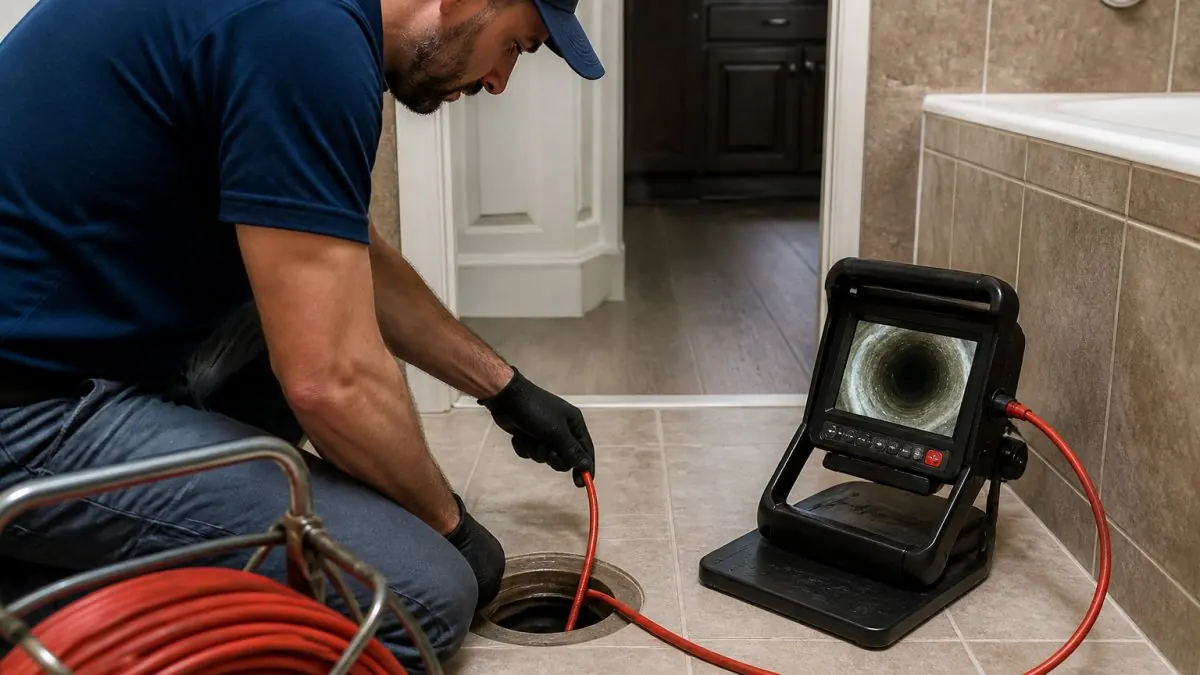
Here's the core idea. A flexible cable carries a small camera head into the sewer line. The camera sends live video to a monitor above ground.
That footage shows what no plunger or snake can reveal:
- Root intrusion through joints
- Cracks and breaks in the pipe wall
- Corrosion and leaks
- Misaligned or bellied sections
- Debris buildup and blockages
The inspection is noninvasive. We access the line through an existing cleanout, so there's no digging and no damage to your yard or floors.
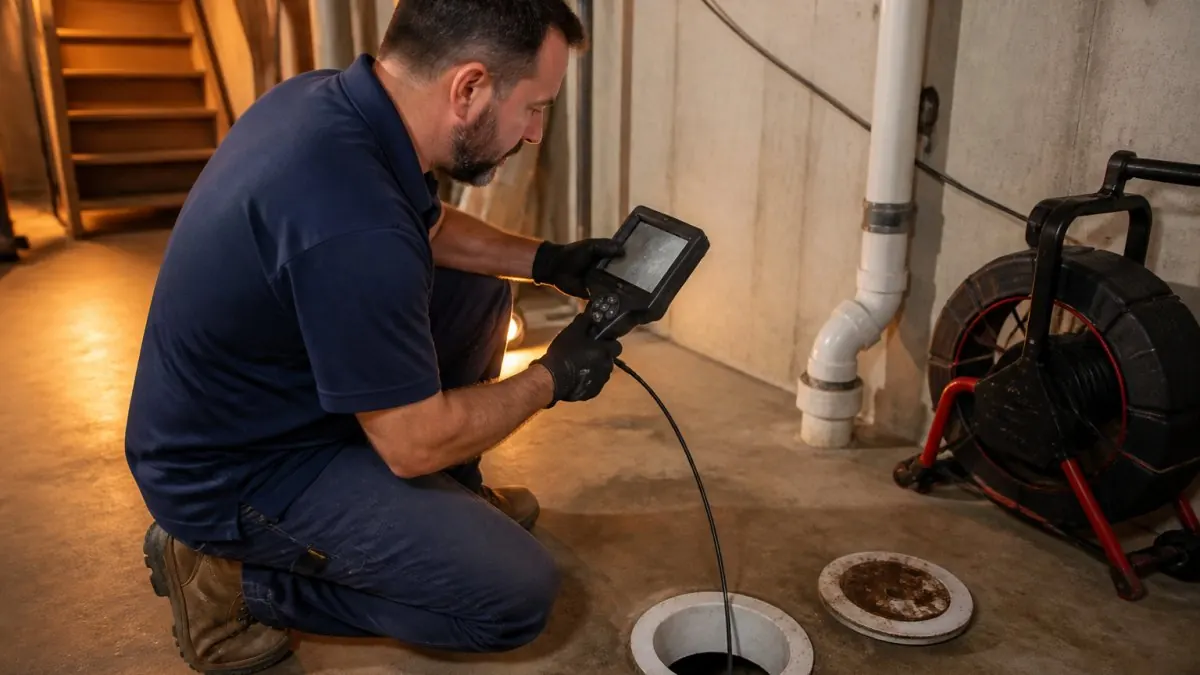
Step by Step: From Cleanout Access to Final Report
The process follows a clear path from start to finish. Here's what a sewer camera inspection looks like step by step:
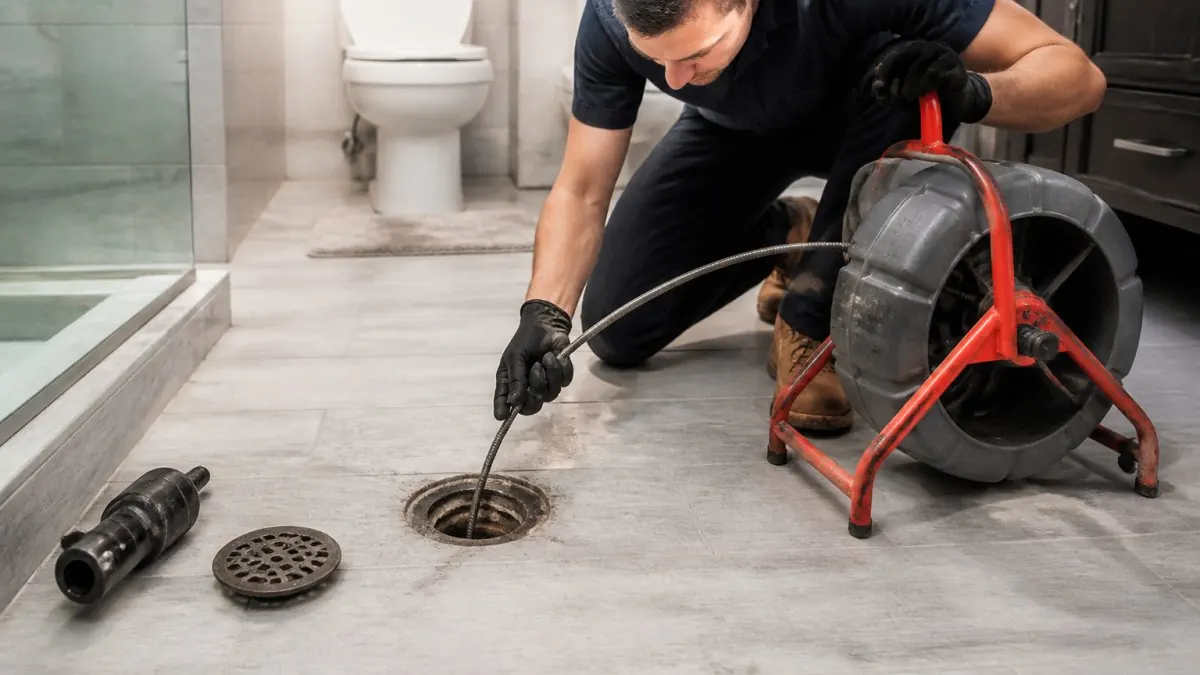
- Locate the access point. We find the cleanout or pull a toilet to reach the main drainpipe.
- Prepare the line. If standing water or heavy debris blocks the view, we clear it first.
- Feed the camera. The flexible cable pushes through the sewer lateral toward the main.
- Watch in real time. The video monitor shows the inside of the pipe as we go.
- Mark the problem. We note depth and location of any defect so it can be found again.
- Record the footage. The whole run is saved to video for you to keep.
- Walk you through findings. We explain what we saw and what repair options make sense.
The goal is simple: locate the problem and assess pipe condition before anyone picks up a shovel.
The Equipment: Waterproof Camera, Flexible Cable, and Monitor
Three parts make the system work: the camera head, the flexible cable, and the video monitor. Each one matters for a clear look at your plumbing system.
The waterproof camera sits at the tip. It has built-in lighting so it can see inside dark, wet pipes. Most heads are rated to survive full submersion.
The flexible cable pushes the camera through bends and long runs. It's stiff enough to travel but flexible enough to turn corners in the drain line.
The video monitor displays real-time footage above ground. The technician watches as the camera moves and can pause to study a defect up close.
Some setups add a locator. This lets the technician pinpoint the camera's position underground, which helps when a repair crew needs to dig at an exact spot. Recorded video ties it all together for your report.
What Do Sewer Inspectors Look For?
Sewer inspectors look for the defects that cause recurring drain problems and pipe failure. The camera reveals the inside of the pipe, so nothing is hidden.
Common findings include:
- Root intrusion: tree roots slip through joints and grow inside the pipe.
- Cracks and breaks: even small fractures let water escape and dirt enter.
- Corrosion: older metal pipes wear thin and start to leak.
- Misaligned pipes: joints that shift out of line catch debris.
- Bellied pipe: a low spot where waste and water pool.
- Collapsed pipe: a full break that blocks flow entirely.
- Debris buildup: grease, scale, or foreign objects narrowing the line.
A slow drain or repeated backup often traces back to one of these. The camera tells you which one, so the fix targets the real cause.
How Long Does a Sewer Camera Inspection Take?
A sewer camera inspection usually takes 30 to 60 minutes for a typical home. The exact time depends on the length of the line and what the camera finds.
A short run with a clear pipe moves fast. A long sewer lateral, heavy root intrusion, or standing water adds time because the technician must clear the view and study the findings.
Here's what affects the clock:
- Length of the sewer line from cleanout to main
- Number of access points needed
- Amount of debris or standing water
- Whether a locator is used to mark defects
You don't need to block out a whole day. Most homeowners can plan around a one-hour window.
Sewer Camera Inspection Cost and What Affects the Price
Sewer camera inspection cost depends on line length, access difficulty, and whether the inspection is bundled with drain cleaning or a home purchase.
Here's a realistic breakdown of what drives the number:
- Line length: A short run from a basement cleanout to the city main costs less than a long lateral with multiple bends. Inspections over 100 feet often carry a premium.
- Access: A readily accessible cleanout keeps the price at the low end. If the technician must pull a toilet or cut into a wall to reach the line, additional costs may apply.
- Condition of the line: Standing water, heavy grease, or root intrusion may require pre-cleaning before the camera can see anything. Drain cleaning may add to the cost.
- Add-ons: A locator that marks the exact depth and position of a defect may add to the cost. A written report with photos and video may be included or cost extra.
- Context: An inspection performed as part of a real-estate transaction or a larger repair job is sometimes discounted or rolled into the project price.
What the service should include: a recorded video of the full run, a written summary of findings with location markers, and a walkthrough of any defects. Ask before booking whether the fee covers the full lateral or only a portion.
Rich's Plumbing Heating & Air Conditioning offers free estimates for most services, so you know the cost before you commit. We'll confirm the scope, access point, and whether drain cleaning is needed, so the price you're quoted is the price you pay.
Your Sewer Inspection Report and Video: How to Read the Findings
Your sewer inspection report and video are the deliverables that turn footage into a plan. The report should tell you what was found, where it is, and how serious it is, but the footage itself can be hard to interpret without context. Here's how to read both.
Location markers. Good footage notes the depth and distance of each defect from the access point. A finding at 12 feet is not the same as one at 60 feet, the closer defect is usually easier and cheaper to repair. Ask the technician to call out the distance as the camera moves so you can follow along.
Severity. Not all defects are equal. A common plain-language ranking looks like this:
- Minor: hairline cracks, light scale, or a small root intrusion that hasn't narrowed the pipe. These can often be monitored rather than repaired immediately.
- Moderate: offset joints, moderate root masses, or early corrosion that catches debris and causes recurring clogs. A spot repair or root treatment may be recommended.
- Severe: collapsed pipe, significant belly (low spot), or a break that lets soil enter. These typically require excavation or trenchless repair and should be addressed before further damage occurs.
Recommended repairs. The report should connect each finding to a fix, from spot repair to full sewer line replacement, and note whether the issue is urgent or can wait. If the report only lists defects without recommendations, ask for clarification.
What to request. Ask for the recorded video file, not just a summary. It's your record of the pipe's internal condition, and a second opinion can review it without a return visit. Also request photos of any major defects and a written report that includes the camera's distance readings.
If the findings are unclear, ask the technician to pause on each defect and explain what you're seeing. A good inspector will walk you through the footage live so you can judge whether a repair quote is fair.
When to Schedule an Inspection and What to Do Next
Schedule a sewer camera inspection when you're buying a property, when drains keep backing up, or when your home is older and the pipes have never been checked. Timing matters more than most people think.
Book an inspection if you notice:
- Slow drains that keep returning
- Repeated backups in the same spot
- Foul odors from drains
- A property purchase or a home inspection
- An older home with original pipes
- Recent settling or foundation work
A sewer scope inspection before buying can save you from inheriting a failing line (What Is a Sewer Scope Inspection?). For older properties, a check every few years catches deterioration early.
After the inspection, you'll have a clear picture and repair recommendations. Some issues need only a spot fix. Others call for a larger sewer line repair. Either way, you'll know the real condition of your pipes.
At Rich's Plumbing Heating & Air Conditioning, our licensed, bonded, and insured team has served homeowners for over 30 years. We offer a fast response time and stand behind our work with a 100% satisfaction guarantee. When a camera inspection turns up a problem, we walk you through the options and give you a straight answer.
A failing sewer line never fixes itself, and guessing at the cause only costs more time and money. If your drains are slow, backing up, or you're buying a home, a camera inspection gives you the facts before you spend. Rich's Plumbing Heating & Air Conditioning brings over 30 years of family-owned experience, licensed and insured technicians, and a 100% satisfaction guarantee to every job. Get started with Rich's Plumbing Heating & Air Conditioning and schedule your sewer camera inspection today.
Frequently Asked Questions
Can a sewer camera find a leak or a blockage?
Yes. A sewer camera inspection can spot active leaks, cracks, and joint failures where water seeps out, plus blockages from grease, debris, or root intrusion. The camera head lights the pipe interior so the technician sees the problem in real time. Some leaks, like those escaping through a hairline crack into surrounding soil, are easier to confirm with the camera moving slowly through the line. If you have slow drains or a recurring backup, a camera inspection is one of the fastest ways to locate the exact source.
How far can a drain camera travel into the sewer line?
Most flexible cables run 100 to 200 feet from the access point, which covers the typical run from a house to the municipal main. The camera reaches the main drainpipe, the sewer lateral, and most branch lines tied into the system. Distance depends on the cable length on the truck and how many bends the pipe has. Sharp turns or collapsed sections can stop the camera early, and the technician will note where it stalled so you know how much of the line was actually inspected.
What should I do after a sewer camera inspection?
Review the sewer inspection report and video with the technician before they leave. Ask them to point out the location markers and rate the severity of each finding. If the line is clear, keep the footage for your records, especially if you plan to sell. If there are cracks, root intrusion, or a bellied pipe, get a written repair recommendation with options. For major repairs, request a follow-up camera inspection after the work is done to confirm the fix.
Do I need a sewer camera inspection when buying a house?
A sewer scope inspection is worth ordering on any home purchase, especially for older properties or homes with large trees near the lateral. A standard home inspection usually does not include the underground sewer line. The camera reveals cracks, root intrusion, misaligned pipes, and collapsed sections that a visual walkthrough cannot catch. Catching these before closing can save you thousands in unexpected sewer line repair and give you leverage in negotiations.