Last Updated: October 29, 2026
Quick Summary
The most common HVAC installation mistakes to avoid are skipping the Manual J load calculation, undersizing or failing to seal ducts, and skipping commissioning. Poor sizing causes short cycling and humidity problems, while unsealed ducts and unverified refrigerant charge waste energy. Always request the load calculation, duct design, and post-install test readings in writing.
- Skipping Manual J leads to oversized or undersized systems that short cycle and wear out faster.
- Ask whether ducts were leakage tested and what the CFM leakage number was.
- Request the startup sheet with static pressure, temperature split, refrigerant charge method, and measured airflow.
- Most local building departments require a permit for replacing a central air conditioner, furnace, or heat pump.
- A system can pass inspection and still be a poor installation, so ask for the commissioning sheet too.
Table of Contents
- Why Common HVAC Installation Mistakes Cost You for Years
- Improper HVAC Installation Symptoms Every Homeowner Should Recognize
- Getting HVAC System Sizing Right with a Load Calculation
- Ductwork Installation Mistakes That Undermine Airflow
- Placement Problems: Equipment, Thermostats, and Return Air
- Moisture, Refrigerant, and Commissioning Details That Get Skipped
- Your HVAC Installation Checklist for a Quality Job
- Schedule a Professional Installation You Can Verify
- Frequently Asked Questions
Why Common HVAC Installation Mistakes Cost You for Years
A bad install rarely shows up on day one. It hides, then quietly drains your wallet for a decade.
Most homeowners judge an HVAC installation by whether cool air comes out. That's the wrong test.
The U.S. Department of Energy's guide to home heating and cooling makes the point plainly: proper installation and maintenance affect efficiency as much as the equipment itself.
Every shortcut below shortens equipment lifespan, raises operating costs, and creates comfort problems you'll chase for years. For real pricing context, see the average cost to replace HVAC.
Improper HVAC Installation Symptoms Every Homeowner Should Recognize
The warning signs are usually comfort issues first, cost issues second. Watch for these improper HVAC installation symptoms before they become expensive failures.
- Rooms that never reach the thermostat setting
- A system that runs constantly but never quite catches up
- Sudden jumps in energy bills with no change in usage
If you spot several of these, get the system checked. You can also book an AC inspection in East Brunswick, NJ to verify the original install was done correctly. A system inspection can help assess whether the original install was done correctly.
Uneven Temperatures and Short Cycling
Uneven temperatures and short cycling are two of the clearest signs of a bad install. For a deeper guide on diagnosing and fixing them, see how to fix uneven house temperatures. Short cycling means the system turns on and off too often to properly condition the home.
This usually traces back to incorrect sizing or a thermostat in the wrong spot. Both are install problems, not equipment problems.
Noise, Humidity, and Rising Energy Bills
Loud operation, sticky summer air, and climbing bills often share one root cause: a system that wasn't set up to manage airflow and moisture. Excess noise can signal undersized ducts or a blower pushing against too much resistance.
Poor humidity control is especially telling. A correctly sized system runs long enough to pull moisture from the air. One that's oversized blasts cold air, shuts off early, and leaves the house clammy.
Getting HVAC System Sizing Right with a Load Calculation
Correct HVAC system sizing starts with a load calculation, not a guess. Ignoring these precise requirements often leads to premature equipment failure, which makes recognizing HVAC system replacement signs an essential part of long-term home maintenance.
Many installers cut corners here: they eyeball the old unit, match the tonnage, and move on. That shortcut causes some of the most common and costly HVAC installation mistakes.
Why Skipping Manual J Leads to Incorrect Sizing
Manual J is the industry-standard load calculation method. Skipping it leads to incorrect sizing, and incorrect sizing causes real damage:
- Oversized systems cool too fast, short cycle, and fail to remove humidity
- Undersized systems run nonstop and never keep up on the hottest days
- Both wear out faster and cost more to operate
A proper Manual J accounts for your home's real load requirements. It's the difference between a system that fits and one that fights your house for years.
Ductwork Installation Mistakes That Undermine Airflow
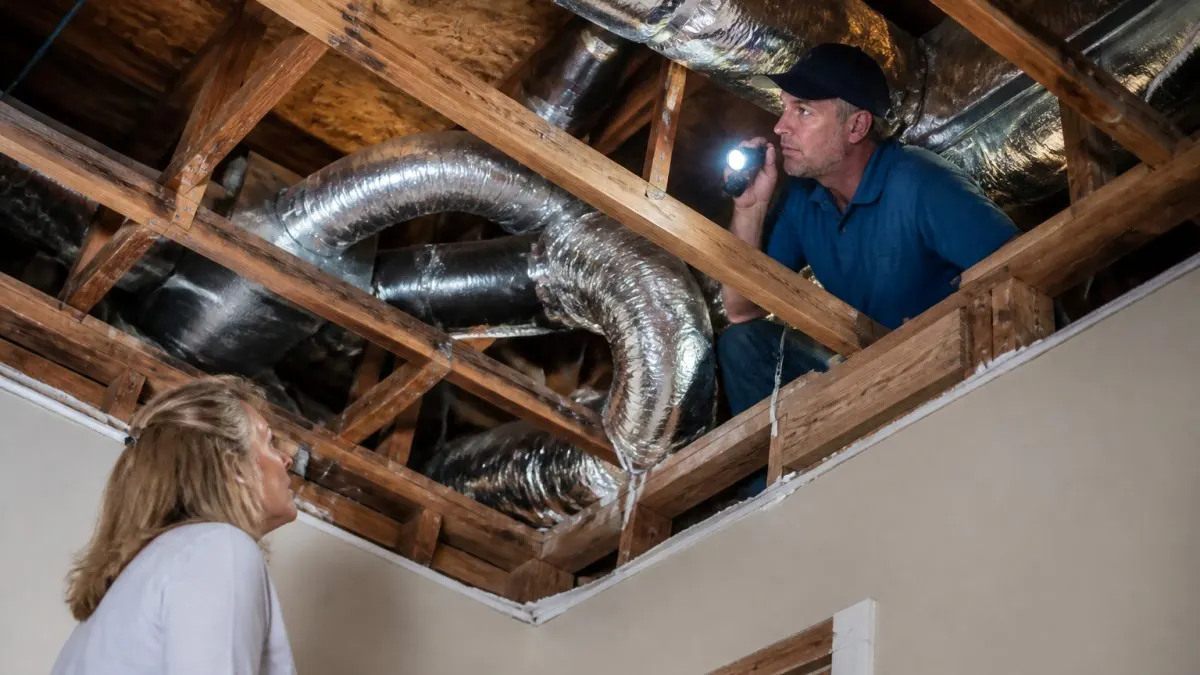
Ductwork installation mistakes quietly strangle airflow. The equipment can be perfect, but wrong ducts mean the system can't deliver comfort where it's needed.
Three problems dominate: duct sizing, duct leakage, and high static pressure. Each one forces your blower to work harder and pushes conditioned air into places it doesn't belong.
Duct Sizing, Leakage, and Static Pressure
Duct sizing must match the system's airflow needs. Undersized ducts choke airflow; oversized ducts lose pressure and distribute air poorly.
Duct leakage wastes the air you paid to cool or heat, bleeding conditioned air into attics and crawlspaces. Duct sealing at every joint is not optional.
High static pressure is the silent killer. It means the blower is pushing against resistance it wasn't built for.
Room-by-Room Airflow Balancing
Balancing turns a working system into a comfortable one. Adjust dampers and registers so each room receives airflow proportional to its heating and cooling load, not equal airflow to every room, but the right airflow for each room.
A practical balancing sequence:
- Measure supply airflow at each register with a flow hood or calibrated balometer.
- Compare measured airflow to the room-by-room load calculation.
- Adjust branch dampers on the trunk to bring high rooms down and low rooms up.
- Re-measure static pressure after adjustment, closing dampers raises resistance, so the system must still be within the blower's rated range.
- Confirm the temperature split remains in range after balancing.
Rooms that are consistently hot or cold after a new install are usually a balancing problem, not an equipment problem. Before anyone recommends a new unit, ask for a balancing report.
Duct Condition and Design Mistakes to Watch For
- Long, winding flex duct runs with sharp bends collapse under negative pressure and choke airflow. Short, taut, supported runs perform better.
- Too few or undersized returns starve the blower and create pressure imbalances that pull outside air into the home.
- Ducts run through unconditioned attics or crawlspaces without insulation or sealing lose capacity before the air reaches the room.
Placement Problems: Equipment, Thermostats, and Return Air
Placement decides whether a good system performs well. Get it wrong and no amount of tuning fixes it.
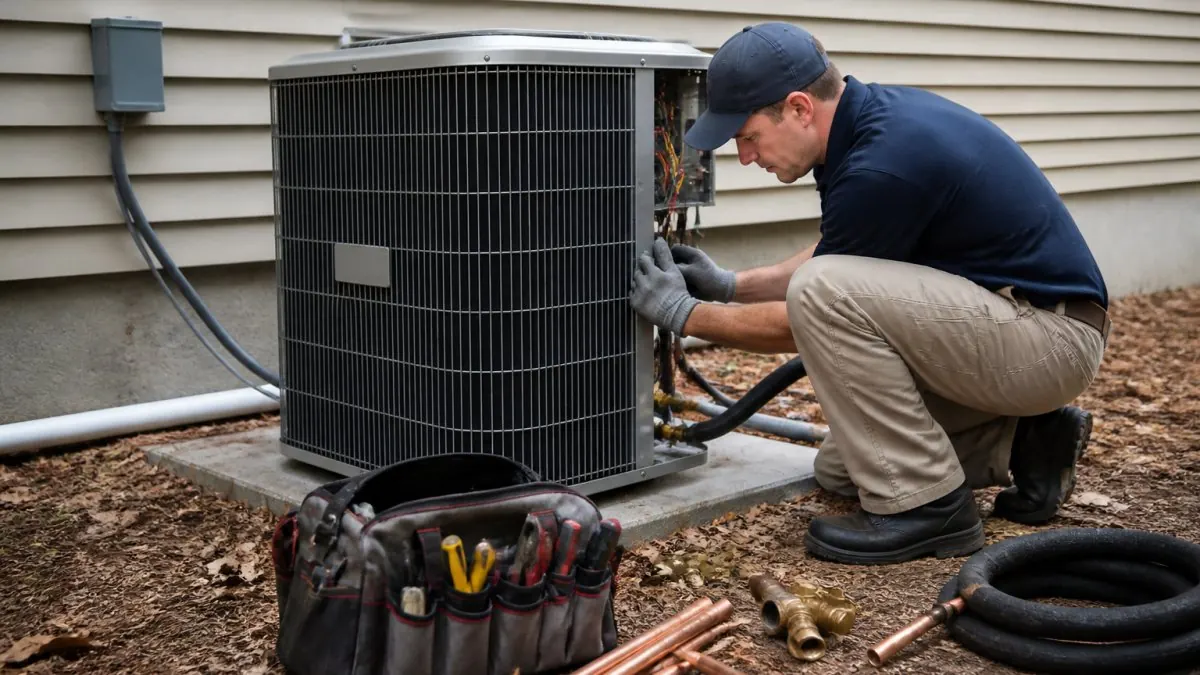
Equipment placement matters. A condenser crammed against a wall or under a deck can't shed heat.
Thermostat placement is just as critical. A thermostat near a sunny window, a lamp, or a supply vent reads the wrong temperature.
Don't overlook return air. Too few returns starve the system.
Moisture, Refrigerant, and Commissioning Details That Get Skipped
The details nobody sees matter most. Refrigerant charge must be set precisely, too little or too much both hurt performance and efficiency. Condensate drainage needs a correct slope and a proper trap; get it wrong and you get water damage, mold, and moisture problems that spread through the home.
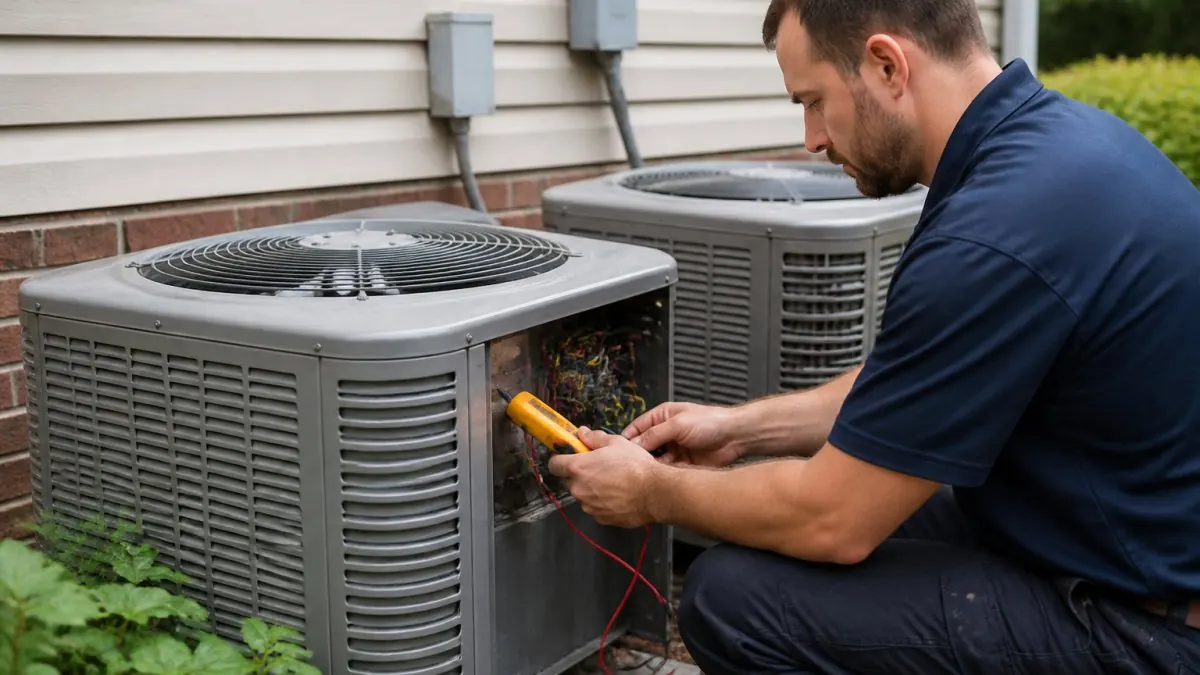
Then there's commissioning: the post-install testing that proves everything works. Many installers skip it. Proper commissioning checks airflow, refrigerant charge, static pressure, and temperature split. Without it, you're trusting the install was right instead of knowing it.
What Commissioning Actually Measures
Commissioning is not a vibe check. It is a short list of measurements taken with instruments, written down, and handed to you. Ask for these numbers in writing:
- External static pressure, measured at the air handler with a manometer. High static pressure means the blower is fighting restrictive ducts, undersized returns, or a clogged coil. It shortens blower motor life and steals airflow from distant rooms.
- Temperature split (Delta T), the difference between return-air and supply-air temperature at the equipment. A split far outside the equipment manufacturer's published range points to low airflow, an overcharge, or a duct problem. The manufacturer's installation manual states the target range for your model; ask the contractor to compare against it.
- Refrigerant charge, verified by superheat and subcooling (or by weighing in the charge per the manufacturer's instructions), not by "feels cold." The equipment nameplate and installation manual specify the target values.
A contractor who commissions properly will hand you a startup sheet with these values. If they cannot produce one, the system was installed, not commissioned.
Permits, Inspections, and Code Compliance
A quality install follows the rules. Installation code and permits exist to protect you. Skipping permits or inspections can void warranties and leave you exposed if something fails.
Permit requirements vary by jurisdiction, but most local building departments require a permit for replacing a central air conditioner, furnace, or heat pump, and for new or altered ductwork. The permit triggers an inspection, typically a rough-in inspection before the system is closed up and a final inspection after startup.
Moisture Problems Beyond the Drain Pan
Condensate is only one moisture path. An oversized system or excessive airflow won't run long enough to dehumidify, leaving the house clammy even when the thermostat is satisfied. Duct leakage in a hot attic or crawlspace can pull humid outside air into the supply stream, and a return duct drawing from a damp basement spreads that moisture through the home.
Your HVAC Installation Checklist for a Quality Job
Use this HVAC installation checklist to hold any contractor accountable. It turns vague promises into verifiable steps.
| Check | What to Confirm | Why It Matters |
|---|---|---|
| Load calculation | Manual J completed and shared | Prevents incorrect sizing |
| Duct assessment | Duct sizing and sealing verified | Protects airflow and efficiency |
| Placement review | Equipment, thermostat, returns planned | Avoids comfort dead zones |
| Permits | Pulled and posted | Ensures code compliance |
| Commissioning | Airflow, charge, static pressure tested | Proves the job is done right |
| Documentation | Warranty and scope in writing | Protects you long term |
Before signing, confirm the written scope, warranty terms, and final inspection. It also helps to know how long HVAC installation takes so you can plan around the project. If a contractor balks at any of these, that's your answer.
Schedule a Professional Installation You Can Verify
The mistakes above share a theme: shortcuts taken where nobody's watching. Avoiding them means choosing an installer who does the work you can see and the work you can't.
At Rich's Plumbing Heating & Air Conditioning, we're family owned and operated, licensed, bonded, and insured, and we offer a 100% satisfaction guarantee.
Ready to schedule a heating installation? Schedule a heating installation in East Brunswick with our team and request a free estimate.
Frequently Asked Questions
What are the most common HVAC installation mistakes?
The most frequent errors are incorrect system sizing without a load calculation, undersized or leaky ductwork, poor equipment and thermostat placement, and skipped commissioning. Each one shows up later as uneven temperatures, short cycling, high energy bills, or a shorter equipment lifespan. Homeowners can reduce the risk by asking for a written scope, confirming the load calculation was done, and verifying permits and inspections before work begins.
How can I tell if my HVAC system was installed incorrectly?
Watch for improper HVAC installation symptoms: rooms that never reach the thermostat setting, frequent on-off cycling, whistling or rattling ducts, clammy indoor air, and bills that climb without a change in usage. A system that needs repairs within the first year is another warning sign. If you notice these, ask a licensed technician to check static pressure, refrigerant charge, and duct leakage rather than simply adding refrigerant.
What happens if an HVAC system is the wrong size?
An oversized unit cools quickly but leaves humidity high, then short cycles and wears out faster. An undersized unit runs constantly, struggles on hot days, and drives up operating costs. Both outcomes trace back to skipping the load calculation during HVAC system sizing. A proper Manual J calculation accounts for square footage, insulation, windows, and air distribution before any equipment is selected.
Should an HVAC system be tested after installation?
Yes. Commissioning should include verifying refrigerant charge, measuring static pressure and airflow at supply and return vents, checking condensate drainage, and confirming the thermostat reads accurately. Ask for the test results in writing and keep them with your HVAC installation checklist. A contractor who skips this step leaves problems hidden until the first heat wave or cold snap.
A system installed right should quietly do its job for years. If you're tired of chasing comfort problems and want a crew that treats your home like their own, get started with Rich's Plumbing Heating & Air Conditioning and schedule a service you can verify from the first visit to the final inspection.