Last Updated: November 5, 2026
Quick Summary
Store bought drain cleaners contain corrosive chemicals like sodium hydroxide and sulfuric acid that can burn skin and eyes, damage pipes, and release toxic fumes in poorly ventilated spaces. Never mix them with bleach or other products, and call Poison Control at 1-800-222-1222 after any exposure. A plunger or drain snake is the safer first move.
- Rinse skin contact under cool running water for at least 15 minutes and do not scrub.
- Never induce vomiting after swallowing drain cleaner; call Poison Control immediately.
- Bleach plus acid cleaner releases chlorine gas, and bleach plus ammonia releases chloramine vapor.
- After a cleaner fails, flush with plenty of water and never add a second chemical product.
- Enzyme cleaners are generally considered a gentler store option for some pipe materials.
Table of Contents
- Why Store Bought Drain Cleaners Are Riskier Than They Look
- Skin Burns, Eye Damage, and Accidental Ingestion
- Fumes, Poor Ventilation, and What to Do If You Inhale Drain Cleaner Fumes
- Drain Cleaner Poisoning Symptoms You Should Never Ignore
- Does Drain Cleaner Damage PVC Pipes and Metal Plumbing?
- What Drain Cleaner Is Safe for PVC Pipes and Older Plumbing?
- Mixing Drain Cleaners With Bleach or Other Products
- When a Drain Cleaner Fails: Safe Next Steps
- Frequently Asked Questions
Why Store Bought Drain Cleaners Are Riskier Than They Look
The dangers of using store bought drain cleaners start with a simple fact: the same liquid that eats through hair and grease will eat through skin and pipe walls too. This guide breaks down what is actually in those bottles, what happens when things go wrong, and how to clear a clog without turning your sink into a hazard.
The Corrosive Chemicals Inside the Bottle
Two ingredients do most of the work, and both are harsh:
- Sodium hydroxide (lye): Found in many crystal and gel cleaners. It dissolves grease by turning it into soap.
- Sulfuric acid: Found in some stronger liquid formulas. It burns through organic matter on contact.
- Sodium hypochlorite (bleach): Added to some formulas for odor control and stain removal.
- Enzyme blends: The gentler end of the shelf, but slow acting.
These are caustic chemicals by design. They cannot tell the difference between a hair clog and human tissue. That is the whole problem.
Skin Burns, Eye Damage, and Accidental Ingestion
Direct contact is the most common injury route, and the damage can be severe. Chemical burns from drain cleaner can develop quickly because the active ingredients are designed to break down organic material on contact.
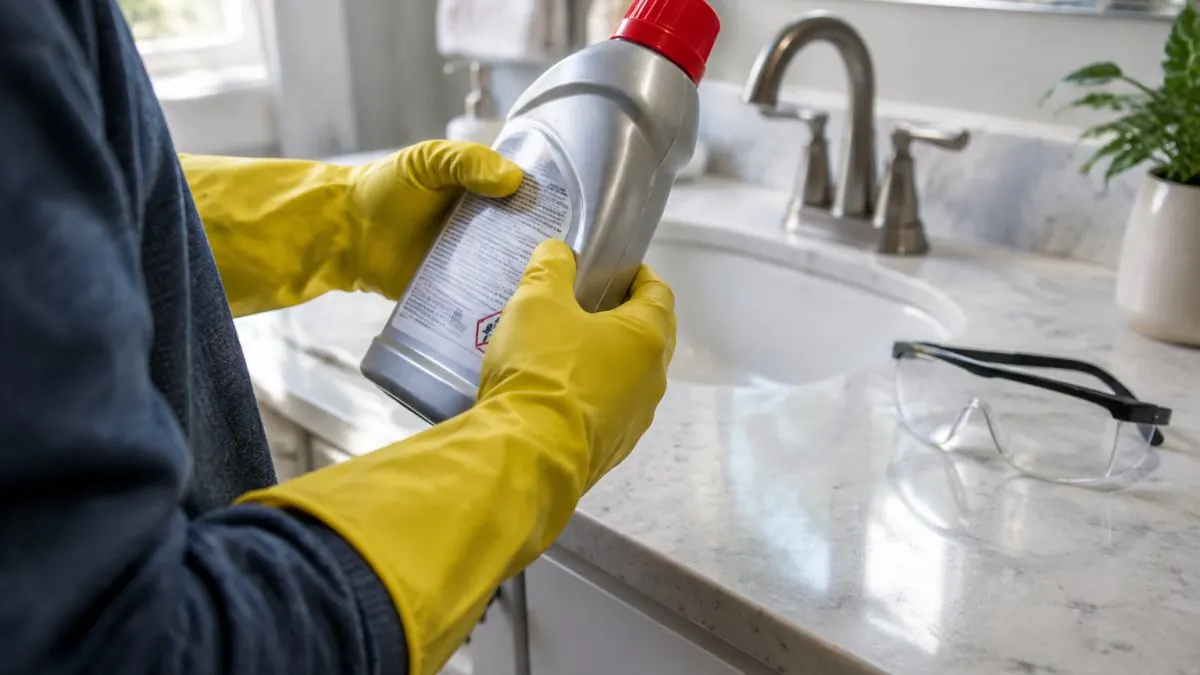
The right response depends on how the product reached the body. Treat each route differently:
- Skin contact: Remove contaminated clothing and jewelry, then rinse the area under cool running water for at least 15 minutes. Do not scrub or apply ointments. Lye feels slippery on skin, which can hide the burn while it works. Seek medical care if the skin is blistered, white, or painful after rinsing.
- Eye contact: Flush the eye with clean, low-pressure water for at least 15 minutes, holding the eyelid open. Remove contact lenses if they come out easily. Do not use eye drops or rub the eye. Call Poison Control or 911 and get medical help right away, even if the eye feels better after rinsing.
- Accidental ingestion: Do not induce vomiting. Rinse the mouth with water and spit it out. Call Poison Control immediately at 1-800-222-1222 and follow their instructions. If the person is unconscious, having trouble breathing, or seizing, call 911.
- Inhalation: Move to fresh air, open windows, and call Poison Control or 911 if breathing is difficult, chest pain develops, or coughing will not stop.
The American Association of Poison Control Centers tracks these exposures, and drain cleaners are a recurring category. Keep the product label or a photo of it on hand when you call, because the active ingredient and concentration guide the advice. Never store these bottles in reach of children or in unmarked containers, and never transfer them into food or drink containers.
Symptoms can sometimes worsen after the first hour, so a person who feels fine right after a splash should still be watched and, for eye or ingestion exposure, evaluated by a medical professional.
How you respond depends on how the drain cleaner reached the body, so treat each exposure route differently.
| Exposure route | What to do | Key warning |
|---|---|---|
| Skin contact | Remove clothing and jewelry, rinse 15 minutes under cool water | Do not scrub or apply ointments |
| Eye contact | Flush eye with low-pressure water at least 15 minutes | Call Poison Control or 911 right away |
| Accidental ingestion | Do not induce vomiting; rinse mouth and spit | Call Poison Control at 1-800-222-1222 |
| Inhalation | Move to fresh air and open windows | Call Poison Control or 911 if breathing is difficult |
Fumes, Poor Ventilation, and What to Do If You Inhale Drain Cleaner Fumes
Inhaling drain cleaner fumes irritates the nose, throat, and lungs, and a small bathroom makes it worse. Toxic fumes build up fast in a closed room.
What to do if you inhale drain cleaner fumes:
- Leave the room and get to fresh air right away.
- Open windows and turn on a fan before anyone returns.
- Sit upright and stay calm.
- Call Poison Control or 911 if you have trouble breathing, chest pain, or coughing that will not stop.
Poor ventilation is the hidden risk here. Most people pour, close the door, and walk away. That traps the fumes with the cleaner.
Drain Cleaner Poisoning Symptoms You Should Never Ignore
Drain cleaner poisoning symptoms range from mild to life threatening. Learn the warning signs before you ever open a bottle.
- Burning in the mouth, throat, or stomach
- Trouble swallowing or speaking
- Chest pain or shortness of breath
- Nausea, vomiting, or drooling
- Skin redness, blistering, or white patches
- Blurred vision or eye pain
Watch out: do not induce vomiting after swallowing drain cleaner. It can burn the throat a second time on the way back up. Call Poison Control and follow their instructions.
Does Drain Cleaner Damage PVC Pipes and Metal Plumbing?
Drain cleaner can damage some pipe materials, especially with repeated use, as heat and chemical reactions can contribute to wear.
A clog that keeps coming back is often a sign the pipe itself is failing. Chemical clearing just masks that.
What Drain Cleaner Is Safe for PVC Pipes and Older Plumbing?
Enzyme cleaners are generally considered a gentler store option for some pipe materials. They use bacteria and enzymes to break down grease and hair more slowly than caustic products.
For a gentler approach, compare natural alternatives to chemical drain cleaners by clog type before you buy anything. Baking soda and vinegar, a plunger, or a drain snake often clear the problem with no chemical risk at all. Mechanical clearing is almost always the better first move.
Mixing Drain Cleaners With Bleach or Other Products
Mixing drain cleaners with bleach or other cleaning products can release toxic gas and cause splashing.
- Bleach plus acid cleaner releases chlorine gas (the CDC).
- Bleach plus ammonia releases chloramine vapor.
- Two different drain cleaners can react and spray hot liquid.
If a cleaner did not work, do not pour a second product on top. Flush with plenty of water first, and only after the label's stated wait time. Better still, stop and switch to a mechanical method.
When a Drain Cleaner Fails: Safe Next Steps
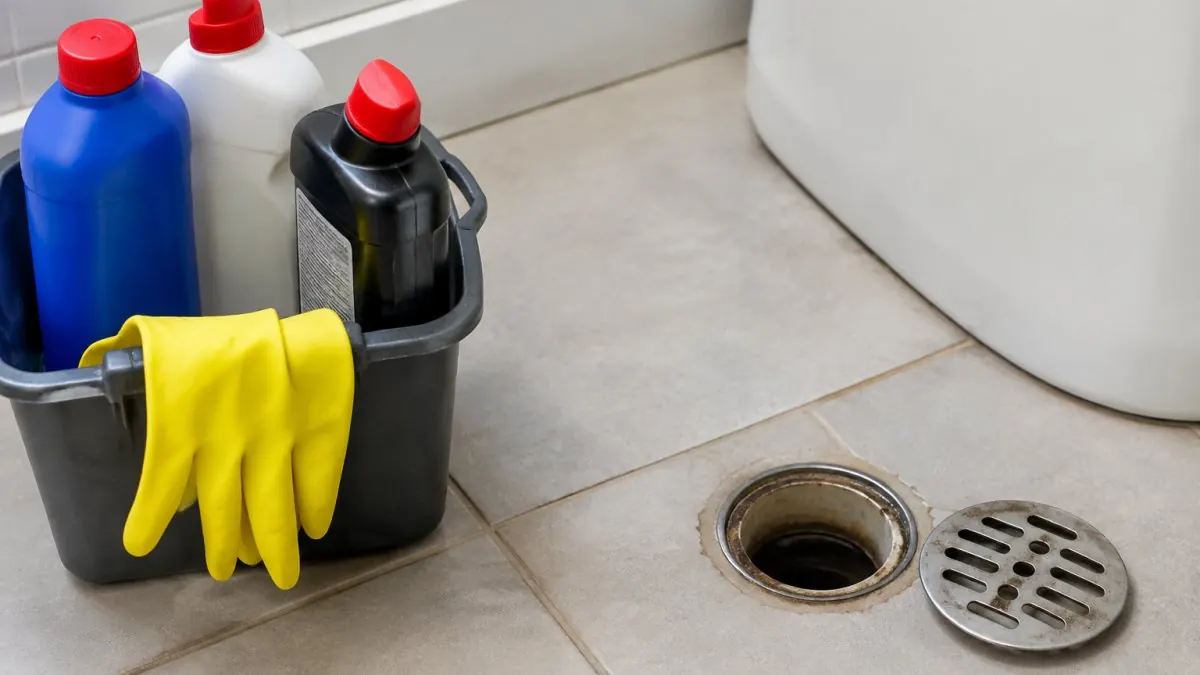
A failed cleaner is a signal, not a setback. The most dangerous moment is often right after the product disappoints, when people reach for a second bottle or a tool without thinking about what is still sitting in the drain. Before adding anything else, let the drain clear and consider safer cleaning alternatives that avoid compounding the risk of chemicals already in the pipe.
Watch out: never add another chemical on top of a failed cleaner. Mixing a lye-based product with an acid-based product, or either with bleach, can release toxic gas, generate heat, and spray caustic liquid out of the drain. Two different drain cleaners can react with each other, even when each was used correctly on its own.
Before you do anything else, read the label for the stated wait time and flushing instructions. Many products require the drain to sit undisturbed for a set period and then be flushed with plenty of water. Rushing that step is how splashes happen.
Safe next steps after a cleaner fails:
- Do not add another chemical product.
- Flush the drain with plenty of water to dilute what is there, pouring slowly to avoid splashing.
- Wait the full time stated on the label before using any tool.
- Try a plunger or a drain snake for mechanical clearing, but wear gloves and eye protection because standing water may still contain caustic residue.
- If water still stands, the clog may be deep in the line or the pipe may be failing.
A common pattern is that a clog which returns within days points to a deeper problem, such as a broken pipe, a bellied line, or roots in the lateral. Chemical clearing masks that. At that point, it is worth asking whether professional drain cleaning is worth it versus more DIY attempts. A pro can scope the line and find the real cause. If you want to know what it runs, our guide to professional drain cleaning cost explains what drives pricing. And if you would rather handle it yourself first, this step-by-step guide to clearing a slow drain walks through the safe method.
Dispose of any leftover product according to the label and local household hazardous waste rules. Do not pour it down the drain to get rid of it, and do not put it in the regular trash if the label says otherwise. Prevention beats all of it. Regular maintenance keeps grease and hair from building up, and our article on the benefits of regular drain maintenance covers a simple routine.
Frequently Asked Questions
What is the safest drain cleaner you can use?
Enzyme-based cleaners are generally considered a gentler option for routine maintenance because they break down hair and grease with bacteria rather than caustic chemicals. They work more slowly and are often used for some pipe materials. For a fully blocked drain, mechanical clearing with a plunger or drain snake avoids chemicals entirely. If the clog keeps returning, a licensed plumber can find the cause instead of adding another bottle of chemicals.
Can liquid drain cleaners damage PVC pipes?
Yes, some drain cleaners can affect pipe materials. Many store bought drain cleaners contain sodium hydroxide or sulfuric acid, which can generate heat as they react with standing water and clogs. Repeated use may contribute to wear on some pipe materials. Enzyme cleaners and mechanical clearing are safer choices for PVC and metal pipes alike.
What should you do if you inhale drain cleaner fumes?
Move to fresh air immediately and open windows and doors to ventilate the area. If you have trouble breathing, chest pain, coughing, or throat irritation that does not ease, call Poison Control at 1-800-222-1222 or seek medical help. Do not induce vomiting. Keep children and pets out of the room until the fumes clear, and never lean directly over a drain after pouring a chemical cleaner.
Why do plumbers say not to use drain cleaners?
Chemical cleaners can soften some pipe materials, corrode metal fittings, and may not address the underlying cause of a clog, which can return. Caustic cleaners left in standing water can also splash during later work, creating a risk of burns. Mechanical clearing and enzyme maintenance address the clog and the buildup behind it, which is why professionals avoid chemical cleaners for routine drain work.
The safest habit is to treat chemical drain cleaners as a last resort, not a first one. If a clog keeps returning, or a chemical has already gone in and failed, call Rich's Plumbing Heating & Air Conditioning. We are family owned and operated, licensed, bonded, and insured, with a 60-minute response time for urgent clogs and free estimates for most services. Get started with Rich's Plumbing Heating & Air Conditioning and clear the drain safely, the first time.