Last Updated: November 17, 2026
Quick Summary
An emergency plumber's coverage is set by each company's service area, not your zip code, so check your full street address on the company's service-area page or by phone. Confirm the answer in writing before you need help, since coverage can stop at a street or subdivision line.
- Enter your full street address, not just the town, on the company's service-area checker.
- Call dispatch and ask whether emergency service covers your exact address, including after-hours coverage.
- Ask about travel fees, minimum charges, and whether your property type is excluded.
- Write down the date, the person's name, and the answers so you have proof at 2 a.m.
Table of Contents
- How to Check Whether an Emergency Plumber Covers Your Address
- What Qualifies as a Plumbing Emergency
- Emergency Plumber Response Time by Severity and Location
- Emergency Plumbing Service Call Fees and What Affects Them
- What to Do Safely While Waiting for the Plumber
- Questions to Ask an Emergency Plumber Before Booking
- Booking Your Emergency Visit with Rich's Plumbing Heating & Air Conditioning
- Frequently Asked Questions
Is your address covered by an emergency plumber? Most homeowners only find out at the worst possible moment, when a pipe bursts at 11 p.m. and the company they called says it doesn't serve their street. Rich's Plumbing Heating & Air Conditioning serves New Jersey homeowners, and this question catches people off guard more often than you'd expect. Checking coverage before you need help takes about five minutes and can save hours of frantic searching.
Emergency plumber service area coverage describes the geographic zone a plumbing company will dispatch to on short notice. That zone is set by the company, not by the homeowner's zip code, so two businesses in the same town can cover very different neighborhoods. This guide walks through how to verify your address, where coverage limits usually hide, and what to do while you wait.
How to Check Whether an Emergency Plumber Covers Your Address
The fix is to verify coverage at the address level, in writing, before you need it. A company's service area is a business decision, not a zip-code lookup, so two plumbers in the same town can draw very different boundaries.
Use an Address-Level Service-Area Checker First
Start with the company's website. Many established plumbers publish a service-area page with either a searchable address field or a list of covered towns and zip codes. Enter your full street address, not just the town, because coverage often stops at a street or a subdivision line. If the site offers a map with a shaded zone, zoom in until your block is visible and confirm your side of the street is inside the shading.
If no checker exists, look for a coverage list that names towns, neighborhoods, and zip codes. Cross-reference your zip code against that list. A zip code that appears on the list is a good sign, but it is not a guarantee, because some companies cover only part of a zip code.
Watch out: a town name on a service-area page does not mean every street in that town is covered, so treat a town-level list as a starting point and confirm your exact address by phone.
Confirm by Phone and Get the Answer in Writing
Call the dispatch line during business hours and read your full address aloud, including the town and zip code. Ask three questions in this order:
- Does your emergency service area include this exact address?
- Does the answer change after hours, on weekends, or on holidays?
- Is there a travel fee or a minimum charge for my address?
Write down the date, the name of the person you spoke with, and the answers. If the company offers text or email confirmation, ask for it. A written answer is the only version that helps you at 2 a.m.
Read the Coverage Boundaries and Exclusions
Coverage limits hide in the fine print. Common patterns include a primary zone with a surcharge beyond a stated mileage limit, exclusions for commercial properties or third-party-managed rentals, and jobs that require a permit the company does not pull. Ask directly whether your property type is covered and whether any permit-related work falls outside the emergency zone.
If the answer is evasive or the dispatcher cannot state a boundary, treat that as information. A company that cannot describe its own service area clearly is a company that may leave you searching for another plumber mid-emergency.
What Qualifies as a Plumbing Emergency
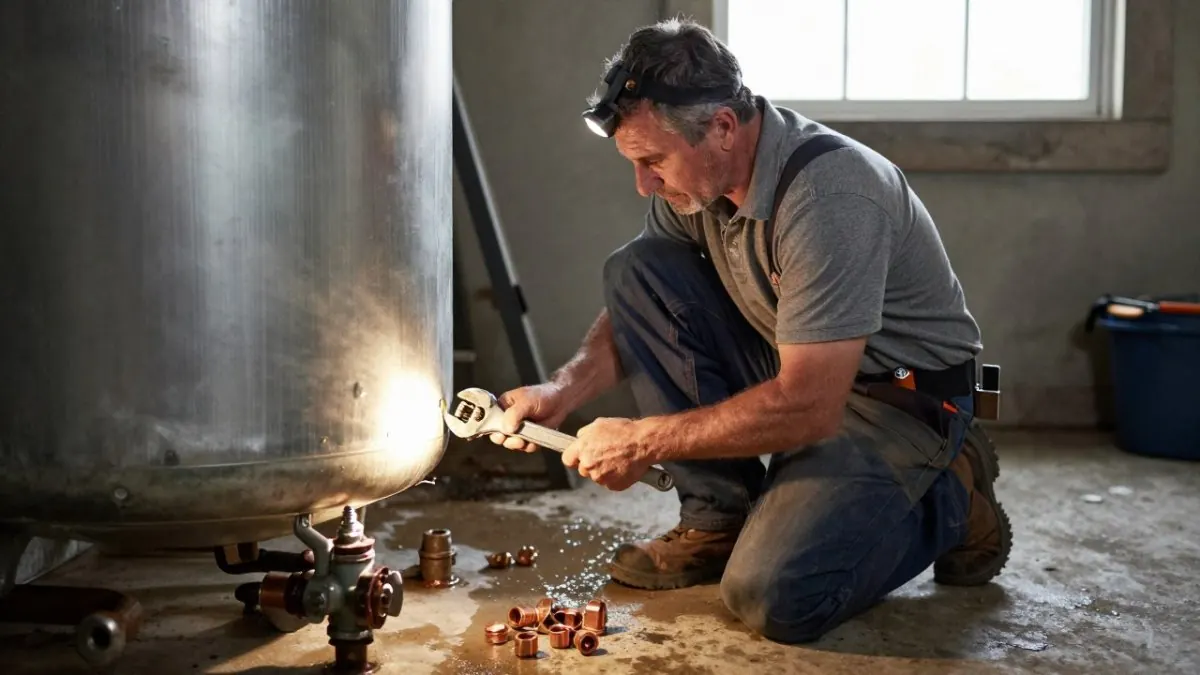
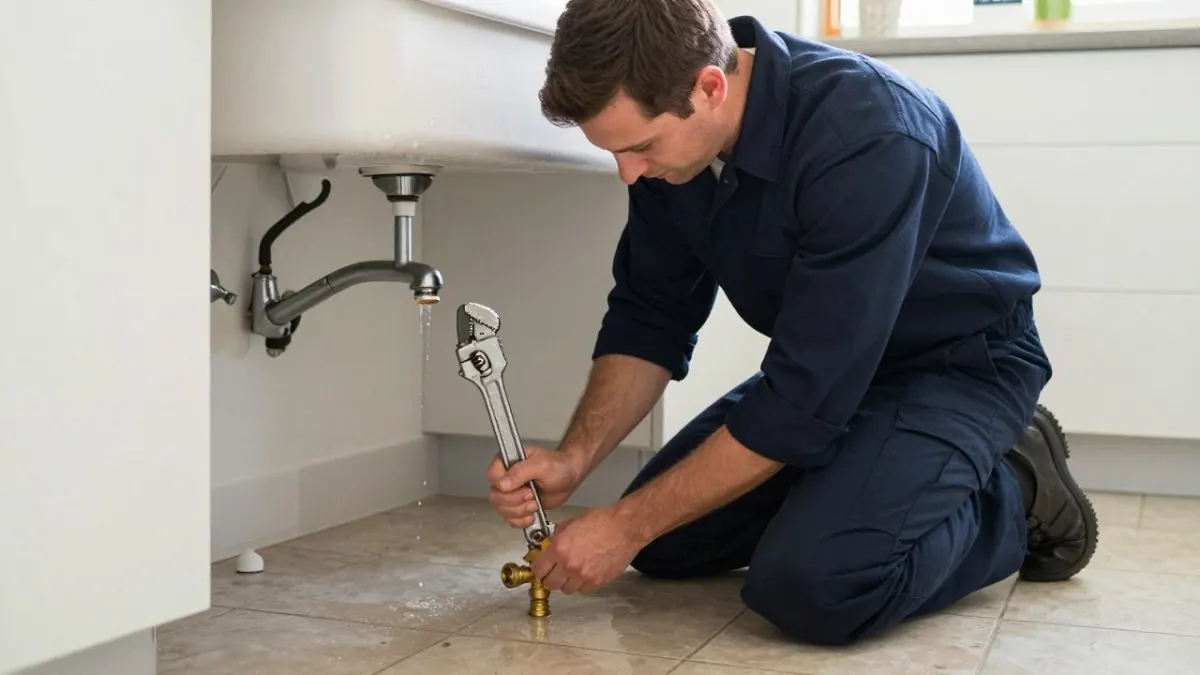
Not every plumbing problem needs an emergency visit, and a company's coverage promise usually applies only to true emergencies. A plumbing emergency is any problem that causes or threatens active water damage, a loss of essential service, or a safety hazard. Examples include a burst supply line, a sewage backup, a gas smell, or a water heater leaking into a finished room.
A slow drip under a sink can usually wait for a scheduled appointment. A toilet that won't stop running can often wait until morning. Knowing this distinction helps you decide whether to pay for an after-hours call.
Emergency Plumber Response Time by Severity and Location
Response time is not one number. You can read what an emergency plumbing response time guarantee actually covers and which exclusions apply. It is the product of how severe the problem is, how far the technician must drive, how many technicians are on call, and what traffic is doing between the shop and your door. A company that quotes a single figure for every call is simplifying, and you should ask how that figure was built.
How Severity Changes the Dispatch Order
Dispatch is a triage system. A burst supply line flooding a basement, a sewage backup entering a living space, or a suspected gas leak moves to the front of the queue because the damage or hazard is active. A leaking water heater with a shutoff valve already closed, a single clogged fixture, or a slow drip under a sink can wait for the next available window.
When you call, describe the hazard, not just the fixture. Say whether water is actively flowing, whether it is near electrical outlets or a panel, and whether you can reach the shutoff. That description is what a dispatcher uses to rank your call.
How Location and Traffic Change the Estimate
Distance matters, but so does the route. A technician ten minutes away on a highway at 2 a.m. may arrive faster than one five minutes away through a closed bridge or a construction detour. Ask the dispatcher for an arrival window in minutes and ask whether that window assumes normal traffic. If the answer is a range, ask what pushes a call to the long end of the range.
Technician availability is the third variable. A company with one on-call technician covering a wide area will have longer windows than one with several technicians staged across its zone. Ask how many technicians are on call overnight and whether they are stationed at a central shop or spread across the service area.
Watch out: a response time quoted by any company is usually a target for urgent calls inside its core service area, not a guarantee for every address, so confirm the figure for your specific address and time of day before you rely on it.
What to Ask to Get a Realistic Window
Before you book, ask these questions and write down the answers:
- What is your target arrival window for my address at this time of day?
- Is that window different on weekends or holidays?
- How many technicians are on call right now?
- What would push my call to a later window?
A clear answer to those four questions tells you more than any single advertised number, and it lets you compare companies on the same basis.
How quickly a plumber reaches you depends on the problem's severity, your location, and technician availability, as summarised below.
| Factor | What it changes | What to ask |
|---|---|---|
| Severity | Active flooding or sewage backup moves to the front of the queue | Describe whether water is actively flowing |
| Distance and traffic | A closer technician can still arrive later due to route | Is the window based on normal traffic? |
| Technician availability | Fewer on-call technicians means longer windows | How many technicians are on call now? |
| Time and day | Weekend and holiday windows can differ | Is the window different on weekends or holidays? |
Emergency Plumbing Service Call Fees and What Affects Them
Emergency service often costs more than a standard weekday visit, and fees can vary with the time of day, the distance traveled, and the complexity of the repair.
Pricing depends on local conditions and the specific job, so no single number applies to every household. For a detailed look at emergency plumber call-out charges and what drives them up, review the breakdown. Rich's Plumbing Heating & Air Conditioning offers estimates for most services, and current pricing details are available on our website. Ask for an estimate or a written quote before work begins, particularly for after-hours calls.
What to Do Safely While Waiting for the Plumber
While you wait, protect people and property first. Shut off the main water valve if you can reach it safely. Turn off electricity to affected areas if water is near outlets or appliances. If you smell gas, leave the home immediately and call your gas utility from outside. Once everyone is safe and the immediate hazards are contained, HOME SAVIOURS LTD can help you think through how long to wait for an emergency plumber.
Place a bucket under active drips and move valuables off wet floors. Take photos of any damage for insurance purposes. Avoid using drains or running water until the technician arrives, since that can make a backup worse.
Questions to Ask an Emergency Plumber Before Booking
Before you agree to a visit, ask whether the company is licensed and insured, and request the license number so you can verify it with the state. Our guide explains how to verify a local plumber license step by step. Ask whether the technician is employed by the company or subcontracted, and whether the work is guaranteed.
Also ask how the company handles a repair that turns out to need more work. A trustworthy plumber explains options and costs before proceeding. Rich's Plumbing Heating & Air Conditioning is a family-owned business that is licensed, bonded, and insured.
Booking Your Emergency Visit with Rich's Plumbing Heating & Air Conditioning
If you've confirmed that your address falls within our emergency service area, you can schedule service through our website or by phone. Rich's Plumbing Heating & Air Conditioning provides plumbing, heating, and cooling service to New Jersey homeowners.
Get started with Rich's Plumbing Heating & Air Conditioning and confirm your coverage today, before the next emergency arrives.
Frequently Asked Questions
What qualifies as a plumbing emergency?
A plumbing emergency is a problem that causes or threatens immediate damage to your home or puts your household at risk. Common examples include a burst pipe, a sewer backup, a gas smell, a water heater leaking heavily, and a toilet that will not stop overflowing. Slow drains and minor faucet drips can usually wait for a scheduled visit. If water is actively spreading or you smell gas, leave the area and call for help right away.
How can I tell whether an emergency plumber serves my address?
Start by checking the company's website or calling the office with your full street address, town, and ZIP code. Ask whether they offer after-hours dispatch to your specific location and whether any travel fees apply outside their core area. Ask about exclusions, such as certain towns or rural addresses. Written confirmation of coverage, even by text or email, helps avoid surprises during a late-night call.
How quickly can an emergency plumber reach my home?
Response time depends on location, traffic, time of day, and how many calls are queued. Rich's Plumbing Heating & Air Conditioning advertises a 60-minute response time for urgent needs in its service area. Ask the dispatcher for an estimated arrival window when you book, and confirm whether that estimate applies to your neighborhood. Less urgent problems may be scheduled for a later time.
What should I ask an emergency plumber before booking?
Ask whether the company is licensed, bonded, and insured, and whether it covers your address. Confirm the call-out fee, whether it applies before work begins, and whether an estimate is free. Ask if the technician will diagnose the root cause rather than only patching the symptom, and whether the work includes a satisfaction guarantee. Clear answers to these questions reduce the chance of an unexpected bill.