Last Updated: October 24, 2026
Quick Summary
The average water heater lifespan is 8 to 12 years for a standard tank model and 15 to 20 years for a tankless unit. The water heater lifespan you actually get depends on the type of system, how hard it works, and whether anyone bothers to maintain it.
- Tankless water heaters commonly reach 15 to 20 years of service because there is no storage tank.
- Electric water heaters tend to have fewer mechanical parts and often reach the upper end of the tank range.
- Flushing the tank once a year removes the sediment that shortens water heater lifespan.
- Tankless systems need annual descaling in areas with hard water to keep the heat exchanger clear.
- If the repair costs more than half of a new installation, replacement may be the better value.
Table of Contents
- How Long Do Water Heaters Last? Average Water Heater Lifespan by Type
- Tankless Water Heater Lifespan: What to Expect and How to Extend It
- Water Heater Replacement Signs You Shouldn't Ignore
- How to Flush a Water Heater to Add Years to Its Life
- Average Cost to Replace a Water Heater and When to Repair vs. Replace
- How to Find Your Water Heater's Age and Read the Warning Signs
- Schedule a Water Heater Inspection with Rich's
- Frequently Asked Questions
How Long Do Water Heaters Last? Average Water Heater Lifespan by Type
The average water heater lifespan is 8 to 12 years for a standard tank model and 15 to 20 years for a tankless unit. That gap drives many replacement decisions. The water heater lifespan you actually get depends on three things: the type of system, how hard it works, and whether anyone bothers to maintain it. Below, we break down realistic ranges by type and fuel, then show you how to check your own unit's age before it fails on a cold morning.
Tank Water Heaters: 8 to 12 Years
A traditional tank water heater holds a steel storage tank full of hot water around the clock. That constant exposure to heat and minerals is why most storage tank units land in the 8 to 12 year range. Hard water accelerates sediment buildup on the tank floor, which forces the burner or heating elements to work harder and shortens service life.
Tankless Water Heaters: 15 to 20 Years
Tankless water heaters heat water on demand and skip the storage tank entirely, so there is no standing water eating at the steel from the inside. That design difference is why tankless units commonly reach 15 to 20 years of service. The catch: tankless systems need annual descaling in areas with hard water. Skip that, and mineral scale clogs the heat exchanger, which is the most expensive part to replace.
Gas vs. Electric: How Fuel Type Changes Longevity
Fuel type shifts the expected range more than most homeowners realize. Electric water heaters tend to have fewer mechanical parts and often reach the upper end of the tank range. Gas water heaters add a burner, gas valve, and venting, so there are more components that can fail, and tanks in gas units are more prone to corrosion when the anode rod wears out.
| Water Heater Type | Typical Lifespan | Main Lifespan Threat |
|---|---|---|
| Tank, gas | 8-10 years | Sediment, tank corrosion |
| Tank, electric | 10-12 years | Sediment, heating element wear |
| Tankless, gas | 18-20 years | Scale in heat exchanger |
| Tankless, electric | 15-18 years | Element degradation |
Tankless Water Heater Lifespan: What to Expect and How to Extend It
Tankless water heater lifespan runs 15 to 20 years, and the units that reach the top of that range share one habit: annual descaling. Scale is the enemy. If you are weighing a switch, our team handles tankless water heater installation in East Brunswick, NJ and can help you determine whether your household demand and water quality suit an on-demand system.
Water Heater Replacement Signs You Shouldn't Ignore
Water heater replacement signs show up long before a tank bursts, and catching them early is the difference between a planned install and an emergency call. Watch for these:
- Rust-colored hot water coming from the tap, which points to a corroding tank
- Rumbling, popping, or knocking noises from sediment boiling under the burner
- Water pooling around the base of the unit, a sign of a leaking tank or fitting
- Hot water running out faster than it used to
- The unit is past 10 years old and needs its first major repair
Age of the unit matters as much as any symptom. A 12-year-old tank with a leak is a replacement. A 5-year-old tank with the same leak may just need a fitting. When you are ready to act, water heater installation in East Brunswick starts with a free estimate so you know the scope before anyone touches a pipe.
How to Flush a Water Heater to Add Years to Its Life
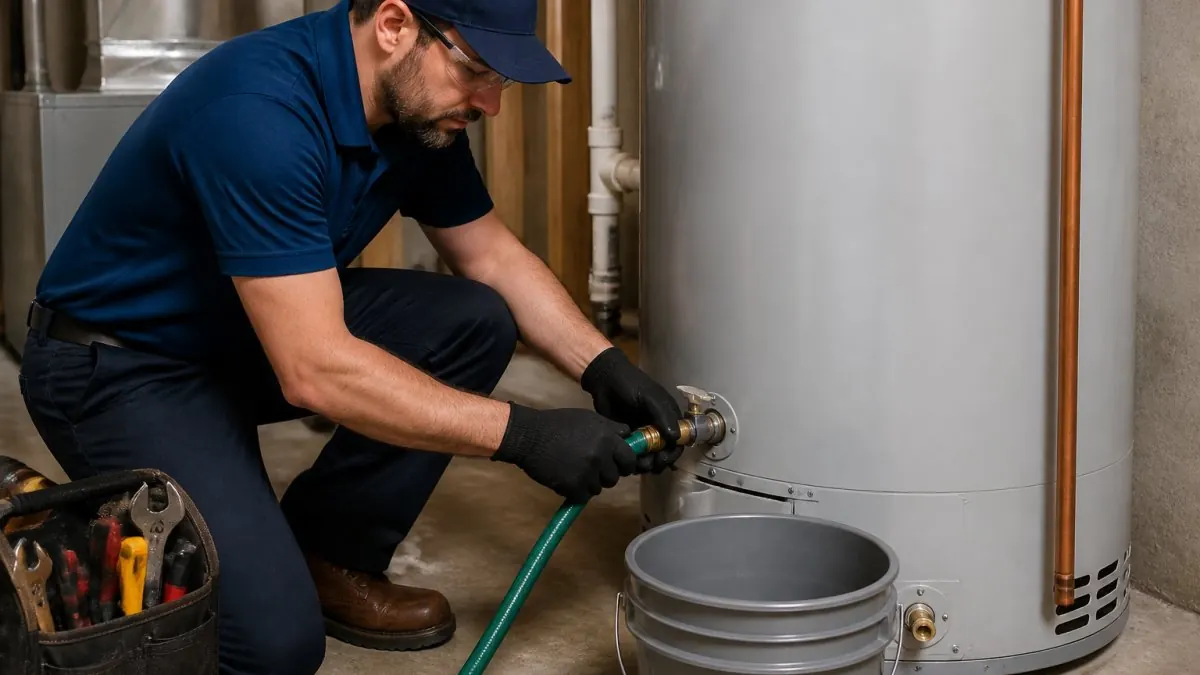
Flushing the tank once a year removes the sediment that shortens water heater lifespan. Here is the process we walk homeowners through:
- Turn off the power at the breaker, or set the gas valve to pilot.
- Shut off the cold water supply valve on top of the tank.
- Connect a garden hose to the drain valve at the bottom and run it to a floor drain or outside.
- Open the drain valve and let the tank empty.
- Open the cold water supply briefly to stir up remaining sediment, then drain again.
- Close the drain valve, refill the tank fully, and restore power or gas.
Watch out: never restore power or relight the burner before the tank is completely full, because a dry heating element or empty tank can crack from the heat.
Average Cost to Replace a Water Heater and When to Repair vs. Replace
There is no single average cost to replace a water heater, because the total depends on tank size, fuel type, venting, code upgrades, and whether the old unit has to be hauled out of a tight space. What we can do is give you a decision framework that works regardless of the quote you receive.
Typical Replacement Cost Ranges
For a standard tank water heater, most homeowners pay somewhere between $1,200 and $2,500 installed, with gas units and higher-efficiency models landing toward the top of that range. Tankless replacements run higher, commonly $2,500 to $4,500 installed, because venting, gas line sizing, and electrical upgrades often need to be addressed. Heat-pump water heaters typically fall in the $2,000 to $3,500 range before any available rebates.
The Repair-vs-Replace Decision Framework
Use these five questions in order. The first one that gives a clear answer usually settles the decision.
- How old is the unit relative to its expected lifespan? A tank at year 9 or 10 is near the end of its service life; a tank at year 5 has years left. Compare against the ranges in the first section of this guide.
- Is the tank itself leaking, or is it a fitting or valve? A leak from the tank shell or from rusted-through metal means replacement. A leak from a fitting, T&P valve, or drain valve is often a repair.
- What is the repair cost as a share of a new install? A common rule of thumb is that if the repair costs more than half of a new installation, replacement may be the better value, especially on an older unit.
- How efficient is the existing unit? Replacing an older standard tank with a heat-pump model can cut water heating energy use, which may change the math on a borderline repair (DOE Finalizes Efficiency Standards for Water Heaters to Save Americans Over $7 Billion on...).
- How many major repairs have you had in the last two years? A second major repair within two years is a strong signal that the unit is failing piece by piece.
For a deeper walkthrough of that decision, read our emergency water heater repair vs replacement guide. If you already know you want it fixed, East Brunswick water heater repair is one call away.
How to Find Your Water Heater's Age and Read the Warning Signs
The age of the unit is printed on the manufacturer's label, usually on the upper part of the tank or behind the access panel. The label carries a serial number, and that serial number is the key to the manufacture date. The trick is that each manufacturer encodes the date differently, so a single rule does not work across brands.
Where to Look
Check three places in this order: the manufacturer's label on the tank shell, the rating plate near the gas valve or electrical junction box, and the owner's manual if it is still attached. The serial number is usually 8 to 12 characters and is separate from the model number.
How to Decode the Serial Number
Most manufacturers embed the year and week of manufacture in the first four characters, but the format varies:
- First two digits as year, next two as week is common on many Rheem, Ruud, and Richmond units (for example, 2315 would be the 15th week of 2023).
- First letter as month, next two digits as year appears on some A.O. Smith and State models.
- First two digits as week, next two as year shows up on certain Bradford White units.
- A single letter followed by a two-digit year is used on some Navien and Rinnai tankless models.
Because the formats differ, the reliable move is to note the full serial number and check the manufacturer's date chart on its website. Most major brands publish a serial-number decoder, and it takes about a minute.
Reading the Warning Signs Against the Age
Once you know the age, compare it to the lifespan range for your type. A tank at year 9 with any warning sign is on borrowed time.
If replacement is on the table, our guide on how to choose the right water heater size for your home covers first-hour rating and peak demand to help you choose a unit that fits your household.
Schedule a Water Heater Inspection with Rich's
A water heater rarely fails without warning. The problem is that most homeowners do not know what to look for until the hot water stops. At Rich's Plumbing Heating & Air Conditioning, our licensed technicians inspect the tank, anode rod, connections, and venting, then tell you plainly whether you are looking at maintenance or a replacement. We have served New Jersey families since 1989 as a family-owned and operated company, and every job is backed by our 100% satisfaction guarantee.
Frequently Asked Questions
Should you flush a 10-year-old water heater?
Yes, a 10-year-old water heater can still benefit from flushing, but proceed with caution. Sediment buildup may be heavy, and the drain valve could be stiff or corroded. A professional flush removes scale and restores efficiency, but if the tank shows rust or leaks, replacement may be the better choice. Regular maintenance every 1 to 3 years helps extend the water heater lifespan and avoid unexpected failures.
What brand of water heater lasts the longest?
Brand alone does not guarantee a long water heater lifespan. Longevity depends more on installation quality, water chemistry, and maintenance habits. Some manufacturers offer longer warranties on their premium lines, but a well-maintained mid-range unit can outlast a neglected high-end one. Look for models with extended tank warranties (10 years or more) and schedule annual professional maintenance to protect your investment.
What are the first signs of a water heater going bad?
Early water heater replacement signs include rumbling or popping noises from sediment, rusty hot water, visible leaks around the base, and a drop in hot water supply. A rising energy bill without changed usage can also signal declining efficiency. If your unit is over 10 years old and shows two or more of these signs, call a licensed plumber for an inspection before a small issue becomes a flooded basement.
How long does a tankless water heater last?
A tankless water heater lifespan typically ranges from 15 to 20 years, often longer than a traditional tank model. The absence of a storage tank reduces corrosion risk, but mineral scale still affects performance. In areas with hard water, annual descaling is essential to reach the upper end of that range. Proper installation and regular maintenance can push a tankless unit past 20 years of service.