Last Updated: October 22, 2026
Quick Summary
Frequent drain clogs in old homes usually come from narrowed pipes, decades of buildup, and plumbing materials that were never meant to last this long. The problem is rarely the drain you're plunging but the aging system behind it. Legacy materials like galvanized steel, cast iron, clay tile, and Orangeburg each fail in ways that cause recurring blockages.
- Hair buildup is the number one cause of bathroom clogs, and soap residue makes it worse.
- Wipes labeled flushable do not break down like toilet paper and are a leading cause of sewer backups.
- Cutting tree roots only prunes them; they grow back, usually thicker.
- Never mix chemical drain cleaners with a plunger, since trapped chemicals can splash back and burn skin or eyes.
- If you've cleared the same drain twice in a year, stop treating it as a fixture problem.
Table of Contents
- Why Old Homes Get Frequent Drain Clogs
- The Most Common Causes of Drain Clogs in Older Homes
- How Legacy Pipe Materials and Aging Pipes Cause Recurring Clogs
- Tree Roots in Sewer Line: A Hidden Cause of Blockage
- Signs of a Clogged Sewer Line You Should Not Ignore
- How to Clear a Slow Drain Safely
- How to Prevent Drain Clogs in an Older Home
- When to Call a Licensed Plumber
- Frequently Asked Questions
Why Old Homes Get Frequent Drain Clogs
Frequent drain clogs in old homes usually trace back to three things: narrowed pipes, decades of buildup, and plumbing materials that were never meant to last this long. If your older house backs up again and again, the problem is rarely the drain you're plunging. It's the system behind it.
At Rich's Plumbing Heating & Air Conditioning, we've spent more than 30 years clearing and repairing drains in older houses, and the pattern is consistent.
That mismatch explains a lot. A drain clog is simply a blockage that stops water from moving through your plumbing system.
Below, we'll walk through the real causes, the warning signs, and a safe way to diagnose and fix them.
The Most Common Causes of Drain Clogs in Older Homes
Most recurring clogs come down to a short list of culprits. The tricky part is that several of them stack on top of each other, so fixing one source rarely solves the whole problem.
Here's what we find most often:
- Hair and soap scum in bathroom drains
- Grease and food particles in kitchen lines
- Mineral deposits from hard water
- Flushed wipes and other non-flushable items
- Deteriorated pipe materials
- Tree roots invading the sewer line
Hair and Soap Residue in Bathroom Drains
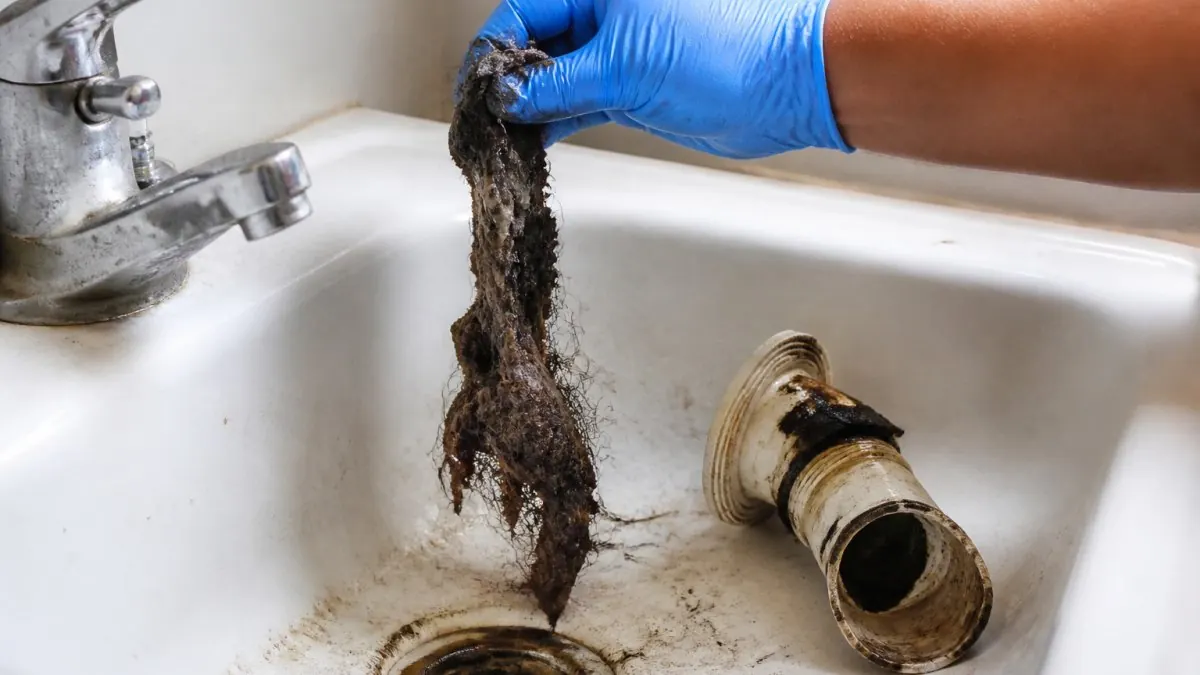
Hair buildup is the number one cause of bathroom clogs, and soap residue makes it worse. Hair tangles around the drain stopper and creates a net that catches everything else. Soap scum then coats the hair, turning a loose tangle into a solid plug.
Older shower drains often have narrow traps and worn stoppers that catch more debris than modern designs. If your tub drains slowly after every shower, that's the early warning.
Grease and Food Waste in Kitchen Drains
Grease buildup is a slow killer. Cooking oil and fat pour down as liquid, cool inside the pipe, and harden into a sticky layer. Food particles stick to that layer, and the pipe narrows a little more with every meal.
A common mistake is chasing grease with hot water. That melts the top layer and pushes it further down, where it cools and sets again. The blockage just moves.
Mineral Buildup from Hard Water
Hard water leaves mineral deposits on the inside of pipes. Calcium and magnesium settle out of the water and form a crust that shrinks the pipe's interior over time. This is a gradual buildup, so you won't notice it until drainage slows across multiple fixtures.
Wipes and Non-Flushable Materials
Wipes labeled "flushable" are a leading cause of sewer backups. They don't break down like toilet paper. They clump together, snag on rough pipe walls, and form blockages that no plunger will clear.
How Legacy Pipe Materials and Aging Pipes Cause Recurring Clogs
Legacy pipe materials are the hidden reason so many old homes get recurring clogs. Even perfect habits can't save a pipe that is corroded, scaled, or collapsing underground.
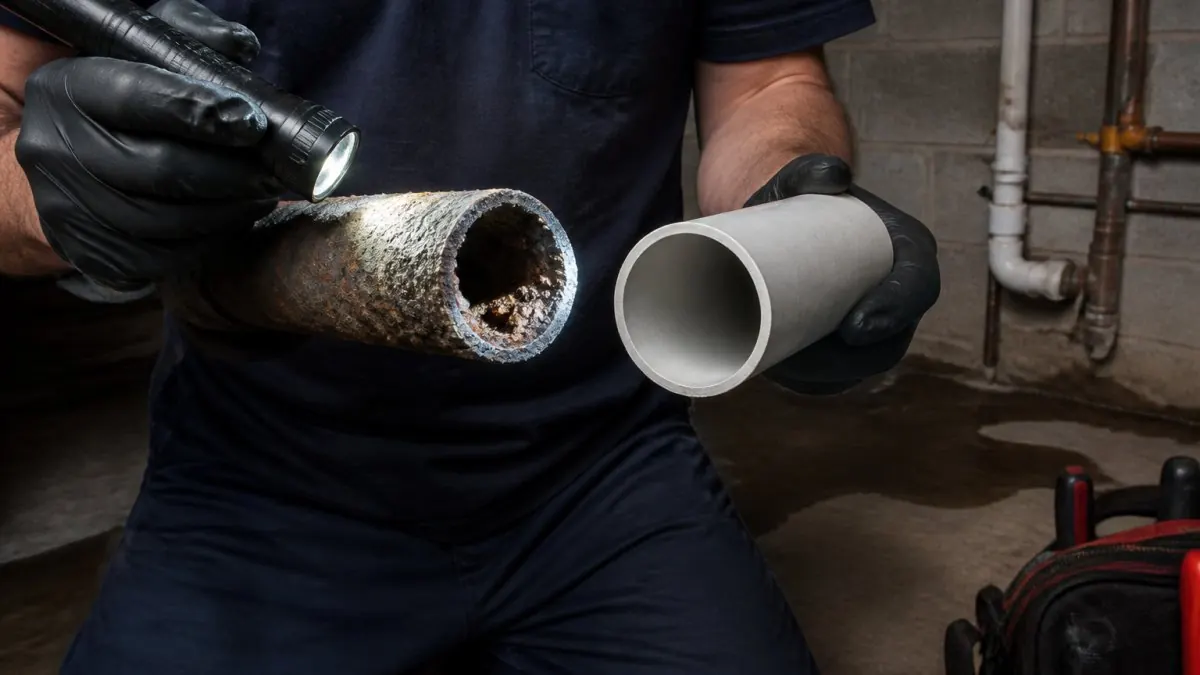
Here's how the common materials fail, and what that means for your drains:
- Galvanized steel: Rusts from the inside out. The zinc coating wears away, the steel pits, and rust flakes create a rough interior that catches hair, soap, and food debris. The pipe narrows to a fraction of its original diameter, so even normal use backs up. Galvanized supply and drain lines were common in homes built roughly from the 1950s through the 1970s.
- Cast iron: Corrodes and scales. The interior develops a rough, pitted surface and a crust of rust and mineral scale that grabs everything passing through. Cast iron drain lines were standard in many homes built before the 1970s and can last decades, but the interior condition, not the exterior, is what determines whether it clogs.
- Clay tile: Cracks and shifts with the soil. Clay sewer lines are jointed, and those joints are the weak points. Soil movement, settling, and age open the joints, and roots find them. Offset sections also catch waste and paper, creating repeat blockages at the same spot.
When the pipe itself is the problem, drain cleaning only buys time. The clog comes back because the pipe condition never changed.
How to confirm what you have. Material and condition should be confirmed by inspection, not guessed from the home's age.
Tree Roots in Sewer Line: A Hidden Cause of Blockage
Tree roots in a sewer line are one of the most common hidden causes of a main drain blockage.
The warning signs are specific. You'll often see multiple drains backing up at once, gurgling toilets, or slow drainage throughout the house.
Cutting the roots only prunes them. They grow back, usually thicker. Long-term repair means sealing the entry point or replacing the damaged section.
Signs of a Clogged Sewer Line You Should Not Ignore
Knowing the signs of a clogged sewer line helps you act before a small blockage becomes an emergency. Watch for these signals:
- Several drains draining slowly at the same time
- Water backing up in one fixture when you use another
- Gurgling sounds from toilets or floor drains
Any one of these points to a main drain issue, not a single fixture. That's your cue to stop plunging and start diagnosing.
How to Clear a Slow Drain Safely
Clearing a slow drain safely means starting gentle and working up, so you don't damage old pipes. Here's the sequence we recommend:
- Boil water only for grease. Skip it for PVC and older joints, where heat can soften seals.
- Use a plunger first. A cup plunger on sinks and tubs, a flange plunger on toilets.
- Try a drain snake, not chemical cleaners. Caustic cleaners sit in old pipes and can eat through thin metal.
- Remove the stopper and clear hair by hand. Most bathroom clogs live right at the stopper.
- Check the P-trap. Place a bucket underneath, unscrew it, and clear the debris.
- Stop if water backs up in other fixtures. That means the blockage is in the main line, not the branch.
How to Prevent Drain Clogs in an Older Home
Prevention in an old home means working with the pipes you have, not pretending they're new. Generic advice like "use a strainer" is a start, but older homes need a schedule and fixture-specific habits that account for hard water, mature trees, and plumbing that is already narrowed.
A practical maintenance schedule for an older home:
- Monthly: Run hot water down kitchen drains for a minute after the last dish of the day to move residual grease, and check that every tub and shower strainer is seated and clear of hair.
- Seasonally: Flush floor drains and rarely used fixtures with water to keep trap seals from drying out and letting sewer gas in. Before heating season, check the basement floor drain and any laundry sink.
- Annually: Have the main line inspected or cleaned if you've had more than one backup in the past year. If you have mature trees near the sewer line, an annual camera check is cheap insurance against a root blockage.
Fixture-specific habits that matter in older homes:
- Bathroom drains: Use a hair catcher in every tub and shower, and clear the stopper weekly. In older shower drains with narrow traps, hair and soap scum combine into a plug faster than in modern wide-trap designs.
- Kitchen drains: Wipe grease into the trash, never down the sink. Run cold water while and after using the disposal so grease congeals and is carried away rather than coating the pipe. Avoid putting fibrous or starchy food waste down the disposal, which older, narrower lines handle poorly.
- Toilets: Flush only toilet paper (the EPA). Wipes labeled "flushable" do not break down like toilet paper and are a leading cause of sewer backups, especially in older lines with rough interiors that snag them.
Hard water and mature trees deserve special attention. If your water leaves scale on fixtures, it is also scaling the inside of your pipes, so periodic descaling or a softener pays off over years.
When to Call a Licensed Plumber
Call a licensed plumber when a clog returns, when multiple drains slow at once, or when you smell sewer gas.
At Rich's Plumbing Heating & Air Conditioning, we're family owned and operated, licensed, bonded, and insured, and we've served homeowners for over 30 years.
Repeated drain clogs are a symptom, not a sentence. Get them diagnosed properly and you can stop the cycle.
Frequently Asked Questions
Why do multiple drains in my old home keep clogging at once?
When several drains slow down or back up together, the problem is usually in the main drain or sewer line rather than the individual fixtures. In older homes, that shared line may have scale buildup, sagging sections, or tree roots intruding at a joint. A single fixture clog clears with a plunger or snake; multiple drains signal a blockage downstream. Shut off water use and have the main line inspected before wastewater backs up into the lowest drain in the house.
Can old or damaged pipes cause recurring drain clogs?
Yes. Cast iron pipes rust and flake on the inside, and galvanized steel narrows as mineral deposits accumulate. Both reduce the pipe's interior diameter, so ordinary amounts of hair, soap residue, and food particles catch on the rough surface and build up faster. Offset or separated joints also snag debris and let roots in. If your home has original pipes from the mid-20th century, recurring clogs are often a pipe condition problem, not a habits problem.
When should a recurring drain clog be checked by a plumber?
Call a licensed plumber when the same drain clogs more than twice in a few months, when multiple fixtures slow at once, when you smell sewage, or when a snake clears the line but the clog returns within weeks. Those patterns point to a deeper issue such as tree roots in the sewer line, a broken pipe, or heavy scale. A camera inspection shows exactly what is inside the line and whether repair rather than another cleaning is the right fix.
What is the best way to prevent drain clogs in an older home?
Use strainers in every tub and shower, wipe grease into the trash instead of the sink, and flush only toilet paper. Once a month, run hot water through kitchen and bathroom drains for a minute to move soap residue along. Avoid chemical drain cleaners, which can damage older pipes. Have the main line inspected every couple of years, especially if you have mature trees near the sewer. These habits go a long way toward clog prevention.
If your old home keeps backing up, don't wait for the next overflow. Rich's Plumbing Heating & Air Conditioning can find the real cause with a camera inspection, clear it fast, and recommend repairs that actually last. Tap to easily schedule service today.