Last Updated: October 30, 2026
Quick Summary
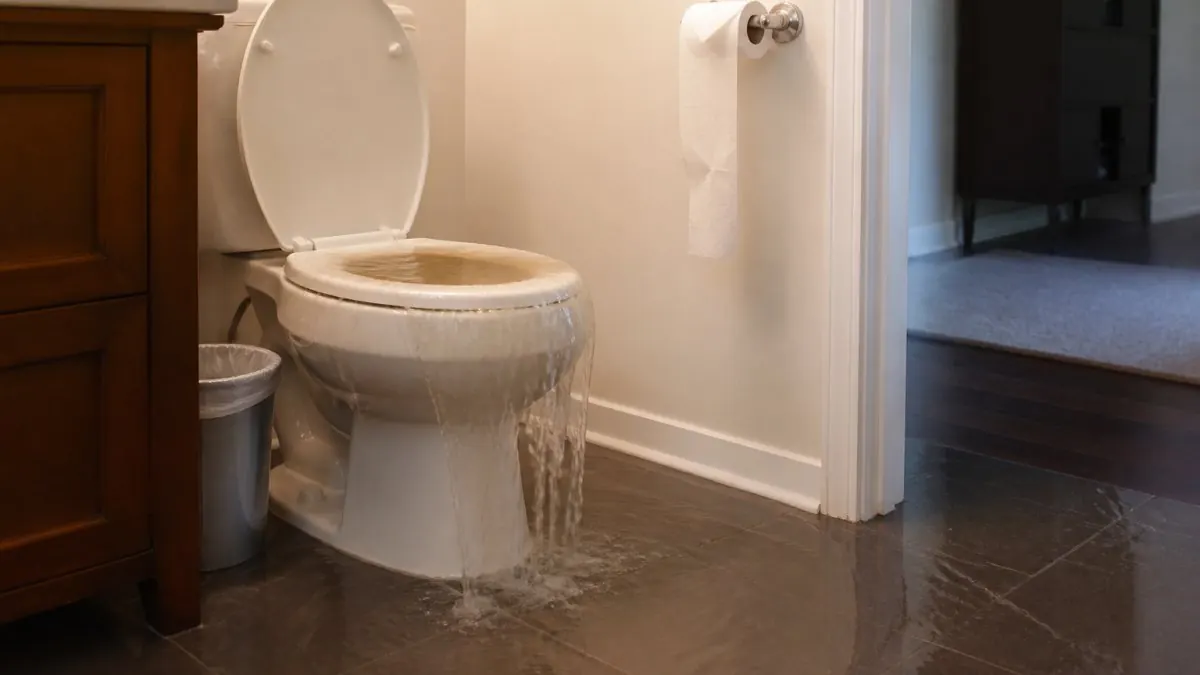
When a toilet overflows, stop the water first: lift the tank lid and push the flapper down, then turn the shut-off valve behind the bowl clockwise until it stops. If the bowl keeps filling, shut off the home's main water valve. Only after the water is off should you tackle the clog with a plunger or auger.
- Turn the shut-off valve clockwise until it stops, then flush once to confirm the water is off.
- Never force a stuck valve with pliers; press the flapper down and use the main valve instead.
- Skip the plunger if the bowl is full to the rim, since each stroke pushes more water out.
- If sink or tub drains are also slow, the blockage is downstream and a plunger will not fix it.
- Run fans or a dehumidifier for at least 24 hours after cleanup to prevent mold.
Table of Contents
- The First Minute: How to Stop a Toilet From Overflowing
- How to Unclog an Overflowing Toilet With a Plunger or Auger
- Overflow Causes Beyond a Simple Bowl Clog
- Toilet Overflow Cleanup and Water Damage: What to Do Next
- Preventing a Recurring Overflow
- When to Call a Plumber for a Clogged Toilet
- Schedule Emergency Plumbing Service Before the Next Overflow
- Frequently Asked Questions
The First Minute: How to Stop a Toilet From Overflowing
A toilet overflows when water keeps running into the bowl faster than the drain can carry it away, and the fix starts with stopping the water, not the mess.
Here is an emergency sequence worth memorizing:
- Lift the tank lid and push the flapper down to seal the tank outlet.
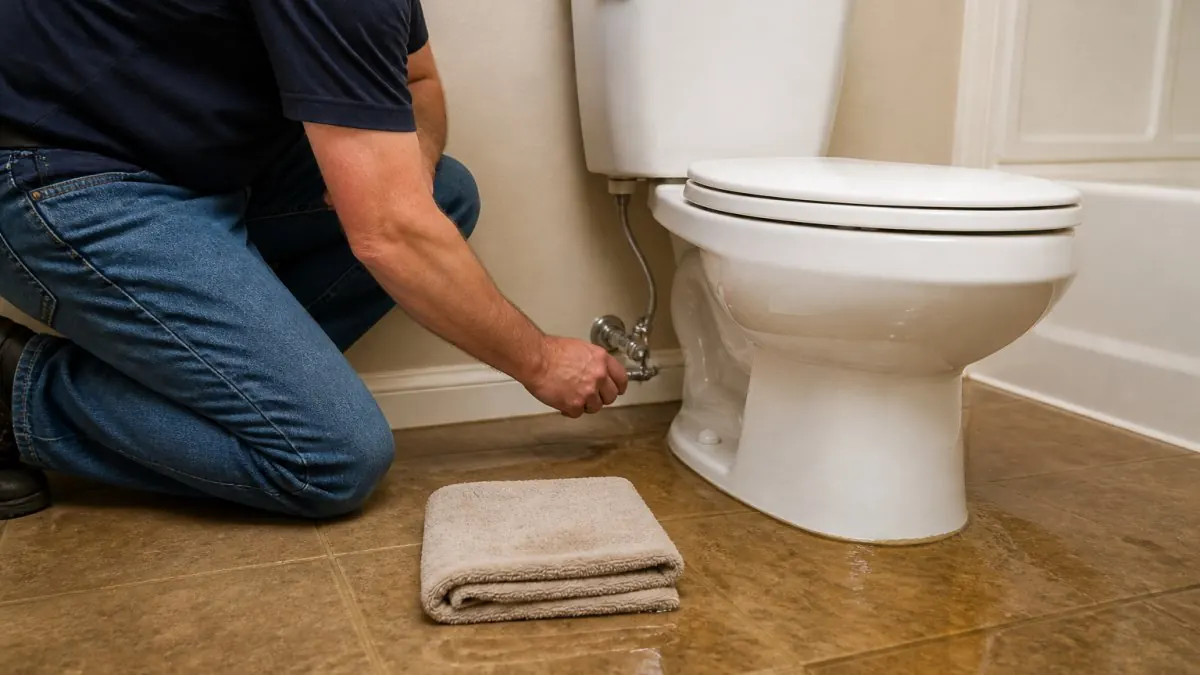
- Reach behind the bowl and turn the shut-off valve clockwise until it stops.
- If the bowl is still filling, turn off the home's main water valve.
- Throw towels around the base to contain the spread.
- Step away and assess before doing anything else.
That order matters. Stop the supply first, then think about the clog.
Locate the Shut-Off Valve and Turn Off the Water Supply
The shut-off valve sits low on the wall behind or beside the toilet base, usually a chrome oval knob on a supply line. For step-by-step help finding and turning off the water valve, see How to Shut Off Main Water Valve: Step-by-Step. Turn it clockwise until it stops. Then flush once to empty the tank and confirm the water has stopped.
What to Do If the Valve Is Stuck or Inaccessible
Stuck valves are common in older homes, and a corroded knob will not budge. Do not force it with pliers. Instead, lift the tank lid and press the flapper down over the drain hole to hold back the flow.
Watch out: yanking a seized valve can snap the supply line and turn a small overflow into a full leak behind the wall.
How to Unclog an Overflowing Toilet With a Plunger or Auger
Once the water is off, the clog becomes the target. A plunger clears most soft blockages in the trapway, while a toilet auger handles the stubborn ones a plunger cannot reach. Here is how to unclog an overflowing toilet without making things worse.
With a plunger:
- Set the rubber cup fully over the drain hole so it forms a tight seal.
- Push down slowly at first to seat the cup.
- Switch to strong strokes, keeping the seal tight on each pull.
With a toilet auger:
- Feed the cable into the drain hole until you feel resistance.
- Crank the handle clockwise to bite into the blockage.
- Pull the cable back and flush once with the supply valve open.
When Not to Plunge or Use Chemical Drain Cleaners
Skip the plunger if the bowl is already full to the rim, since each stroke pushes more water out. Chemical drain cleaners are a bigger risk: they sit in standing water, can damage seals, and splash back when the clog releases.
Overflow Causes Beyond a Simple Bowl Clog
A bowl clog is the obvious suspect, but it is not the only one. Repeat overflows often trace back to a part failure or a line problem, not a wad of paper.
- A failing fill valve that keeps running after the tank refills. Clue: you hear water running long after the flush finishes, and the tank keeps topping itself off.
- A worn flapper that lets water trickle constantly into the bowl. Clue: the bowl water level creeps up on its own with no flush, and you may see a faint ripple at the surface.
- A float set too high, letting the tank overfill and spill into the overflow tube. Clue: the water in the tank sits above the marked water line, and the overflow happens without a clog at all.
If more than one drain in the home is slow, the problem is in the line, not the toilet. If the bowl fills on its own with no flush, the problem is in the tank, not the drain.
How to Tell a Bowl Clog From a Line Problem
A quick test narrows it down. Shut off the toilet's supply valve, then run the bathroom sink and the tub for a minute. If those drains are slow or gurgle, the blockage is downstream of the toilet and a plunger will not fix it.
A second test checks the tank side. With the supply valve open and the bowl empty, watch the water level in the tank for a few minutes without flushing.
When the Cause Points to a Professional
A single slow drain that clears with a plunger is usually a homeowner fix. A pattern of slow drains across multiple fixtures, sewage odor, or water backing up into a tub when you flush can point to the main line, which is typically a job for a licensed plumber. The same is true for a tank that keeps overfilling after you have adjusted the float and replaced the flapper; a persistent fill-valve problem can waste water quietly for months before it shows up as a higher bill.
Toilet Overflow Cleanup and Water Damage: What to Do Next
Cleanup starts the moment the water stops, and the goal is drying, not just wiping. Standing water wicks into grout, baseboards, and subfloor within hours, and toilet water is not clean water. Treat every surface it touched as contaminated until it has been disinfected.
Work in this order:
- Put on rubber gloves before you touch anything. Keep children and pets out of the bathroom until the floor is dry and disinfected.
- Soak up standing water with towels or a wet/dry vacuum. Bag soaked towels in a plastic trash bag rather than dropping them in the laundry basket.
- Pull up bath mats and move belongings off the floor. Porous items that soaked up the spill, like rugs, cardboard, or untreated wood, are usually not worth saving and should be discarded.
- Disinfect every surface the water touched with a household disinfectant labeled for bathroom use, following the label's contact time. Pay attention to the base of the toilet, the grout lines, and the seam where the floor meets the wall.
- Run fans or a dehumidifier for at least 24 hours. Airflow matters more than heat; a closed bathroom with no ventilation stays damp and invites mold.
- Photograph any staining, soft flooring, or warped baseboard before you repair it.
Sewage Exposure and Health Precautions
A toilet overflow is generally considered a grossly contaminated water loss, since the water can carry waste. That classification matters for how you clean and for what your insurer will cover.
- Wear rubber gloves and eye protection if there is any risk of splashing.
- Keep children and pets away until the area is dry and disinfected.
- Do not use a household fan to blow air across a contaminated floor before it has been cleaned; that spreads droplets.
If the overflow involved visible sewage or the water sat for more than a day, a professional cleanup is the safer call. Mold can begin growing on wet building materials within 24 to 48 hours, and contaminated drywall or insulation usually has to be removed rather than dried in place.
Water-Damage Documentation and Insurance Considerations
Before you throw away a ruined rug or tear out a warped baseboard, document it.
- Photograph the standing water before you start soaking it up, then photograph each damaged item before you discard it.
- Keep receipts for any towels, fans, dehumidifiers, or cleaning supplies you buy for the cleanup.
- Write down the date, time, and what you observed, including whether the water appeared clear or contained waste.
A common pattern is for homeowners to clean up thoroughly and then discover the subfloor or a cabinet base is still wet weeks later. If the bathroom smells musty or the flooring feels soft, stop and have it inspected before you close out the claim.
Preventing a Recurring Overflow
A second overflow usually means the first fix was incomplete. Prevention comes down to a short monthly check and a few habits.
| Check | How Often | Why It Matters |
|---|---|---|
| Test the flapper seal | Monthly | Stops silent leaks into the bowl |
| Watch the water level | Monthly | Catches a mis-set float early |
| Flush only waste and paper | Every flush | Prevents most bowl clogs |
| Clear slow drains fast | As needed | Signals a line blockage forming |
For a deeper look at stopping clogs from coming back, our guide on preventing recurring plumbing clogs covers the full routine.
When to Call a Plumber for a Clogged Toilet
Call a plumber when the clog survives a plunger and an auger, when water backs up into other fixtures, or when you smell sewage. If you want to know what a professional visit includes, our guide on emergency drain services for homes explains the process and typical response.
A common mistake is patching the symptom, like plunging weekly, instead of finding the cause.
Schedule Emergency Plumbing Service Before the Next Overflow
The real challenge is not the first overflow. It is the second one, which usually hits at a worse time. To compare fastest-response drain cleaning options and response times, see Best Quickest Drain Cleaning Service & Response Time. Rich’s Plumbing Heating & Air Conditioning is a family-owned, licensed, bonded, and insured team serving New Jersey since 1989. The company offers emergency service with a 60-minute response time and free estimates for most services, backed by a 100% satisfaction guarantee.
Tap to easily schedule service today!
Frequently Asked Questions
Why is my toilet overflowing?
Most toilet overflows happen when a clog in the bowl or drain line blocks water from leaving, so the next flush pushes water past the rim. A failing fill valve or a flapper that won't seal can also let the tank keep refilling and spilling into the bowl. If the bowl rises after a flush and drains slowly, the clog is the likely cause. If water keeps running with no flush, check the tank components first.
Should you flush an overflowing toilet again?
No. Flushing again adds more water to a bowl that already can't drain and makes the overflow worse. Turn off the water supply at the shut-off valve first, then clear the blockage with a plunger or toilet auger. Wait until the bowl drains fully and the water level stays normal before flushing. If the water won't go down after two or three attempts, stop and call a plumber.
How do you stop a toilet from overflowing when the valve is stuck?
If the shut-off valve won't turn, lift the tank lid and push the flapper down to seal it, or tie the float arm up so the fill valve stops refilling. You can also turn off the main water supply to the house. Never keep flushing to test it. Once the water is controlled, call a plumber to free or replace the stuck valve, since a seized valve often signals mineral buildup or a worn internal part.
When should you call a plumber for an overflowing toilet?
Call a plumber if the water won't stop after you shut off the supply, if the clog returns after plunging, if multiple drains in the home are slow, or if the overflow involves sewage backup. Recurring overflow can point to a blocked drain line or a failing toilet, which a plunger won't fix. A licensed plumber can camera the line and clear the blockage at the source instead of patching the symptom.