Last Updated: October 27, 2026
Quick Summary
HVAC lifespan in New Jersey depends on equipment type, local climate exposure, installation quality and system sizing, and how consistently you maintain the system. Coastal salt air and humidity speed corrosion, inland temperature swings add wear from cycling, and urban debris loads filters and coils faster. Preventive maintenance is the single biggest lever homeowners control.
- Central air conditioners typically last 12-17 years, while furnaces last 15-20 years.
- Coastal salt air can corrode condenser fins and rust the base pan by year eight or ten.
- Change filters every 1-3 months, more often with pets or renovation dust.
- A maintenance plan should include two seasonal visits per year, one for cooling and one for heating.
- Repairs costing more than half the system's value usually mean replacement is the better spend.
Table of Contents
- How Long HVAC Systems Last by Equipment Type
- Climate and Environmental Factors That Shorten HVAC Lifespan
- Installation Quality and Correct System Sizing
- How to Extend HVAC System Life with Maintenance and Smart Habits
- How Often to Service an HVAC System
- What an HVAC Maintenance Plan Should Include
- Signs an HVAC System Needs Replacement
- Schedule a Maintenance Check with Rich's Plumbing Heating & Air Conditioning
- Frequently Asked Questions
How Long HVAC Systems Last by Equipment Type
HVAC lifespan varies sharply by equipment type, and knowing the expected service life of your system is the first step in judging whether a repair is worth it. The equipment matters as much as the maintenance.
Here's the typical service life homeowners can expect:
- Central air conditioner: 12-17 years
- Furnace: 15-20 years
- Boiler: 15-25 years, longer with annual service
- Heat pump: 12-15 years
- Geothermal heat pump: 20+ years for the indoor unit, with the ground loop lasting far longer
- Evaporative cooler: 10-15 years in heavy use
- Solar heating system: 20+ years for collectors
These are general ranges, not guarantees. An air conditioner that runs hard all summer in a hot climate may fall short of the low end.
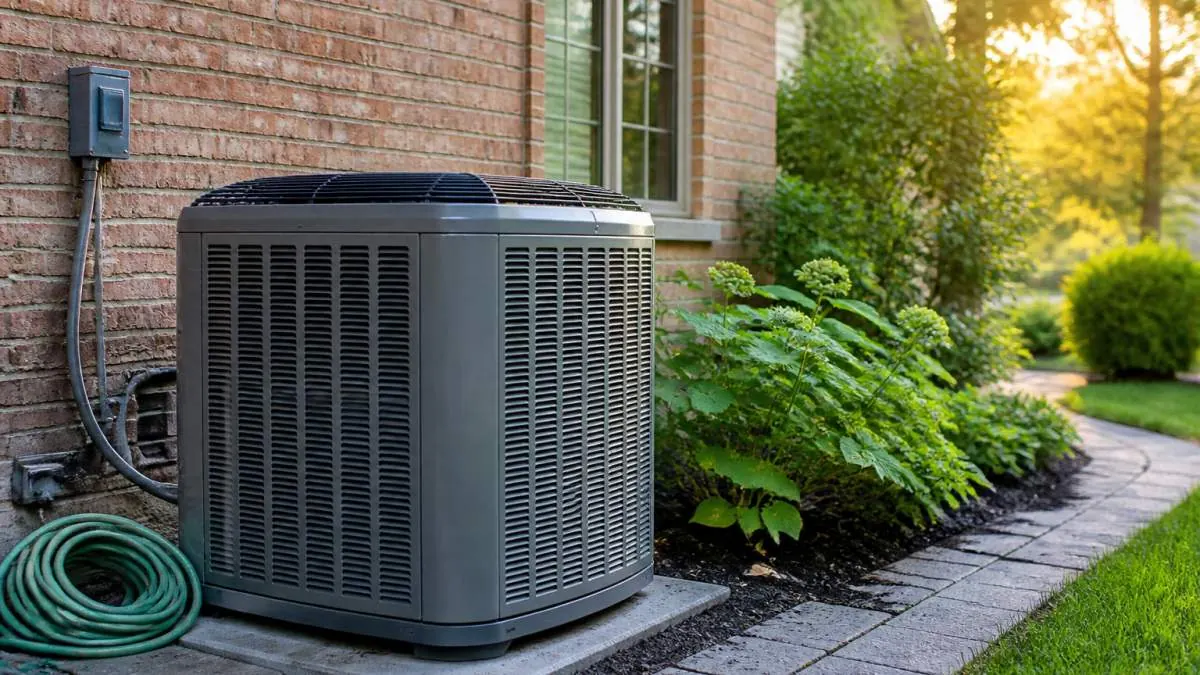
Climate and Environmental Factors That Shorten HVAC Lifespan
Most guides treat the state as one climate. It isn't. A condenser in a shore town faces a different set of stresses than the same model in a wooded inland suburb, and those differences show up in how long the equipment lasts and what fails first. Here's how the main exposures break down.
Coastal salt air and humidity
Homes within a few miles of the shoreline deal with airborne salt that settles on outdoor coils, cabinet panels, and fasteners. Salt accelerates corrosion on aluminum fins and steel housings, and it can pit the coil surface so that heat transfer drops before the unit actually fails. Humidity along the shore compounds the problem: the air conditioner runs longer cycles to pull moisture from the air, which means more compressor runtime and more condensate moving through the drain system. A common pattern in coastal homes is a condenser that still cools but has visibly corroded fins and a rusted base pan by year eight or ten.
Inland temperature swings
Farther inland, the stress is seasonal range rather than salt. A system may run in cooling mode on a humid 90-degree afternoon and switch to heating the same week. That repeated expansion and contraction works on refrigerant lines, brazed joints, and heat exchanger metal. Furnaces and heat pumps inland tend to see more ignition cycles and defrost cycles per season than coastal systems, which puts wear on igniters, flame sensors, reversing valves, and defrost controls. The equipment isn't failing from one dramatic event; it's accumulating cycle counts.
Urban and suburban exposure
In denser areas, airborne debris, pollen, road dust, construction grit, loads filters and outdoor coils faster. A condenser tucked against a fence or under a deck recirculates its own hot discharge air, which raises head pressure and shortens compressor life. Shade helps, but dense landscaping that blocks airflow does more harm than good.
What this means for lifespan
The same model can land at the low end of its range in one location and the high end in another. Coastal homes should expect more frequent coil cleaning and faster corrosion on outdoor components. Inland homes should watch ignition and defrost components. Urban homes should change filters more often and keep the outdoor unit clear. None of these are reasons to replace a system early, they're reasons to adjust the maintenance schedule to the exposure.
Installation Quality and Correct System Sizing
Installation quality shows up years later in:
- How evenly the house heats and cools
- How often the system needs repair
- How long the compressor and blower last
How to Extend HVAC System Life with Maintenance and Smart Habits
Preventive maintenance is the single biggest lever homeowners control, but "maintenance" means different things in April and October. A seasonal schedule tied to the equipment you're about to rely on keeps small faults from becoming mid-season failures, and it protects the manufacturer's warranty, which often requires documented service.
A seasonal schedule you can follow
Spring, before cooling season
- Replace the air filter (or clean a reusable one)
- Clear leaves, grass clippings, and debris from around the outdoor condenser
- Hose off the outdoor coil from the inside out, with power off at the disconnect
- Check that the condensate drain line is flowing and the pan is dry
- Schedule a professional cooling tune-up
Summer, during heavy runtime
- Check the filter monthly; change it every 1-3 months, more often with pets or renovation dust
- Keep the area around the outdoor unit clear of growth and stored items
- Watch for ice on the refrigerant lines, which signals an airflow or charge problem
Fall, before heating season
- Replace the filter again
- Test the furnace or heat pump in heating mode before the first cold night
- Clear debris from the furnace intake and exhaust vents
- Schedule a professional heating tune-up
Winter, during heavy runtime
- Check the filter monthly
- Keep snow and ice away from the outdoor unit and exhaust vents
- Watch for unusual smells or sounds and shut the system down if something changes
What homeowners can safely do versus what needs a licensed technician
Safe homeowner tasks are limited to filter changes, keeping the outdoor unit clear, hosing off the outdoor coil with power off, and visual checks for ice, water, or debris. Anything that involves opening a panel, testing electrical components, handling refrigerant, cleaning a heat exchanger, or adjusting gas pressure belongs to a licensed technician. Refrigerant handling in particular is regulated under federal law, and improper handling can void a warranty and create a safety hazard.
Household conditions that quietly shorten life
If you want a season-by-season plan you can follow yourself, our HVAC maintenance checklist for homeowners covers filter changes, seasonal tasks, and when to call a pro. For the heating side, heater maintenance in East Brunswick protects your system before the first cold snap.
How Often to Service an HVAC System
- Cleaning or replacing the air filter
- Checking refrigerant levels and coil condition
- Inspecting electrical connections and capacitors
- Lubricating moving parts
- Testing the thermostat and safety controls
- Clearing the condensate drain
If you want to book a professional visit, our team handles AC maintenance in East Brunswick.
What an HVAC Maintenance Plan Should Include
A good plan should cover both heating and cooling, not just one half of the system.
Look for these elements:
- Two seasonal visits per year, one for cooling and one for heating
- Full system inspection, including coils, electrical parts, and safety controls
- Filter service and a clear filter-change schedule
- Priority scheduling for repairs
- Discounts or included labor on covered repairs
- Written records of each visit
Ask what happens if a repair is needed mid-season, and confirm the plan covers your specific equipment. You can review our comprehensive maintenance plans to see what's included.
Signs an HVAC System Needs Replacement
| Warning Sign | What It Usually Means | Best Next Step |
|---|---|---|
| Repairs cost more than half the system's value | Money is better spent on replacement | Get a replacement quote |
| Frequent breakdowns | Wear and tear has caught up | Assess remaining life |
| Rising energy bills | Efficiency has dropped | Compare repair vs. replace |
| Uneven room temperatures | Sizing or ductwork problems | Professional inspection |
| Strange noises or smells | Failing components | Stop running it, call a pro |
| System is past expected lifespan | End of service life is near | Plan replacement |
If you're weighing the decision, our guide to HVAC repair vs replacement walks through lifespan factors and how to run the numbers before you commit.
Schedule a Maintenance Check with Rich's Plumbing Heating & Air Conditioning
Rich's Plumbing Heating & Air Conditioning has served New Jersey homeowners since 1989 as a family-owned, licensed, bonded, and insured team. We offer a 60-minute response time for urgent needs, free estimates for most services, and a 100% satisfaction guarantee. Our licensed professionals handle heating and cooling solutions.
Get started with Rich's Plumbing Heating & Air Conditioning.
Frequently Asked Questions
How long does an HVAC system typically last?
Actual HVAC lifespan depends on the system and its circumstances, so treat any lifespan estimate as a planning guide rather than a guarantee.
What factors affect the lifespan of an HVAC system?
The biggest factors are installation quality and correct sizing, routine maintenance, air-filter changes, and how hard the system works during peak heating and cooling seasons. Environmental exposure, including humidity, salt air near the coast, and seasonal temperature swings, also plays a role. Homes with leaky ducts, poor insulation, or frequent thermostat adjustments force longer runtime and more wear and tear, which shortens equipment longevity.
How often should HVAC filters be changed?
Check the filter monthly and replace it every 1 to 3 months for standard 1-inch filters. Homes with pets, allergy sufferers, or heavy occupancy may need changes every 30 days. Thicker media filters can last 6 to 12 months. A clogged filter restricts airflow, raises energy use, and strains the blower motor, so consistent filter changes are one of the cheapest ways to protect HVAC lifespan.
Can poor installation shorten the life of an HVAC system?
Yes. An oversized system short-cycles, turning on and off frequently, which wears out compressors and blowers faster. An undersized system runs constantly and never keeps up. Poor ductwork, incorrect refrigerant charge, and sloppy electrical work all reduce efficiency and reliability. Hiring a licensed contractor who performs a load calculation before installation prevents these problems and supports the full expected HVAC lifespan.