

Last Updated: October 26, 2026
Quick Summary
Natural alternatives to chemical drain cleaners include baking soda and vinegar, hot water with dish soap, salt and hot water, citric acid, enzyme products, and a drain snake for hair clogs. These remedies loosen film, melt grease, and move along loose debris, but they cannot clear a solid plug or pull out a hair mat.
- Pour half a cup of baking soda into the drain, then one cup of white vinegar, and cover the opening for 10 to 15 minutes.
- Never follow a natural remedy with a chemical drain cleaner, since mixing vinegar and a caustic product can create dangerous fumes and heat.
- Use a drain snake first on tub and shower clogs with visible hair, then flush with hot water.
- Pour hot water in two or three stages with a minute between them instead of using boiling water, which can crack PVC and porcelain.
- Call a licensed plumber if water backs up in more than one fixture, you smell sewage, or standing water does not drop after two treatment attempts.
Table of Contents
- Why Homeowners Are Switching to Natural Drain Cleaners
- Baking Soda and Vinegar Drain Cleaner: What It Can and Cannot Clear
- How to Remove Grease From a Drain Without Harsh Chemicals
- Using a Drain Snake for Hair Clogs in Bathroom Drains
- Enzyme Drain Cleaner: How It Works and When to Choose It
- Salt, Hot Water, and Dish Soap: Simple Remedies for Minor Clogs
- Safety and Pipe Compatibility: What Never to Mix or Pour
- When to Stop DIY and Schedule Professional Drain Service
- Frequently Asked Questions
Why Homeowners Are Switching to Natural Drain Cleaners
Many homeowners are rethinking what they pour down their drains. This guide covers natural alternatives to chemical drain cleaners and situations where a home remedy may not work.
A natural drain cleaner is a non-chemical method intended to address a drain clog.
Baking Soda and Vinegar Drain Cleaner: What It Can and Cannot Clear
Baking soda and vinegar are sometimes used as a home remedy for drains.
How to Apply the Baking Soda and Vinegar Method
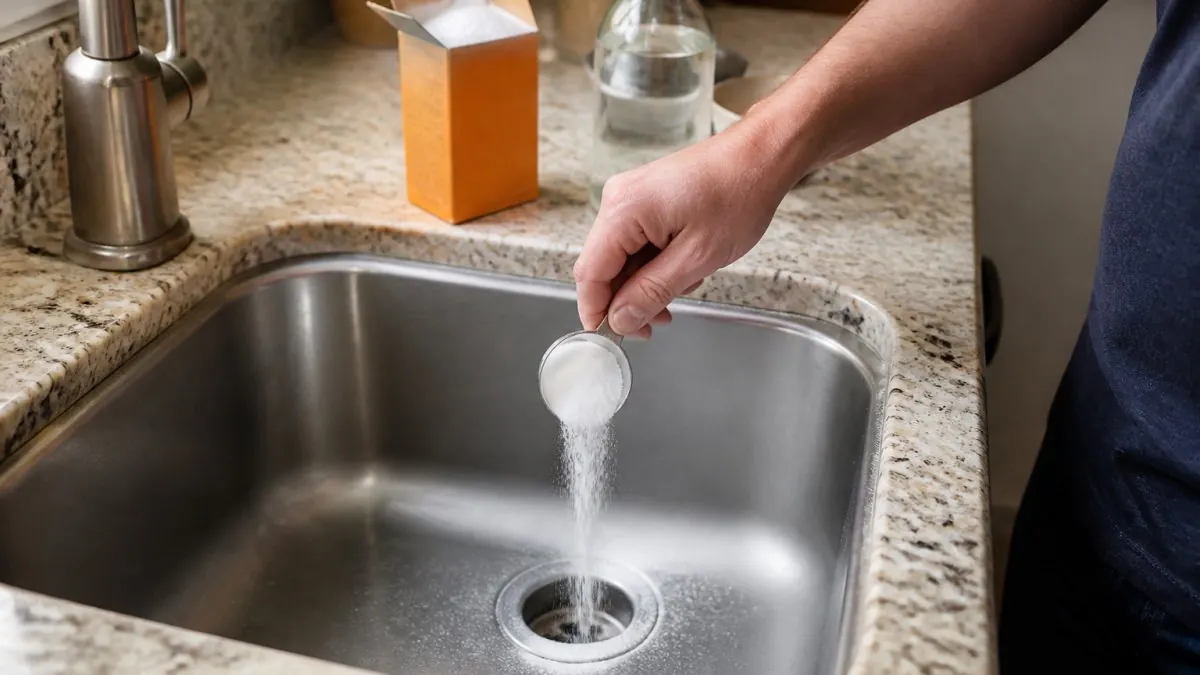
- Pour half a cup of baking soda (sodium bicarbonate) straight into the drain.
- Follow with one cup of white vinegar.
- Cover the drain opening to trap the reaction for 10 to 15 minutes.
- Flush with a pot of hot water, not boiling, to wash the loosened debris through.
- Repeat once if the drain still runs slow.
Watch out: never follow this with a chemical drain cleaner. Mixing vinegar and a caustic product can create dangerous fumes and heat.
How to Remove Grease From a Drain Without Harsh Chemicals
Grease in a drain can be addressed with a home remedy, but results may vary.
To reduce the amount of grease entering a drain, wipe pans with a paper towel before washing.
Using a Drain Snake for Hair Clogs in Bathroom Drains
A drain snake is one mechanical tool used to address a bathroom drain clog. See how hydro-jetting compares to snaking for tougher clogs.
Best for: tub and shower drains with visible hair. Skip if: the clog is in a toilet or a drain shared with the kitchen line.
Enzyme Drain Cleaner: How It Works and When to Choose It
An enzyme drain cleaner is a product marketed for drain maintenance.
Salt, Hot Water, and Dish Soap: Simple Remedies for Minor Clogs
Home remedies are sometimes used for minor drain clogs.
Match the remedy to the clog
| Clog type | Where it shows up | Best first remedy | Why it works | What it will not do |
|---|---|---|---|---|
| Soap film and light grease | Kitchen sink, bathroom sink | Dish soap + hot water | Surfactants lift the film so hot water can carry it away | Clear a solid grease plug or standing water |
| Grease buildup | Kitchen drain | Half cup salt, then boiling water (see pipe caveat below) | Salt scours the walls; heat melts the coating | Dissolve a full blockage deeper in the line |
| Hair and soap mat | Tub, shower | Drain snake or hair tool first, then hot water flush | Mechanical removal beats any liquid on hair | Pull a mat that has moved past the trap |
| Mineral film and hard-water scale | Faucets, showerheads, drain strainers | Citric acid dissolved in warm water | Acid dissolves calcium and magnesium deposits | Clear organic clogs or restore a fully blocked drain |
| Odors with slow flow | Any drain | Baking soda + vinegar, then hot water flush | Agitation loosens scum; the flush moves it along | Fix a blockage or a dry trap issue |
| Food debris | Kitchen sink | Hot water in stages, then dish soap | Heat softens fat; soap suspends particles | Reach debris packed past the P-trap |
How to apply each one
Hot water: Bring a pot to a simmer, not a rolling boil, and pour in two or three stages with a minute between them. Pouring slowly lets the heat work on the film instead of rushing past it. This is the safest first move on any drain and the one most likely to be repeated without harm.
Dish soap + hot water: Squeeze a generous amount of grease-cutting dish soap directly into the drain, let it sit for a few minutes, then flush with hot water in stages. This is the go-to for a kitchen sink that drains slowly after cooking.
Salt + hot water: Pour half a cup of salt into the drain, follow with hot water, and let it sit for 15 to 20 minutes before flushing. Salt is abrasive, so treat it as a scouring step for pipe walls, not a clog-buster. Skip it on older metal fittings where repeated abrasion could wear the surface.
Citric acid: Dissolve a few tablespoons in a quart of warm water and pour it down the drain or soak a removable strainer or showerhead in the same solution. It is the right choice for chalky white scale, not for grease or hair.
What these remedies realistically do
Home remedies may not resolve every drain clog. If a drain remains blocked, consider contacting a plumber.
For a full prevention routine that keeps these remedies from being needed as often, read our guide on preventing recurring plumbing clogs.
Safety and Pipe Compatibility: What Never to Mix or Pour
Natural products are not automatically harmless. Take care when using drain products.
Never mix these
- Natural remedy + chemical drain cleaner. Do not mix a natural remedy with a chemical drain cleaner.
- Bleach + vinegar. Mixing them releases chlorine gas.
- Bleach + ammonia. This combination also produces toxic gas (the CDC). Check labels on any cleaner before pouring, since some formulations contain ammonia.
- Two different chemical cleaners. Even within the same brand, different products can react. Flush thoroughly with water and wait before switching products.
Pipe material matters
| Pipe material | Hot water | Boiling water | Salt | Citric acid | Notes |
|---|---|---|---|---|---|
| PVC / plastic | Generally fine | Avoid; can soften joints | Fine in moderation | Fine | Most common in newer homes |
| Copper | Fine | Use caution | Avoid repeated use | Fine | Salt is abrasive over time |
| Cast iron | Fine | Use caution | Avoid repeated use | Fine | Older lines may already be corroded |
| Galvanized steel | Fine | Use caution | Avoid repeated use | Fine | Interior coating can degrade |
| Porcelain fixture | Fine | Can crack the fixture | Fine | Fine | Pour into the drain, not onto the surface |
If you do not know what your pipes are made of, consider contacting a licensed plumber.
Set realistic expectations
Home remedies are maintenance and light-clog tools. They loosen film, melt grease, and move along debris that is already free. They do not generate the force to clear a solid plug, and they will not pull out a hair mat. A drain that is fully blocked, or one that backs up across multiple fixtures, is past the point where a recipe helps. Enzyme products are gentler still: they work over hours or overnight and are best used on a schedule to keep a slow line from getting worse, not as an emergency fix. Consistent upkeep with natural cleaning products prevents the buildup of organic matter that eventually necessitates more aggressive intervention.
When to stop and call a plumber
Consider contacting a licensed plumber if you encounter any of these situations:
- Water backs up in more than one fixture at the same time.
- You smell sewage.
- Standing water does not drop after two treatment attempts.
- The same drain clogs repeatedly within a few weeks.
- You have already used a chemical cleaner and the drain is still blocked.
Those signs may warrant contacting a plumber.
If you're weighing gentler habits against a professional service, our article on the benefits of regular drain maintenance covers the long-term picture. Safety first: when in doubt, stop and call a licensed plumber.
When to Stop DIY and Schedule Professional Drain Service
Consider contacting a licensed plumber if water backs up across multiple fixtures, you smell sewage, or repeated treatments fail.
If you've decided to bring in help, you can book drain cleaning in East Brunswick.
At Rich's Plumbing Heating & Air Conditioning, we've served New Jersey since 1989 as a family owned and operated team. We're licensed, bonded, and insured, with a 60-minute response time and a 100% satisfaction guarantee.
Frequently Asked Questions
Can baking soda and vinegar really unclog a drain?
Baking soda and vinegar are sometimes used as a home remedy for drains. If a drain remains blocked, consider contacting a licensed plumber.
Why do plumbers say not to use chemical drain cleaners?
Follow the product label when using a chemical drain cleaner.
What is the safest way to clear a slow drain?
If water backs up into other fixtures, consider contacting a licensed plumber.
When should I stop trying DIY drain-cleaning methods and call a plumber?
Consider contacting a licensed plumber if water backs up in multiple drains, you smell sewage, or the clog returns.
A stubborn clog that keeps coming back is your cue to stop pouring and start solving. Rich's Plumbing Heating & Air Conditioning brings licensed, insured technicians, a 60-minute response time, and free estimates for most services. Get started with Rich's Plumbing Heating & Air Conditioning and clear that drain for good.