Last Updated: November 3, 2026
Quick Summary
To improve home insulation for energy efficiency, start with a professional energy audit to find where heat actually escapes, then seal air leaks before adding insulation. Prioritize attic air sealing and blown-in insulation for the fastest payback, and match R-values to your climate zone.
- An energy audit uses blower doors and thermal cameras to locate air leaks and weak insulation.
- Seal gaps around window frames, pipes, wires, and the attic hatch before adding insulation.
- Attic air sealing and blown-in insulation usually deliver the fastest payback per dollar.
- Recommended R-values vary by climate zone, so a single generic target is wrong for most homes.
- Leave blown-in insulation, duct sealing, spray foam, and work near gas appliances to professionals.
Table of Contents
- Start With an Energy Audit to Find Where Heat Escapes
- How to Seal Air Leaks Before Adding Any Home Insulation
- How to Insulate a House That Is Already Built
- Cost to Insulate a House and How Fast It Pays Back
- Match Insulation Choices to Your Climate and Air Quality Goals
- DIY vs Professional Installation: Which Gets Better Results
- Schedule an Insulation and HVAC Assessment With Rich's
- Frequently Asked Questions
Start With an Energy Audit to Find Where Heat Escapes
Learning how to improve home insulation for energy efficiency starts with finding the leaks, not buying materials. An energy audit is a professional inspection that locates air leaks, weak insulation, and heat loss points using tools like blower doors and thermal cameras. A home energy audit can also help prioritize which leaks and insulation gaps to address first, so repairs target the biggest sources of heat loss.
A home energy audit typically covers:
- A blower door test to measure whole-house air leakage
- Thermal imaging to spot missing insulation and cold spots
- A check of attic, walls, and rim joists
- Duct inspection for disconnected or leaky runs
You can also do a simple walk-through yourself. Feel for drafts around windows and doors on a windy day. Look for gaps where pipes and wires pass through walls. Check the attic hatch for daylight.
The U.S. Department of Energy's home energy audit guide recommends an audit before any major retrofit. Why? Because sealing and insulating the wrong spots changes nothing. The audit gives you a ranked list of where heat actually leaves your house.
How to Seal Air Leaks Before Adding Any Home Insulation
Sealing air leaks comes first because insulation traps air, but it cannot stop moving air. Warm air escapes through gaps the size of a pencil, and that defeats even thick insulation. This is the step most homeowners skip, and it's the one that matters most.
Common leak spots in homes:
- Gaps around window and door frames
- Cracks where the foundation meets the sill
- Openings around pipes, wires, and vents
- The attic hatch and recessed lighting fixtures
Watch out: sealing a gas appliance flue or a combustion air vent can trap carbon monoxide indoors. Leave those alone and let a licensed technician handle them.
Air leakage is often the biggest driver of heat loss in older homes. Stopping it first makes every dollar you spend on insulation work harder.
How to Insulate a House That Is Already Built
You can insulate a finished house without tearing it apart. The trick is choosing methods that fit inside existing walls and attics.
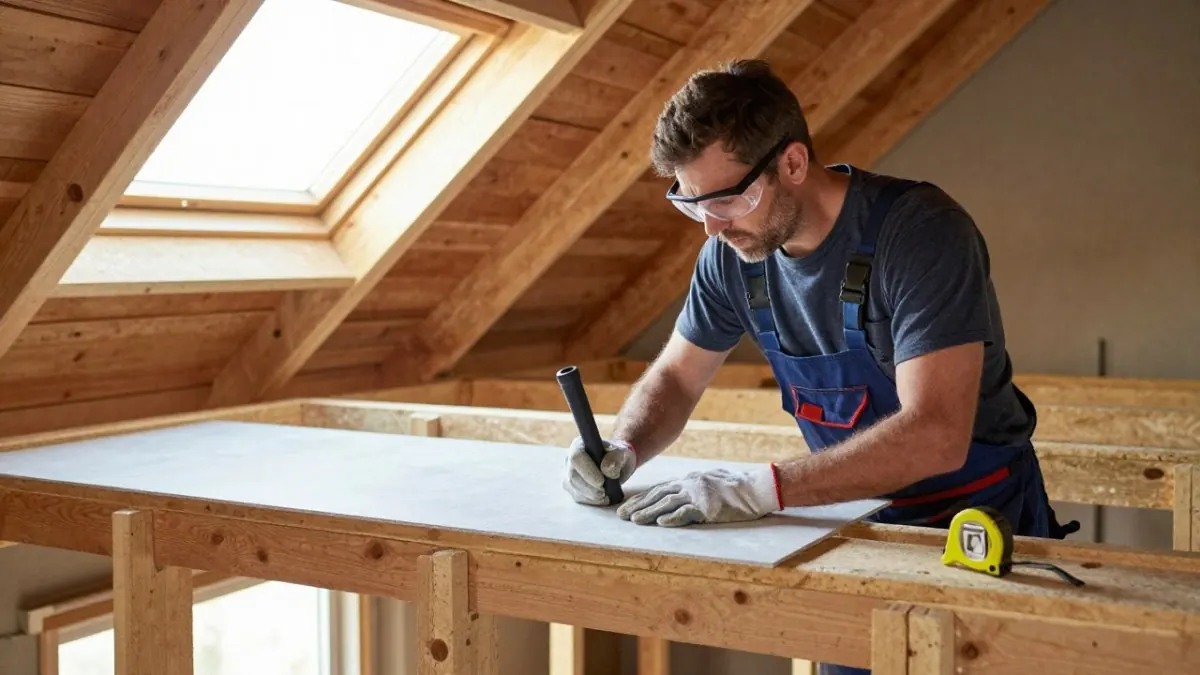
Attic Insulation and Ventilation
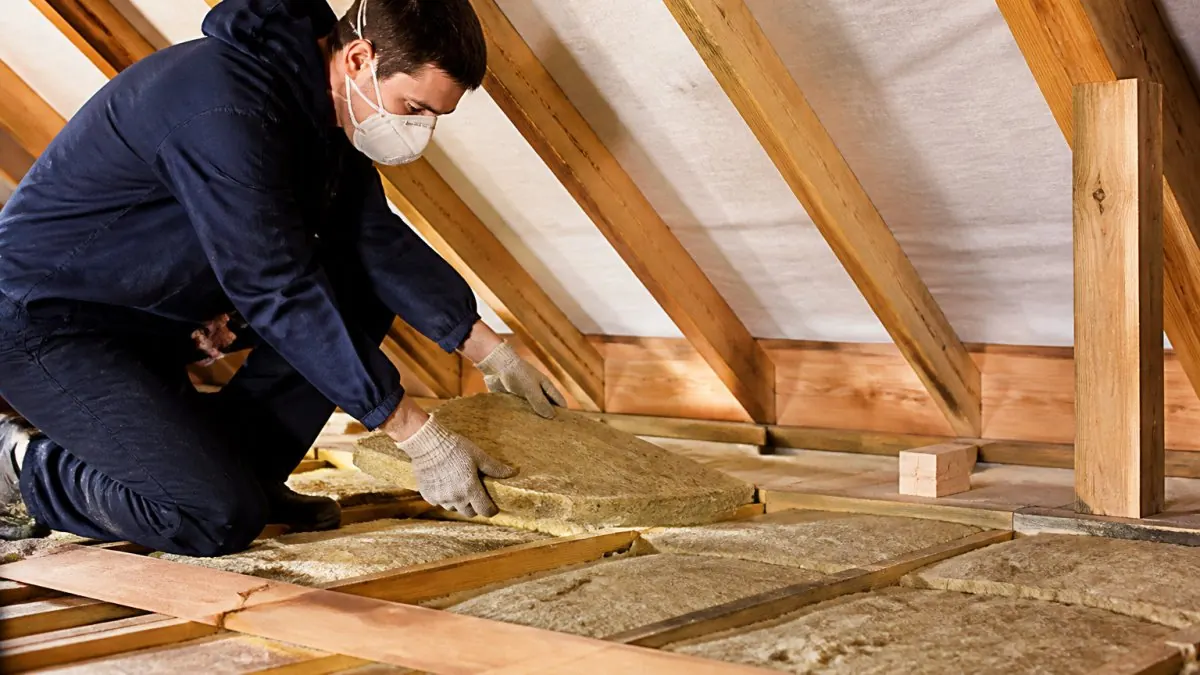
Attics are the easiest and most rewarding place to start. Blown-in insulation can fill gaps around joists and pipes, and it works well in tight spaces. Aim for a deep, even layer rather than a thin scatter.
Ventilation matters just as much. Blocked soffit vents trap moisture, which ruins insulation and can rot roof decking. Keep a clear path for air to move from the soffits to the ridge.
Wall, Foundation, and Ductwork Insulation
For foundations, foam board or spray foam along the rim joist stops cold air at the base of the house. Basement walls benefit from rigid foam before framing.
Ducts in attics and crawlspaces can leak and lose heat.
Cost to Insulate a House and How Fast It Pays Back
The cost to insulate a house depends on square footage, material, and how much access your attic and walls allow. Pricing depends on the scope, so contact Rich's Plumbing Heating & Air Conditioning for a quote on your home.
Generally, the projects with the fastest payback are air sealing and attic insulation, which tend to deliver large heat-loss reductions per dollar spent.
How to Estimate Payback Before You Buy
Payback period is simple arithmetic: divide the installed cost of a project by the annual energy savings it produces. The hard part is estimating savings honestly. A blower-door test before and after gives you the air-leakage reduction, and thermal imaging shows where insulation was missing. Those two data points let a contractor model savings instead of guessing.
A common pattern is to compare projects on cost per unit of heat saved rather than sticker price. Attic air sealing and blown-in insulation usually come out ahead because they are cheap per square foot and address the largest losses in most homes. Wall and foundation work costs more per square foot but lasts for decades, so it can still be worth doing after the cheap wins are exhausted.
Watch out: payback estimates that assume perfect installation are optimistic, since installation quality affects savings.
What Moves Your Payback Up or Down
- How much heat you're losing now. A leaky older home has more low-cost savings available than a recently built one.
- Your heating and cooling costs. Higher energy prices shorten payback on the same project.
- Which upgrades you choose. Air sealing and attic work are the fast wins; wall and foundation work are the long-game wins.
- Incentives and rebates. Available incentives and utility rebate programs can change the math, so check what your utility and state programs offer before you commit.
- Whether you bundle work. Sealing ducts while the attic is already open costs far less than a separate visit.
A useful rule: prioritize the projects with the lowest cost per unit of heat saved. Your energy audit gives you that ranking. For a deeper look at efficiency ratings that affect long-term savings, see our guide on how to choose the right HVAC efficiency rating.
Match Insulation Choices to Your Climate and Air Quality Goals
Insulation choices should match your climate and your indoor air goals. In a mixed-humid climate, moisture control matters as much as thermal resistance. Wet insulation stops working, so vapor barriers and ventilation have to be right.
Key terms worth knowing:
- R-value is a measure of how well a material resists heat flow. Higher means better.
- Thermal bridging happens when framing lumber carries heat past the insulation.
- The building envelope is the outer shell that separates indoors from outdoors.
Climate-Specific Targets, Not Generic Advice
Recommended R-values vary by climate zone, and the targets differ sharply. Cold climates need higher R-values in attics and walls. Hot, humid climates need careful vapor control to keep moisture out of wall cavities. Arid climates can tolerate different vapor strategies than humid ones.
In a mixed-humid climate, the priority order is usually air sealing, then attic insulation to the zone-recommended level, then moisture control at the foundation and rim joist. Vapor retarders belong on the warm side of the assembly in cold climates and require more care in humid ones, where a misplaced vapor barrier can trap moisture in the wall cavity.
Watch out: adding insulation over a wet assembly traps moisture and can lead to mold and rot. Fix leaks and roof or plumbing moisture problems before you insulate.
The Airtightness and Air-Quality Trade-Off
Sealing a house tightly improves efficiency but reduces natural ventilation, and that trade-off is where many efficiency projects go wrong. A tighter envelope can concentrate indoor pollutants, raise humidity, and increase the risk of backdrafting from combustion appliances. The fix is deliberate ventilation, not leaving leaks in place.
Options include a balanced mechanical ventilation system, such as a heat-recovery or energy-recovery ventilator, or a properly sized bath and kitchen exhaust strategy. If anyone in the home has allergies or asthma, ventilation design matters as much as R-value.
Air quality ties in too. For a deeper guide, see how to improve home air quality. Sealing leaks and controlling moisture reduce drafts, dust, and mold risk, but only when ventilation is addressed at the same time. Treat airtightness and ventilation as a pair, not as competing goals.
DIY vs Professional Installation: Which Gets Better Results
Professional installation can get better results than many DIY attempts. The materials are similar; the difference is diagnosis, safety, and getting the details right.
DIY makes sense for small jobs:
- Weatherstripping doors and windows
- Caulking visible cracks
- Adding a layer of batt insulation in an open attic
Leave these to the pros:
- Blown-in insulation and dense-packing walls
- Duct sealing and insulation
- Anything near gas appliances or combustion vents
- Spray foam, which needs proper equipment and safety gear
A common mistake is compressing insulation to make it fit. Squashed batts lose R-value fast, and the money is wasted.
The real difference between DIY and professional work comes down to the audit and the details. A pro finds the hidden leaks, seals them safely, and installs to the right density. That's where the savings live.
Some jobs are safe to handle yourself, while others are best left to the pros.
| Task | DIY or Professional | Note |
|---|---|---|
| Weatherstripping doors and windows | DIY | Small job suited to homeowners |
| Caulking visible cracks | DIY | Small job suited to homeowners |
| Adding batt insulation in an open attic | DIY | Small job suited to homeowners |
| Blown-in insulation and dense-packing walls | Professional | Leave to the pros |
| Duct sealing and insulation | Professional | Leave to the pros |
| Work near gas appliances or combustion vents | Professional | Leave to the pros |
| Spray foam | Professional | Needs proper equipment and safety gear |
Schedule an Insulation and HVAC Assessment With Rich's
The best insulation plan starts with a real assessment of your home, not a guess. Rich's Plumbing Heating & Air Conditioning is family owned and operated, serving New Jersey since 1989, and licensed, bonded, and insured. We offer free estimates for most services and back our work with a 100% satisfaction guarantee.
When you're ready, you can schedule service with Rich's Plumbing Heating & Air Conditioning. For a complete overview of services for New Jersey homeowners, see our HVAC in NJ service guide.
Frequently Asked Questions
What are the most cost-effective ways to improve home insulation?
Start with air sealing, not insulation. Caulking and weatherstripping gaps around windows, doors, and penetrations is inexpensive and stops warm air from escaping before you spend on materials. After that, blown-in attic insulation delivers the biggest R-value gain for the money in most homes. Duct sealing in unconditioned spaces also pays back quickly because leaking ducts waste conditioned air. An energy audit tells you which of these gives the best return for your specific house.
How does the R-value of insulation affect energy efficiency?
R-value measures thermal resistance, or how well a material slows heat transfer. Higher R-value means more resistance to conduction and convection, so less heat escapes in winter and less enters in summer. The right target depends on your climate zone and which part of the house you are insulating. Attics usually need the highest R-value, while walls and foundations need less. Installing more insulation than the assembly can support, or compressing batts, lowers the effective R-value.
How do I identify air leaks in my home?
On a windy day, hold a lit incense stick or a thin piece of tissue near window frames, door edges, electrical outlets, attic hatches, and where pipes enter walls. A flickering flame or moving tissue marks a leak. You can also check for drafts by hand around baseboards and recessed lighting. A professional energy audit uses a blower door test, which pressurizes the house and measures total air leakage, giving a far more complete picture than a visual walkthrough.
Is it worth adding insulation to an older home?
Usually yes, but the order matters. Older homes often have air leakage and under-insulated attics, so sealing gaps and adding blown-in insulation first gives the fastest improvement in comfort and energy savings. Have an energy audit first so you know which areas are actually underperforming, and check that ventilation and moisture control are handled so you do not trap moisture in the building envelope.
Your home loses heat in places you can't see, and guessing costs you money every month. Rich's Plumbing Heating & Air Conditioning brings over 30 years of experience, a fast 60-minute response time, and licensed, insured technicians to every job. We start with a real assessment, seal and insulate the right spots, and stand behind the work with a 100% satisfaction guarantee. Get started with Rich's Plumbing Heating & Air Conditioning and turn your drafty house into an efficient home.